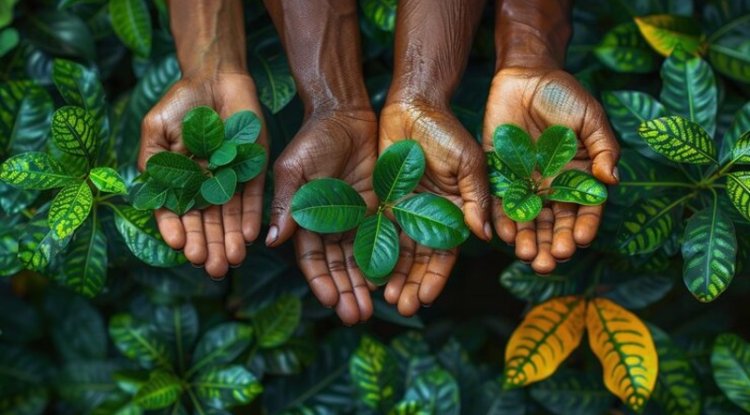
India’s tribal communities are transforming their traditional skills into sustainable businesses, with strong support from TRIFED and growing leadership from women.

The tribal population in India are slowly changing their lifestyle, the way of earning money. Earlier, they were highly dependent on forests for their daily needs but now they are using their traditional skills by transforming them into products that people are willing to buy in the market. This shows that their lifestyle if shifting from basic survival to creating small sustainable businesses that fits with the modern world.
This has been clearly seen at the Bharat Tribes Fest 2026, which is being held from March 18 to 30, 2026, at Sunder Nursery. The festival is being organised by TRIFED in collaboration with the Ministry of Tribal Affairs, where tribal community showcases tribal products and skills to the large audience.
Sustainability and Eco-Friendly Livelihoods
Many government initiatives are also helping these tribes grow in a sustainable manner. Programmes like RISA, Van Dhan Yojana, and Tribes India are helping these artisans move beyond selling raw forest products. Rather, they are learning to sell finished products, which have more economic value.
The TRIFED network enables tribal producers to sell their products directly to buyers in cities, bypassing middlemen. On the other hand, Van Dhan Vikas Kendras are helping these producers sell their forest products in a better manner. These centres are helping these tribal families work together to process forest produce in a better way.
Products like bamboo items, natural fibres, or forest-based products are not only traditional but also sustainable. They are more environmentally friendly because they are made from natural sources, which generate less waste. Tribal communities are also proving to the world that economic growth can be achieved in a sustainable manner.
Women Leading the Change
The biggest change is being spearheaded by women. They are not just helping in the background; they are now becoming leaders, entrepreneurs, and decision-makers. Women groups are now managing, saving money together, and investing in their work.
Their work and stories are being promoted at events like Bharat Tribes Fest 2026, providing them with the much-needed recognition and confidence. For them, this is the first time they are seeing their work as a profession.
“I don’t want to see a woman suffering or unemployed in my community. My vision is to provide opportunities so that every woman in my community becomes self-reliant and empowered. I also want to protect our traditions and proudly represent our culture at the global level.”
These are examples of Debongshi Chakma, where we learn that women are able to build their business without compromising their culture and environment. Her business involves textiles that are handwoven, bamboos, and farming, which are environmentally friendly.
Another woman is Urmila Sonwar, who creates handwoven sarees through traditional designs. Through her business, she is able to earn a living and preserve her culture.
“I want our village and its traditions to be recognised through my work. When someone sees my saree, they should immediately know it comes from Kajri. Through handloom, I want to give identity and visibility to our indigenous culture.”

Preserving Tradition While Protecting Nature
There are many crafts that are related to nature. For example, Toda embroidery is a craft that makes use of natural materials and has been passed down through generations. It is not a mass-produced craft, and that is what makes it unique and sustainable.
The second example is that of Munja grass weaving by Anita Rana from Uttarakhand. She makes useful items like roti covers using natural grass that is fully biodegradable and can replace plastic.
“Munja grass weaving is part of our culture and also a good solution for the environment. What we make is completely natural and does not harm nature. I want the younger generation to learn this so that our tradition continues and more women can earn with dignity.”
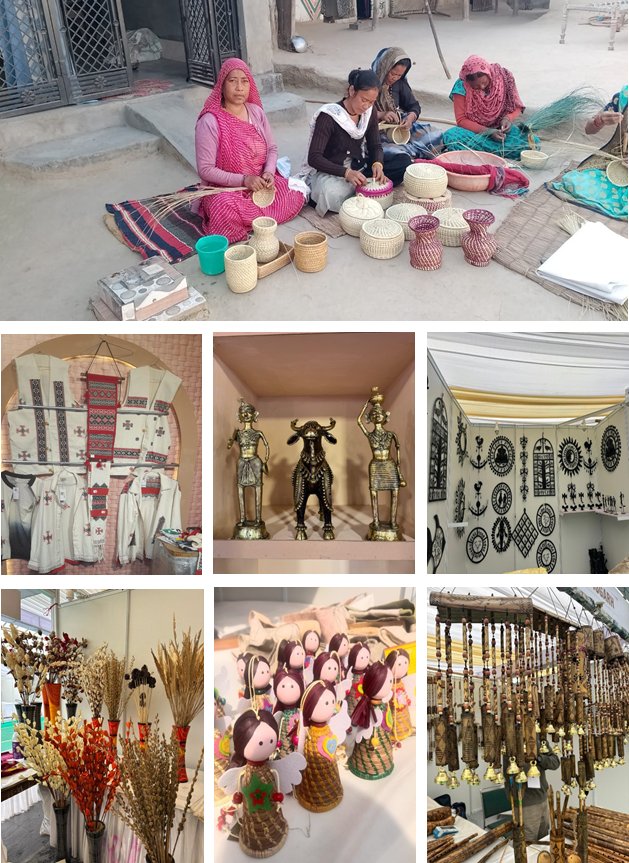
Such work shows how traditional knowledge can help solve modern environmental problems.
Connecting Tradition with Global Markets
With the support from TRIFED and other organizations such as National Institute of Fashion Technology, tribal products are being redesigned in such a way that they match modern tastes while retaining their originality.
Today, tribal products are being sold in various places such as airports, malls, and online websites. These products are not only being sold to customers in India but also across the world. In this way, tribal artists are being provided with better income for their products.
Growth Rooted in Sustainability
The tribal communities in India are showing the world how growth can be achieved. Their products are not only handmade but also sustainable and nature-friendly. In an era where mass production is taking over the world, tribal products have managed to achieve growth by being unique in this way.
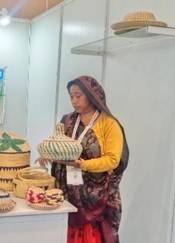
With increasing support systems, tribal artists are not only selling products but also building a sustainable future for themselves.
What's Your Reaction?