India Expands Export Diversification: Targeting 50 Countries to Mitigate US Tariff Blow
India’s Commerce Ministry is expanding its export reach to 50 countries to counter the impact of steep US tariffs, focusing on regions encompassing 90% of current trade. The move aims to diversify export destinations, boost competitiveness and support MSMEs, helping shield at-risk sectors and sustain economic growth.
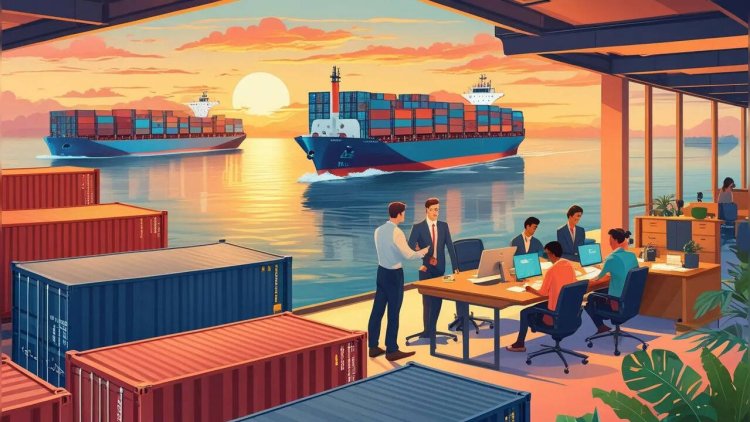
India is undergoing a significant transformation in its export strategy as the Commerce Ministry expands its market focus from 20 to 50 countries to offset the intensified impact of United States (US) tariffs on Indian goods. This shift, announced in August 2025, seeks to reduce reliance on single key buyers such as the US and cushion the blow from sharp increases in import duties imposed by Washington. Analysts view this move as a pivotal step to maintain export growth and stabilise sectors at risk of major income and job losses.
With recent tariff hikes bringing duties on Indian exports to the highest rates among major global economies—matching those charged by Brazil at 50%—the new diversification drive is both urgent and comprehensive. The first round of 25% US tariff increases took effect last week, with another 25% scheduled for late August. Sectors like textiles, leather, marine products, gems, and jewellery face the brunt of these hikes, with export orders and production lines threatened across industrial hubs.
The strategy’s focal point includes regions in the Middle East, Africa, Latin America, Europe, and other areas which already account for approximately 90% of India's total exports. By expanding market reach, India aims to reroute vulnerable goods—such as textiles, seafood, engineering products, gems and jewellery, petroleum, and chemicals—toward new buyers, using focused trade promotion and enhanced market access tactics.
Government officials have outlined a product-by-product approach based on four core pillars: export diversification, import substitution, export competitiveness, and logistical improvement. This analysis involves identifying priority products for each target nation, strengthening trade bodies, and removing bottlenecks in regulation and shipping. Exporters, particularly in affected sectors, are encouraged to tailor offerings and meet local requirements, with the government promising stronger support and improved credit guarantees under a new Rs2,250crore Export Promotion Mission.
The urgency of diversification is underscored by trade figures. India's exports remained flat year-on-year at $35.14billion in June 2025, a consequence of broader global economic uncertainty. Meanwhile, the trade deficit narrowed to a four-month low of $18.78billion that month, suggesting moderating import bills but highlighting the risk posed by stagnant overseas demand. During April–June of the current fiscal, India’s exports inched up 1.92% to $112.17billion, with imports rising 4.24% to $179.44billion. These numbers underline the need for a robust multi-market approach to maintain economic resilience.
Central to the revised strategy is building relationships in West Asia and Africa—regions seen as promising new growth engines for Indian engineering goods, gems and jewellery, pharmaceuticals, auto components, and agricultural products. The Ministry is liaising closely with export promotion councils to match Indian strengths against market opportunities, benchmarking products and rivals by country and sector. This collaborative effort aims not only to preserve export volume but also to enhance India's positioning as a reliable partner amidst international turbulence.
A detailed, coordinated approach is underway, involving regular meetings and strategic reviews with stakeholders nationwide. Exporters are being briefed on risk management techniques and incentives for exploring niche or emerging markets, leveraging technology, and building long-term supply chains outside traditional destinations. The priority remains rapid adaptation, supported by sector-specific schemes—such as credit guarantees, interest subsidies, and faster tax refunds—to overcome financial constraints.
The implications are significant for micro, small, and medium enterprises (MSMEs) as well. MSMEs account for a substantial portion of Indian exports and stand to benefit from increased access to international buyers, particularly in developing regions. Tailored product offerings, improved logistics, and competitive pricing are being seen as ways to counteract the detrimental effects of US-focused disruption. The government is collaborating with industry to ensure that exporters can participate in foreign trade shows, digital outreach, and market research initiatives.
Notably, industry observers caution that while diversification offers hope, replacing the massive US demand is a complex, long-term challenge. Many new markets do not have consumption capacity, purchasing power, or established trade relations to quickly compensate for diminished US orders. Therefore, building deeper economic alliances—through bilateral agreements, diplomatic engagement, and regional cooperation in trade and investment—is a key part of the government’s ongoing efforts.
In summary, India’s export diversification to 50 countries represents a strategic response to unprecedented trade headwinds, seeking to maintain economic growth and job security amidst shifting global patterns. By focusing on new regions, prioritising product adaptation, and supporting exporters through policy innovation, India is working to ensure export resilience and supply chain reliability. The success of this drive will depend on effective execution, industry support, and the ability to rapidly integrate with changing international markets.
What's Your Reaction?