Prime Minister Narendra Modi has flagged off India's first hydrogen-powered train on the Jind–Sonipat route, marking a major milestone in the country's clean mobility and green hydrogen ambitions.
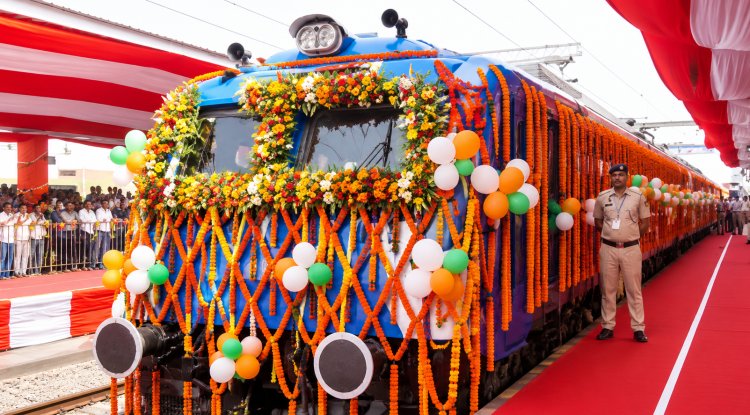
India on Friday celebrated an important step in its clean transportation with the launch of its first hydrogen train and becoming one of the few countries that have introduced hydrogen fuel-cell technology for their railways.
Prime Minister Narendra Modi flagged off the train at Jind railway station in Haryana on the 89-km stretch of Jind-Sonipat route under Northern Railway and places India among a select group of countries, including Germany, France and China, that have experimented with hydrogen-powered trains. This is India's first Hydrogen Train reflects the country's commitment to sustainable mobility and world-class railway infrastructure.
However, the real impact of the project goes beyond the introduction of a new train. The technology behind it represents a different approach to generating power for transportation, where hydrogen is converted into electricity through a clean energy process instead of burning fossil fuels. The project also highlights how alternative energy solutions can support India’s broader goal of reducing emissions from the transport sector.
Understanding How a Hydrogen Train Works
In case of hydrogen train, it relies on hydrogen fuel cells. The technology is different from the conventional diesel locomotives. For example, in conventional diesel trains, the chemical energy is converted into mechanical energy through combustion of the fuel in the engine, causing movement of the train. This causes air pollution by releasing gases like carbon dioxide, nitrogen oxide and particulate matter in the atmosphere.
In case of hydrogen trains, the hydrogen is not burned. Instead, electrochemical conversion of hydrogen through fuel cell stacks produces electric energy.
During this reaction, hydrogen molecules are broken down into protons and electrons. The flow of electrons produces electricity, which in turn drives electric motors attached to the wheels of the locomotive. The protons and oxygen combine to produce water vapor and heat, the two main by-products of the whole process.
Simply, the train uses hydrogen to produce electricity through a chemical process, and then uses this electricity to drive the same kind of electric motors that ordinary electric trains use.
This technology would enable the train to generate electricity without the direct emission of carbon emissions during its functioning and would thus be useful in cutting down the negative effect of trains on the environment. Unlike diesel trains, hydrogen fuel cell trains would not emit greenhouse gases like carbon dioxide, nitrogen oxides, and particulate matter.
Technology Behind India’s Hydrogen Train
Hydrogen Train that has been made for Indian Railways has been designed using indigenous technology by collaboration of Research Design and Standards Organisation (RDSO) and Integral Coach Factory (ICF) in Chennai along with Medha Servo Drives.
This hydrogen train comprises of two power cars powered by fuel cells and eight passenger coaches. These two power cars provide traction power of about 2,400 kW; thus, the capacity of passengers is about 2,600.
The hydrogen fuel cell system is the most significant part of the train. This train differs from an electric train which uses batteries and needs to be charged because the fuel cell train generates electricity as long as there is hydrogen available.
In addition to this system, there are other systems such as hydrogen storage systems, power management systems, and control systems which help manage the flow of electricity from the fuel cell to the traction motor.
Safety has always been a major focus due to hydrogen’s highly flammable nature and low molecular weight. There are sensors and detection devices installed in the train to detect any danger like hydrogen leaks, changes in pressure, smoke, and change in temperature.
Why Hydrogen Could Be a Cleaner Alternative to Diesel
Diesel engines in trains have long been an integral part of railways, particularly where electrification of railways is not possible. However, there are greenhouse gas emissions from diesel engine combustion that pose a threat to the environment.
For each litre of diesel burnt, a certain amount of carbon dioxide and other contaminants are released into the atmosphere. Typically, 2.6 to 3 kg of carbon dioxide are produced by diesel locomotives per litre of diesel fuel burnt.
Indian Railways is one of the largest consumers of diesel in the country. Reducing diesel dependence through cleaner technologies such as hydrogen-powered trains can help lower fossil fuel consumption, reduce exposure to international oil price fluctuations and support India’s energy security goals.
Hydrogen trains provide an alternative approach since it does not involve any burning process in the generation of power. Instead, when it is running, it produces water vapor rather than carbon emissions.
This could help in reducing pollution levels near railway station tracks where the diesel locomotive engines are running, especially in places where communities reside near railway lines.
However, the eco-friendly aspect of hydrogen is determined by the method of its production. Hydrogen is eco-friendly if it is produced using clean energy resources.
Environmental Impact Beyond Carbon Reduction
Benefits of hydrogen-powered trains go far beyond cutting down on carbon emissions. One of the harmful effects of diesel-powered locomotives is that they emit fine particulates and nitrogen oxides into the environment.
Using hydrogen fuel cells will allow lowering the level of pollutants in the environment around railway stations and urban centres.
The technology could be useful for railway routes where complete electrification is challenging. Despite the successful electrification of Indian Railways' broad-gauge network, there are still some routes where the cost of installation of electric overhead lines is too high.
The use of hydrogen trains offers an option to replace fossil fuel vehicles with cleaner alternatives along these routes without necessitating a lot of work done in order to electrify the tracks.
Moreover, increasing the adoption of hydrogen will also promote investment in renewables, fuel storage technology and clean production methods.
Green Hydrogen Will Determine the Sustainability Impact
The climate benefits of hydrogen trains depend largely on the source of hydrogen used as fuel. Hydrogen produced using renewable energy, such as solar or wind power, is known as green hydrogen and has significantly lower emissions compared with hydrogen produced from fossil fuels.
If renewable electricity is used to split water molecules into hydrogen and oxygen, the overall carbon footprint of the fuel can be greatly reduced. This creates a cleaner energy cycle, starting from hydrogen production to train operation.
With green hydrogen as the fuel, hydrogen trains have the potential to provide near-zero emission operations relative to the diesel engine. But the emissions from hydrogen produced with fossil fuel can negate the environmental advantage that hydrogen trains offer.
Thus, the success of hydrogen train technology depends not only on the development of hydrogen trains but also on the creation of a hydrogen train ecosystem, which will include green hydrogen production with renewable energy, storage, and fuelling stations.
Moreover, hydrogen train deployment may increase the demand for green hydrogen, thereby contributing to industries' production capabilities and technology, and gradually reducing the cost of production.
Where Hydrogen Trains Fit into India’s Railway Decarbonisation Plan
There have been huge efforts by Indian Railways to electrify its railways because its aim is to decrease the use of fossils fuels. Electric trains are the most efficient means of transport, particularly when electricity is generated using renewable energy sources.
Electrification of every railway line is not always possible because some railway lines could require huge infrastructure costs due to tough geographical terrain.
Hydrogen trains can provide an alternative for such routes because they do not require overhead electric lines. Instead, they can operate using hydrogen refuelling infrastructure, making them suitable for sections where complete electrification may not be economically feasible.
The technology is therefore expected to complement railway electrification rather than replace electric trains.
As India works towards its climate goals, hydrogen-powered rail services could support Indian Railways’ broader ambition of becoming a net-zero carbon emitter by 2030. Replacing diesel-powered services with hydrogen-based systems could contribute to reducing emissions over the operational life of trains.
Challenges Before Hydrogen Rail Can Expand
Despite its environmental potential, hydrogen-powered rail transport faces several challenges before large-scale adoption becomes possible.
The first problem is that it is costly. The cost of producing, storing and transporting hydrogen is much more than diesel and electricity costs.
Another problem is that storing hydrogen is hard as hydrogen needs high pressure tanks since it is less dense than other forms. The development of reliable storage facilities is key to the successful utilisation of hydrogen trains.
A New Direction for Sustainable Mobility
India’s first-ever hydrogen train is not only an innovative railway development but also an effort to question conventional sources of transportation energy. This example shows how modern technologies can contribute to the transition from fossil fuels to cleaner energy systems.
The development is at an early stage and its success depends upon lowering costs, increasing the supply of green hydrogen, and building supporting infrastructure. Nevertheless, the development will be useful in gaining experience in the use of hydrogen as a future source of transportation energy.
As India continues to expand renewable energy capacity and strengthen its clean energy ecosystem, hydrogen-powered trains could become an important part of the country’s broader strategy to reduce transport emissions, improve energy security and build a more sustainable mobility system.
What's Your Reaction?