Meta Partners with Sage Geosystems for 150 MW Geothermal Powerhouse
Meta and Sage Geosystems plan a 150 MW geothermal plant by 2027, using EGS to power data centers, supporting clean energy and U.S. sustainability goals. Meta partners with Sage Geosystems for a 150 MW geothermal plant by 2027, powering AI data centers with clean, baseload energy.
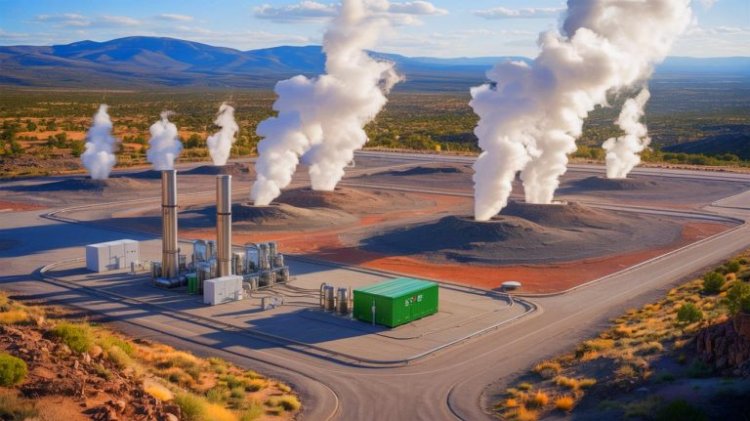
Meta has partnered with U.S. startup Sage Geosystems to develop a 150-megawatt geothermal power plant, set to be operational by 2027. Using advanced drilling techniques, the project aims to power Meta’s data centers with clean, baseload energy, addressing the rising electricity demand from AI and supporting U.S. sustainability goals.
The surge in AI-driven data centers has increased electricity demand, with U.S. tech giants seeking clean energy solutions to power their operations. Meta, the parent company of Facebook, announced a collaboration with Houston-based Sage Geosystems in August 2024 to build a 150 MW geothermal power plant east of the Rocky Mountains. The project, expected to be online by 2027, will supply emissions-free electricity to Meta’s expanding data center network, equivalent to powering 70,000 homes.
Sage Geosystems employs enhanced geothermal systems (EGS), adapting fracking and horizontal drilling techniques from the oil and gas industry. The process involves drilling deep wells into hot, impermeable rock, typically 8,000 feet deep, and injecting water under high pressure to create fractures. These fractures form an underground radiator, heating water to produce steam that drives turbines. The site’s geology, with hot rocks at shallow depths, enables efficient heat extraction, reaching temperatures of 380°F (193°C).
The project builds on Sage’s expertise in geothermal innovation. In 2023, Sage tested an “earthen battery” in Texas, storing excess clean energy by pumping water underground to build pressure, which can be released to generate electricity. The 3 MW Christine, Texas, installation demonstrated the potential for geothermal storage, complementing intermittent renewables like solar and wind. Sage’s approach uses existing oil-field rigs, enabling rapid deployment across regions with hot crust, potentially covering 70% of the U.S.
Meta’s investment aligns with its goal of a zero-carbon economy, having secured over 12,000 MW in sustainable energy projects globally. The geothermal plant supports the Biden administration’s push for tech companies to invest in clean power, addressing a projected doubling of U.S. electricity demand by 2030, driven by AI, electric vehicles, and manufacturing. Geothermal energy, providing constant baseload power, complements India’s renewable mix, where wind and solar dominate but require storage for stability.
The U.S. has prioritized EGS since 2015, with the Department of Energy’s Utah FORGE lab receiving $220 million to advance drilling techniques. Fervo Energy, another EGS pioneer, operates a 3.5 MW plant in Nevada, powering Google’s facilities, and reduced drilling costs by 70% at its 400 MW Cape Station project in Utah. Sage’s project with Meta aims to replicate these cost reductions, targeting $80 per megawatt-hour by 2027, competitive with grid prices.
Challenges include reservoir sustainability, as biofilms and mineral scaling can reduce permeability over time, impacting output. Seismic risks, as seen in a 2017 South Korea EGS project that triggered an earthquake, require careful management. Sage and Meta are working with the U.S. Geological Survey to monitor seismicity and employ horizontal drilling to distribute pressure, minimizing earthquake risks. Innovations like sealed down-hole radiators and supercritical water, which doubles energy output, could enhance efficiency.
India, with its 500 GW non-fossil fuel target by 2030, could adopt similar EGS technologies. The country’s geothermal potential, estimated at 10 GW, remains untapped due to high drilling costs and limited hot springs. Pilot projects in Ladakh and Gujarat, supported by the Ministry of New and Renewable Energy, explore shallow geothermal, but deep EGS could unlock baseload power in regions like the Deccan Traps. Partnerships with U.S. startups like Sage could accelerate India’s geothermal development, reducing coal reliance.
The project’s environmental footprint is minimal, producing no carbon emissions or radioactive waste. Hybrid plants, repurposing coal infrastructure with geothermal heat exchangers, could further decarbonize grids. However, high upfront costs and investor risk require government incentives, like Germany’s €252 per megawatt feed-in tariff for EGS. The U.S. Inflation Reduction Act’s tax credits for geothermal support Meta’s project, but sustained funding is needed for scale.
Conclusion
Meta’s 150 MW geothermal project with Sage Geosystems marks a significant step in powering AI-driven data centers with clean energy. By leveraging EGS, the initiative supports U.S. and global decarbonization goals. India could explore similar technologies to diversify its renewable mix, but cost and seismic challenges must be addressed for widespread adoption.
Source: Sustainability Times
What's Your Reaction?