Indian Airlines Face ₹18,000 Crore Carbon Offset Cost by 2035
Indian airlines may face up to ₹18,000 crore in carbon offset costs by 2035 under CORSIA. A TERI report urges action on emissions strategy, sustainable aviation fuel, and domestic trading systems to avoid economic strain.
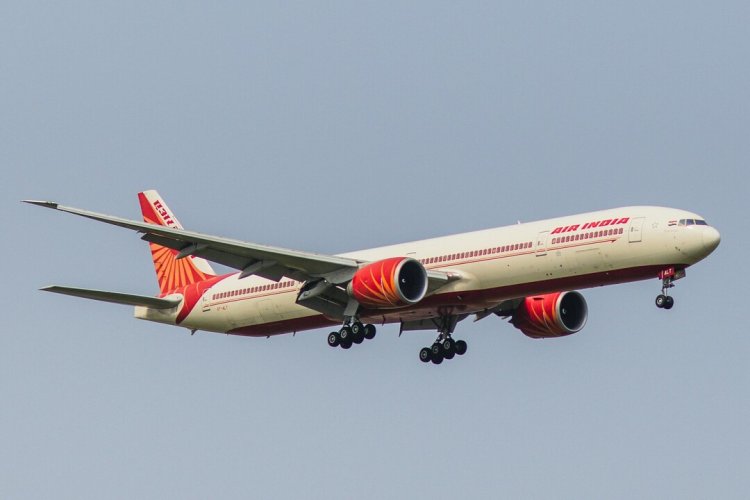
Indian airlines may face up to ₹18,000 crore (approximately $2.2 billion) in carbon offset costs between 2027 and 2035 under the international CORSIA scheme, according to a new report by The Energy and Resources Institute (TERI). The global Carbon Offsetting and Reduction Scheme for International Aviation (CORSIA), implemented by the International Civil Aviation Organization (ICAO), aims to cap net carbon emissions from international flights at 2019 levels. Airlines must offset emissions growth beyond this baseline by purchasing carbon credits from approved markets.
TERI’s analysis reveals that, assuming a 5 percent annual increase in emissions, Indian carriers could be required to spend between ₹1,998 crore and ₹10,018 crore depending on carbon credit prices ranging from $10 to $50 per tonne. If growth accelerates to 8 percent, the total cost could rise to ₹18,009 crore. Major carriers like Air India, Indigo, and SpiceJet are expected to contribute significantly, with Air India potentially emitting 75.9 million tonnes of CO₂ during this period. Indigo and SpiceJet could account for 10 million tonnes and 5.1 million tonnes respectively.
Despite India's relatively low share of global international aviation emissions—just 1.2 percent in 2018 compared to 7 percent from the United States and 4 percent from China—Indian carriers may be disproportionately impacted by the offset cost structure, which is based on both sectoral and individual airline growth. The report suggests that the current scheme does not fully consider historical emissions responsibility or differences in development stages between countries.
To reduce future financial risks, TERI recommends that India enhance its domestic emissions trading systems and urgently scale up the production of sustainable aviation fuel (SAF). The country consumed over 8.3 million tonnes of aviation turbine fuel in 2019 but has minimal SAF production capacity. Initiatives such as Perform, Achieve and Trade (PAT) and Renewable Energy Certificates (REC) could be adapted to support airline offset needs. Development of SAF using domestic feedstocks like jatropha and agricultural residue could also help reduce reliance on carbon credits.
The COVID-19 pandemic, which significantly reduced aviation demand, led ICAO to revise the CORSIA baseline to 2019-only levels instead of the original 2019–2020 average. While this revision temporarily reduces the number of offsets airlines will need to purchase, the overall financial recovery of the aviation sector remains fragile. India's aviation industry reportedly lost ₹21,000 crore in FY2021. During the pandemic, Air India experienced a one-third drop in passenger traffic, while Indigo and SpiceJet saw nearly 50 percent reductions in domestic operations.
To avoid long-term economic strain and maintain global competitiveness, the report calls for India to finalise a national strategy for CORSIA compliance by 2025. This strategy should focus on a balanced approach that ensures environmental responsibility without undermining the international expansion of Indian carriers. Integrating sustainable practices into aviation now could protect the sector from high-carbon penalties and support India's broader climate goals.
Source & Credit:
The Energy and Resources Institute (TERI) Report | Reported by Nirmal Menon | Published June 13, 2025
What's Your Reaction?