India must diversify its water sources through wastewater reuse and atmospheric water harvesting as declining rainfall and groundwater make dependence on the monsoon increasingly unsustainable
Year after year, we go through the same cycle with drought and water shortages. In April, the stories start appearing in the media: i.e., water shortages, no water in wells or boreholes, long lines for tankers. By June, the monsoon arrives to relieve this drought, and we forget that it happened.
This cycle cannot continue, and it will not. The World Economic Forum predicts that India, with almost 18% of the world's population, has only about 4% of the world's fresh water and that if we do nothing to change this situation, by 2030 we will have double the amount of water needed to meet our demands. The two pillars supporting our water supply—seasonal rainfall and groundwater—are both in decline.
Looking at the statistics, we see that, as of 2021, per capita availability of water in India is 1,486 cubic metres per year, and by 2031, it will drop to 1,367 cubic metres per year. This is below the 1,700 cubic metre per year threshold. There are already over 1,000 administrative areas classified as over-exploited with regard to ground-water extraction. In 2025, the Central Ground Water Board will release its latest report, which will classify one-quarter of India's 6,762 groundwater basins located in states such as Punjab, Haryana, Rajasthan, Karnataka, Delhi and Tamil Nadu as over-exploited, critical, or semi-critical.
A major problem exists at a structural and cyclical level; the erratic nature of monsoon seasons now results in longer periods of drought followed by more severe rains resulting in altered river flows and reduced aquifer replenishment potential. When there is volatility in the water supply itself, continuing to build additional pipeline systems from the same strained source will only compound reliance on the same water supply. In fact, urban distribution losses are still significant, with 40-50% of piped water never being delivered to customers due to leakages and inefficiencies.
To resolve this problem, we need to diversify our sources for urban water supply: No single source of water can forfill the cities' water needs; therefore cities need to use layers of multiple independent supply sources.
An important component of this diversification is the circular reuse of existing water. India only treats approximately 28% of the sewage produced in its urban areas while the urban areas produce over 72,000 million litres of wastewater each day. Recovering even a small percentage of this volume through a decentralized treatment process would significantly relieve some of the pressure that we place on freshwater supplies. Several state level government policies already have created reuse targets, specifically the states of Odisha and Uttar Pradesh.
Secondly, extracting humidity from ambient air: There is currently an estimated 12,900 billion litres of water in the atmosphere at any given time (many times more than the total volume of all rivers around the world). The resources in the atmosphere get replenished approximately every 8–10 days.
Systems today for harvesting atmospheric water generate potable water through controlled condensation of air moisture, independent of groundwater tables, surface water sources, or other municipal infrastructure (for example, through filtration systems). As such, as institutional and individual entities create resilient approaches to obtaining water supplies, this decentralised solution will be a significant complement to existing utility infrastructure—though the extent of success of harvesting will depend upon local relative humidity. There are parts of the country where the average relative humidity drops below 50% for significant periods during the course of the year, yielding far less moisture and requiring appropriately sized systems.
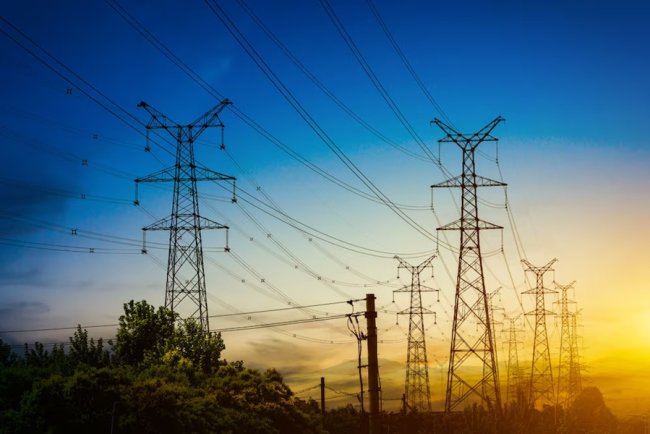
The objective is not to declare any one technology winner; it is to eliminate any thought of a single-source paradigm altogether. The energy sector has already progressed similarly by decentralising energy generation by utilising solar energy, wind energy and battery storage technology. The water sector must now do the same.
The monsoon continues to arrive in June each year; however, cities can no longer organise their continued existence around the monsoon's arrival. A resilient water supply requires the exploration and use of multiple sources, at multiple scales of development, so that supply will no longer depend on sky-based sources alone.
Views expressed are personal
What's Your Reaction?