Amway India has launched the second phase of its 'Power of 5' nutrition programme, targeting 2,500 students across 10 government schools in South Delhi with nutrition education, health monitoring and community outreach.
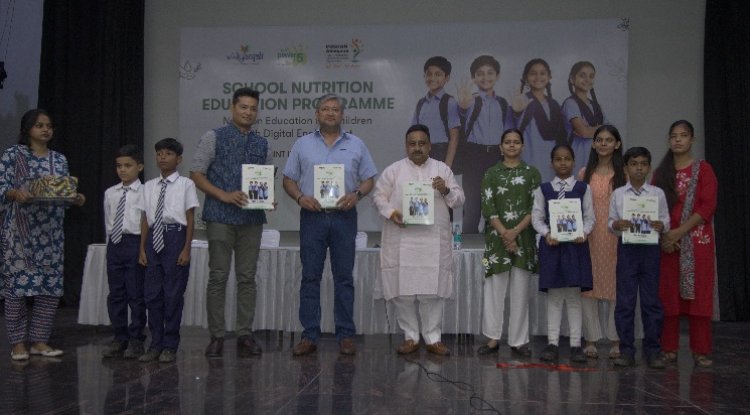
Amway India, Thursday, said that it has launched the second phase of its school nutrition programme, Power of 5, extending it to ten government and government-aided schools in South Delhi over the coming financial year. The first phase reached 40,000 people, including 10,000 schoolchildren directly. This round is smaller in scale — about 15,000 people, including roughly 2,500 students from Grades 1 to 8 — but the company is framing it as a deepening of the model rather than just an expansion in numbers.
The programme was inaugurated at Shaheed Hemu Kalani Sarvodaya Bal Vidyalaya in Lajpat Nagar, where students planted nutrition-themed kitchen gardens and herb pots, ran through sports drills, and sat down to a meal put together for the occasion. Manisha Taneja, State Nodal Officer for Education and Literacy with the Delhi government, attended as guest of honour, alongside Amway India's Managing Director Rajneesh Chopra and ChildFund India's Executive Director Anand Vishwakarma — ChildFund is the implementing partner for this phase, having taken over from the Nourishing Schools Foundation, which ran Phase I.
Chopra pointed to the behavioural shifts the company says it tracked in Phase I as the reason for pressing ahead. "By reaching over 40,000 individuals, including 10,000 children directly, we witnessed meaningful behavioural change — from children making healthier food choices and adopting better hygiene practices to embracing more nutritious lifestyles," he said, adding that the new phase is meant to push nutrition education "beyond classrooms to families and communities."
Praveen Khandelwal, the Lok Sabha MP from Chandni Chowk, framed the programme as one piece of a larger, government-led push on child nutrition through schemes like Poshan Abhiyaan, while making the point that the government can't carry that work alone. "It's a collective duty that calls for active participation from citizens, communities, and responsible corporate institutions alike," he said, calling out Amway India's programme specifically as an example of that kind of contribution.
Anand Vishwakarma of ChildFund India, which will run the programme on the ground this phase, said the organisation's focus would be on habits that outlast the intervention itself. "Nutrition education during school years is foundational to lifelong health outcomes," he said. "Through this program, we will work closely with children, teachers, and communities to nurture habits that last a lifetime."
The programme itself runs on four tracks over the year: classroom nutrition education for children, training for teachers (who take on the role of "Nutrition Champions" and are expected to work concepts into storytelling and games rather than teach them as a standalone subject), a digital learning platform paired with health-monitoring kiosks, and outreach to parents and the broader school community. There's also a peer-to-peer layer — a Nutrition Ambassador scheme where students themselves carry the material back to their classmates.
Amway says it isn't just running the programme and hoping for the best. Baseline and endline assessments will track nutrition knowledge, dietary habits, BMI and other health indicators, and the stated target is for at least 70% of participating students to show a 30% improvement in nutrition knowledge and status. Whether that holds up will presumably be visible when the endline data comes in next year.
The evidence Amway is leaning on comes from an evaluation by the Nourishing Schools Foundation, which ran Phase I across Delhi and Chennai in 2025–26. According to that assessment: the share of children with a normal BMI rose 11 percentage points in Delhi and 8 in Chennai; underweight and overweight/obesity prevalence each fell by close to 5%; and handwashing with soap rose sharply — 31 points in Delhi, 38 in Chennai. The report also noted a drop in processed food intake, and found that 80–100% of surveyed students wanted the programme to continue.
Power of 5 is part of a broader set of CSR programmes Amway India runs, which the company says have reached 1.9 million people over its 28 years in India — including 840,000 people, more than 141,000 of them children, through the nutrition programme alone. The company also runs a livelihood skills initiative for women across six states and operates four telemedicine centres in Tamil Nadu's Dindigul district. It has picked up CSR recognition over the years, including the FICCI CSR Award, the Golden Peacock CSR Award and four consecutive CSR Times Awards since 2018.
The programme is pitched as contributing to two of the UN's Sustainable Development Goals — Zero Hunger and Good Health and Well-being — and to sit alongside government efforts like Poshan Abhiyaan and the School Health & Wellness Programme under Ayushman Bharat. Whether the Delhi rollout produces results comparable to Phase I's, across a different set of schools and a smaller cohort, is the thing worth watching once the endline numbers come in.
What's Your Reaction?