Russia’s Floating Nuclear Power Plant Saves 300,000 Tonne CO₂ Annually
Since its inception in 2020, the plant has generated more than 1 billion kilowatt-hours (kWh) of electricity
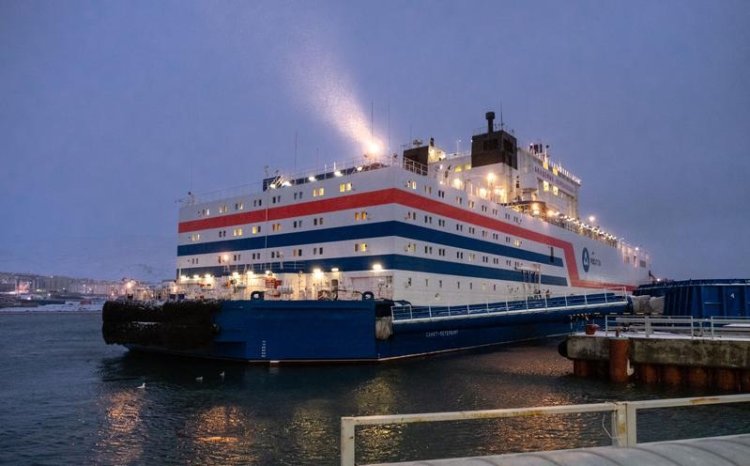
Five years ago, Russia set up a Floating Nuclear Power Plant (FNPP) in located in the Pevek region of Chukotka Autonomous District to generate energy. Since then, the plant has been producing zero-emission nuclear energy.
Since its inception in 2020, the FNPP has generated more than 1 billion kWh of electricity. Nowadays, the plant accounts for over 60% of total energy production in the Chaun-Bilibino hub. Moreover, the FNPP continues to increase its output each year - demonstrating its ability to meet the region's energy demands, even after the scheduled decommissioning of the Bilibino Nuclear Power Plant at the end of 2025.
The FNPP is powered by two KLT-40S reactor units - similar to those used in nuclear icebreakers. Unlike traditional land-based nuclear power plants, which partially refuel every 12 to 18 months, the FNPP undergoes a full core refueling every few years, replacing all spent fuel at once. The first full fuel replacement was successfully completed on the starboard-side reactor in 2023; the second, on the port-side reactor, followed in 2024.
Andrey Zaslavsky, Chief Engineer of the FNPP, said: "FNPP is a symbol of Russia's leadership in advanced technological solutions - bringing power and heat to areas where other sources are either inaccessible or economically impractical. Over the past five years, we've successfully operated in the extreme conditions of the Far North, performing unique maintenance at our mooring site and steadily increasing energy production. Starting in 2026, after the Bilibino plant shuts down, FNPP will become the main supplier of heat and electricity for enterprises across western Chukotka. We're also deeply engaged in the region's social development. This year, Pevek will see the opening of a new sports and recreation center, and construction will begin on an indoor ice rink."
This plant was developed by Russian scientists, and the one-of-a-kind project has become a reliable source of uninterrupted heat and electricity for the Chaun-Bilibino energy hub. (Note: This is an energy district isolated from Russia's Unified Energy System and other power hubs in Chukotka. It serves western Chukotka and the village of Chersky in Yakutia.)
The development of small modular nuclear power plants (SNPPs) remains a key strategic priority for the future. They open up fundamentally new opportunities for delivering energy to hard-to-reach, Arctic, and remote areas, as well as to industrial clusters with low but stable power demand. Mobile, autonomous, and rapidly deployable solutions have already proven their effectiveness - a vivid example being the Akademik Lomonosov floating nuclear power plant in the Chukotka Autonomous District, which operates successfully under some of the harshest climate conditions on Earth.
What's Your Reaction?