She speaks about how the company is working toward that objective
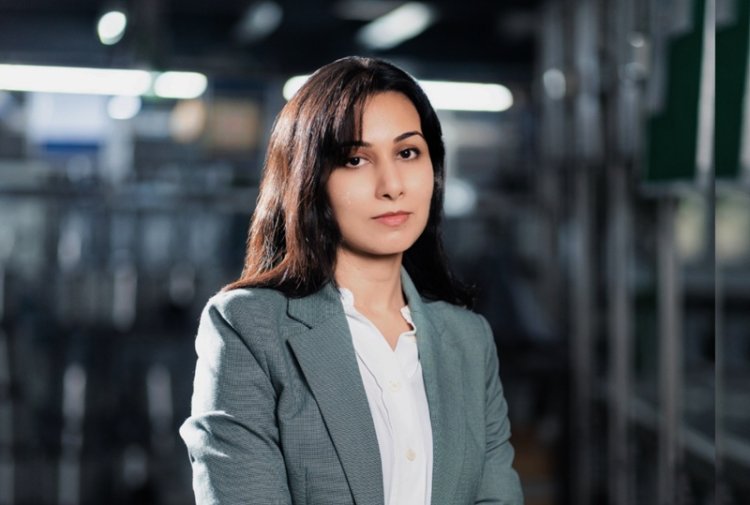
The reason Neha Juneja started IndiaP2P was simple: to get more capital into the hands of women so they could start and grow businesses. In an interview with ResponsibleUs, she spoke about how the company is working toward that objective. She emphasised that increasing women’s participation in the economy is one of the strongest levers for growth, as women entering the formal workforce create benefits that extend beyond individual households and contribute to wider social and economic development.
Excerpts:
Your work sits at the intersection of finance, women’s income, and social impact. What was the first gap you noticed that led you to start India P2P?
The story goes back nearly 15 years. Before IndiaP2P, I ran a social enterprise called Greenway Grameen, which made efficient cookstoves to replace traditional mitti ke chulhas. Even today, nearly 50 per cent of Indian households cook primarily on a chulha. Globally, around 2.5 billion people still rely on indoor open fires in various forms. Over the next 10–12 years, this work took me into self-help groups and joint liability groups across rural India, where I began to understand how grassroots financing actually works.
What stood out was the role rural women played in driving change—saving time, increasing household incomes, and managing money with discipline. Data supports this as well. Despite earning less on average and facing gaps in formal economic participation, women are consistently more prudent borrowers. They repay better, which is why, in India, women often have stronger credit scores than men, even with lower incomes.
The second insight was larger: increasing women’s participation in the economy is one of the strongest levers for economic growth. When women enter the formal economy, the impact extends beyond individual households, creating wider social and economic benefits.
IndiaP2P emerged from this understanding. The goal was simple—get more capital into the hands of women so they could start and grow businesses. Banks and NBFCs already exist, so the question was how to do this differently. The answer was to package these loans into a financial product that is easy to participate in, whether for a ₹25,000 individual investor or a large institution. It isn’t risk-free, but it is a strong, well-structured product designed to broaden access to capital where it matters most.
We are innovating other products as well that you can trade it on an exchange etc. You get the same tax advantages as a regular investment, and you can benchmark it properly. Some of these products are rated, so you know what you’re investing in.
From what you have seen, what are the biggest challenges and roadblocks preventing women from being equal players in finance?
We have our own data to support this. India is still a patriarchal country, but women’s ambition is not as inhibited as it is often assumed to be. Rural and urban women alike are ambitious and understand business. With digital connectivity, learning is accessible.
For example, we see handicraft businesses where women study international trends—sometimes something as simple as watching a Nordstrom feed on YouTube—understanding what designs sell, and adapting or exporting inspired products. The ability to learn is not the issue.
The real barriers are structural. Registering a business, navigating official processes, or even basic interactions can be uncomfortable or unsafe for women. This is not a failure on their part. It reflects systems that are not designed with women in mind. As a result, many women still register businesses in their husband’s or a male family member’s name. These practices continue, especially in both rural and urban settings.
The other issue is the persistent bias within financing institutions. If you’ve ever tried taking a large loan—say a home loan, not a credit card, which is easy—you’ll notice that even today, banks or lending institutions often insert a consent requirement from a male family member.
Do you think this calls for policy intervention? We’re discussing these as roadblocks. Should there be specific rules to ensure women can access loans independently?
I don’t think we need a new policy. If you look at the RBI’s policy framework, it is largely neutral. RBI doesn’t mandate these practices. What we see instead is the lender’s mindset—the bank’s or NBFC’s internal policies.
For example, there is a rule that a woman cannot be arrested after 6 pm. That rule exists not to give women any leeway, but because of safety concerns. Using that logic, some banks and NBFCs build in extra conditions when lending to women.
As a business, a lender can create its own policies. A lender can say it will not lend to anyone above the age of 64, and it may have reasons for that. Similarly, these gender-based biases often come in as business policies. But they are damaging—and not just socially, even from a business perspective.
The women we work with are small-scale entrepreneurs, but not informal in the way people assume. To give you hard data, the median age of our borrowers is around 40. They are not very young. Most have been running their businesses for six to seven years. These are established enterprises, yet they remain starved of credit.
There are two key reasons for this, beyond the fact that they are women. First, many of these businesses are not formally registered. Very few have GST registration, largely because the ₹20 lakh threshold excludes most Indian businesses. A large number of nano and micro MSMEs fall into this category.
Second, income assessment is difficult. When you apply for a loan, a bank looks at whether your income can cover the EMI. If your EMI is ₹35,000 a month, they expect to see a monthly income of ₹60,000–70,000. For salaried borrowers, this is easy to verify—bank statements, Form 16, and other documents make income visible.
That visibility does not exist for this group. On top of that, their businesses are seasonal. Very few businesses have steady revenue throughout the year. Income fluctuates, whether it’s tailoring, handicrafts, or even something like wedding-related work. This seasonality makes traditional credit assessment models poorly suited to them.
We have some wedding decoration businesses. During the wedding season, they are extremely busy, and then for some months, they have practically no income. So we have to factor all of that in.
To do this, you need a very specific lending process. A bank that does corporate lending, credit cards, and multiple other products cannot easily design—or cost-effectively run—a process to assess this borrower category. That is where specialised lenders are required.
We cannot do credit cards or corporate loans.Regulations do not permit us to. But we do have, and are building on, the capability to lend to this specific borrower type.
What is the rate of interest?
The interest rate is on a reducing balance basis and currently ranges between 18% and 24%.
And once they take the loan, what kind of impact do you see on their daily lives or businesses?
I’ll be upfront—we don’t track the business growth of every single borrower. But we do track two types closely.
First, when a new business type comes into our portfolio, we track those borrowers to better understand the business profile. Second, around 20–30% of borrowers return for a top-up loan—sometimes after six months, sometimes after a year or longer—and we track them as well.
I’ll give you a few anecdotal examples of income improvement. We mostly operate in southern and eastern India, which are relatively less patriarchal states and easier to work in.
You’ll see many small cafes selling coffee, idlis, or quick snacks. These are typically small setups. The woman running the stall often spends 12 to 14 hours a day there. She may take a short break during lean afternoon hours, go home, and return later, but overall she is investing long hours.
Many women take small loans—₹60,000 to ₹70,000—to build a simple covered seating area in front or add café-style chairs and tables. Even in small towns, customers prefer a place to sit while having coffee, scrolling on their phones, or chatting.
With this small upgrade, she is able to serve more customers within the same 12–14 hours. It’s a very simple change, but it leads to higher throughput. We see this kind of expansion very often. For the same amount of time spent, her income increases—sometimes by 20% or more—because she is effectively serving almost double the number of customers.
These are very small, very practical improvements.
What does repayment look like? If you lend ₹10 or ₹100, how much do you recover?
We do have defaults. In any lending business, zero defaults are unrealistic. If someone claims zero defaults, they’re either miscalculating or not being honest.
That’s why we clearly tell investors on the platform to expect some defaults in their portfolio. Currently, defaults are around 2%. To minimise the impact, we advise diversification—lending small amounts across many borrowers.
For example, instead of lending ₹50,000 to one borrower, lend ₹500 to 1000 borrowers. Technology makes this easy. But defaults should be anticipated.
Defaults happen for a variety of reasons. Sometimes there is genuine medical stress or a death in the family. There can be climatic factors—cyclones, floods—where someone may lose their house or shop. In such cases, you cannot actively go out and recover from them.
At other times, there is broader economic stress due to downturns. We saw this clearly during COVID. People in urban centres who retained their jobs stayed home and saved money. But for those whose livelihoods were directly impacted, repayments were simply not possible. That is why we introduced a moratorium.
Coming to EquiRize—how do you ensure that financial products centred on gender equity shift power for women and are not just a tick-box exercise?
IndiaP2P and EquiRise are separate because financial products need to be regulated. IndiaP2P is regulated by the RBI, while Equirise is regulated by SEBI.
EquiriRe was started with a colleague, Imran Khan who has worked in the broking business for 20–25 years. He resonated strongly with what IndiaP2P was doing and felt a similar concept could be built within the SEBI-regulated ecosystem. He now leads that effort.
From here, it’s important to look at this first from the investor’s perspective, and then at how gender equity and sustainability are embedded at the core.
IndiaP2P is a peer-to-peer lending product. If you give a loan—for example, a 24-month loan—you receive your money back over those 24 months. If, six months in, you face an emergency and want your money back, there is no way for us to ask borrowers to repay early. The repayments come on a fixed schedule.
Many investors, however, want the flexibility to exit an investment in case of an emergency. This is why instruments like bonds and debentures can work. If you buy a bond, you have the option to sell it, even if that means exiting at a discount. In an emergency, you can still access your money.
To cater to different investor needs, we introduced these structures. The core remains the same—aggregating loans given to rural women or other SDG-aligned businesses. With bonds, however, we also have the flexibility to finance other sustainability-linked areas, such as distributed solar, green bonds, and similar products.
This also helps build awareness that sectors like solar energy, women’s financial inclusion, and electric mobility are sustainability-linked. These sectors also receive regulatory encouragement, which strengthens them as investment opportunities.
For instance, investing in Coal India may still make sense financially today. But coal-based power plants are unlikely to remain favoured ten years from now. It is hard to predict exact timelines, but the direction is clear. In contrast, solar is not something the government will phase out over the next few decades. Similarly, regulators are unlikely to say that too much lending is happening to women and put a stop to it.
These sectors are aligned with long-term economic priorities, which adds a non-financial dimension to the investment as well.
How is investing in IndiaP2P or EquiRize different from investing in a Coal company?
The products are structured like other financial instruments. Just as in the bond market, you can choose to invest in bonds linked to coal processing, or in bonds backed by loans to women entrepreneurs or solar projects. The structure has parity with traditional financial products—the difference lies in the underlying asset and its long-term sustainability alignment.
Both products are rated. In both cases, investors can compare risk and returns and then decide whether they want to invest in a sector they see as more socially or economically positive, or one they are already familiar with. All kinds of investors exist, but not just younger investors—many experienced, older investors also tend to prefer investments where there is an added social or economic benefit alongside returns.
Your model relies heavily on trust between borrowers and lenders. How do you ensure lending remains ethical and fair without putting additional pressure on women borrowers?
This is why a highly specialised lending operation is necessary. We do not believe in using pressure tactics or strong-arm recovery methods. We are a regulated entity, and any complaint from a borrower would invite regulatory action. Ethical conduct is non-negotiable.
From the perspective of a rural woman entrepreneur, access itself is the first challenge. She has very little time because of her work, and the nearest lender is often 20 kilometres away. Travelling that distance is not easy. Simply launching an app offering loans to women would not work, because trust is a major concern—women want to know who they are dealing with and whether the interaction is safe.
Our model works more like a Swiggy or Zomato service. A borrower reaches out to us, and we send an agent to her home or place of work. She knows when the agent is coming and who that person is. The interaction is consultative. The agent reviews the business, understands income patterns, and helps assess what level of EMI the borrower can realistically manage. This approach allows lending to remain fair, transparent, and aligned with the borrower’s actual capacity.
What's Your Reaction?