Oxford Joins £13m Nuclear Graphite Project to Boost UK’s Net Zero Goals
The UK has launched a £13m ENLIGHT project to develop sustainable graphite for nuclear energy, led by Oxford, Manchester, Plymouth, and Loughborough universities. The programme aims to secure domestic graphite supply, recycle radioactive waste, and support net zero goals.
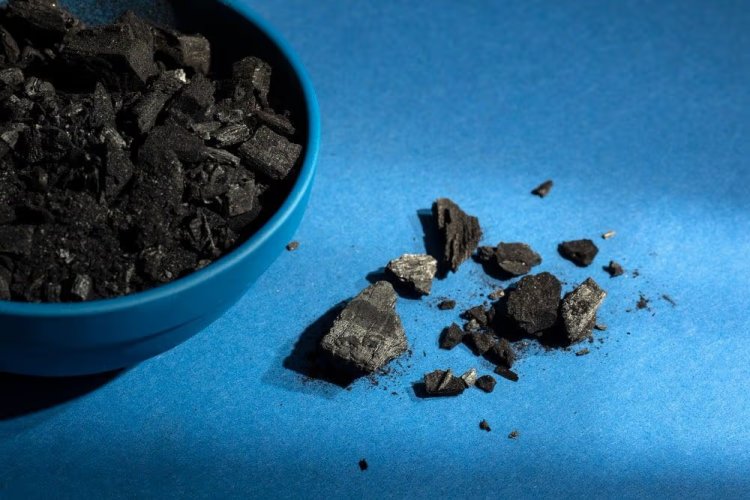
The United Kingdom has begun a new £13 million research programme aimed at changing how we use graphite in nuclear energy, while meeting long term net zero commitments. The ENLIGHT initiative, or Enabling a Lifecycle Approach to Graphite for Advanced Modular Reactors, brings together some of Britain's leading institutions to tackle the challenge of creating a safe and sustainable supply of graphite, and the problem of dealing with radioactive graphite waste of decommissioned generation stations.
The five year project will be led by the University of Manchester and will work with the University of Oxford, the University of Plymouth and Loughborough University. The project will receive funding support, including an £8.2 million grant provided by UK Research and Innovation and £5 million from industry collaborators. This programme aims to address the rising demand for nuclear materials while helping to break the current reliance on imports in the UK as well as helping to eliminate legacy waste which has historically been prohibitive to developments of cleaner nuclear technology.
Graphite is essential in nuclear energy generation. In particular, graphite is of critical importance in the very near future to Advanced Modular Reactors (AMRs), which the government has said they want to see as a core element of the drive to deliver 24GW of nuclear by 2050. Whilst graphite is a key structural component and moderating material in reactors, it is also an expensive and will account for around a third of the overall construction costs. Currently, the UK imports 100% of the graphite it uses, leading to vulnerabilities in cost and medium-to-long-term energy security. Furthermore, decommissioned reactors across the UK have left abundant irradiated graphite waste that will require new solutions in order to recycle, dispose of, and handle.
Two elements of these challenges are being tackled by the ENLIGHT programme. The project aims to take a full lifecycle approach to graphite; designing new resilient graphite materials for AMRs, and identifying sustainable recycling routes for the waste material already produced. The synergies from these two areas of focus means the project will be able to improve efficiency, improve reliance on local graphite, and reduce the environmental impact of nuclear power in the UK.
The University of Oxford is leading one of the three principal strands of research within ENLIGHT. They are going to focus on designing new graphite based materials that will survive the extreme environments in advanced reactors. Given that graphite has such an important role in the safety and efficiency of reactors, the University of Oxford's contribution is considered to be an important one. Professor James Marrow and Associate Professor Dong Liu and their teams will use the latest science based technologies with characterising graphite such as Raman spectroscope, X-ray diffraction, 3D X-ray images and data driven tools like deep learning to investigate how graphite behaves when it is subjected to radiation, heat and mechanical loads. The data will then be used to produce predictive computer models that simulate how graphite materials perform over long reactor lifetimes.
These predictive models will not only provide a basis for the design of new, improved, graphite materials, but they will also help to provide a basis for recycling. Our work at Oxford with ENLIGHT and our industrial partners aims to find a way, through combining simulation and experimentation, that graphite can be reused and repurposed, thus avoiding new imports, saving money longterm. Our work will also help to develop safer and more sustainable ways to handle this very important waste stream, which is spent, irradiated graphite waste, that is generated by the nuclear industry and leads to many of the industry’s most challenging problems.
The government views Advanced Modular Reactors to be a cheap, flexible technology that can also supports renewables on the national grid. These reactors will provide large quantities of round the clock low-carbon energy which are seen as a foundational technology for the future of net zero. It is essential that ways are developed to allow AMRs to be constructed and maintained using sustainable materials, particularly, graphite. Therefore, the development of graphite is not only a technical challenge but also a strategic issue which will have implications for energy security, competitiveness in the industry, and the environmental sustainability or longevity of the reactors.
In addition to the Oxford research strand, the other universities involved will drive the participating institutions towards other associated challenges. For example, Manchester will coordinate the programme and lead on experimental testing of materials. Plymouth and Loughborough will bring their experience in recycling and the chemistry of irradiated graphite. The academic consortium will work alongside their industry partners so that any innovations developed can be used in the nuclear sector.
ENLIGHT's importance goes beyond energy research only. The initiative should help to establish the UK as a pioneer in sustainable nuclear innovation by addressing both supply chain weaknesses and the environmental problem of waste. For both local energy security and worldwide cooperation, this might be beneficial. Nuclear energy is more and more being regarded as a component of the solution as nations all over Europe and beyond strive to decarbonise their economies. Still, acceptance has sometimes been constrained by concerns about waste and materials. The UK hopes to specifically solve these problems by considering graphite's lifespan.
Meeting ambitious climate and energy targets also requires more cooperation across government, academia, and industry, as the programme shows. With major contributions from both government and private industry, the joint funding strategy highlights the mutual desire to discover permanent answers. Should ENLIGHT succeed, it may establish a template for other countries wanting to improve their own nuclear supply networks while minimizing environmental effects.
Although nuclear power is still a contentious topic in some quarters, its possible contribution in providing dependable, low-carbon energy is becoming more and more clear. Though their unpredictable nature means that baseload electricity is also needed to guarantee system stability, renewable energy sources like wind and solar are vital. Advanced nuclear reactors—supported by breakthroughs like those under development in ENLIGHT—could provide this stability while maintaining low emissions.
The work being done by Oxford and its collaborators might go beyond nuclear energy itself as well. Progress in graphite science might find uses in aerospace, energy storage, and sophisticated manufacturing in addition to other industries. Graphite is a flexible substance, and a better grasp of its characteristics may pave the way for fresh applications in technologies assisting the shift to a low-carbon society.
Reaching net zero by 2050 calls not just for new energy sources but also for a refashioning of material sourcing, use, and recycling. One of the most important fields of nuclear technology, ENLIGHT explicitly tackles this problem. Combining cutting-edge science with real-world use, it marks a major step toward creating a greener and more secure energy future.
The expectation is that this project will provide innovations over five years that will enable the UK to generate its own sustainable graphite, decrease dependence on imported materials, and handle effectively the legacy of radioactive waste. Should these objectives be achieved, ENLIGHT could be a pillar of the nation's nuclear innovation plan and a major player in its net zero goals.
Information released by the University of Oxford indicates that the joint initiative highlights the UK's ambition to not only increase nuclear capability but also to do so responsibly and strategically sensible. It underlines the part that research and invention play in defining the road toward net zero, pointing out how much progress depends on cutting-edge materials science as it does on government and infrastructure.
What's Your Reaction?