Amitabh Baxi, Director of Government Relations & Corporate Affairs at McCain Foods, shares how India is shaping up as a key contributor to the company's net zero ambitions and more
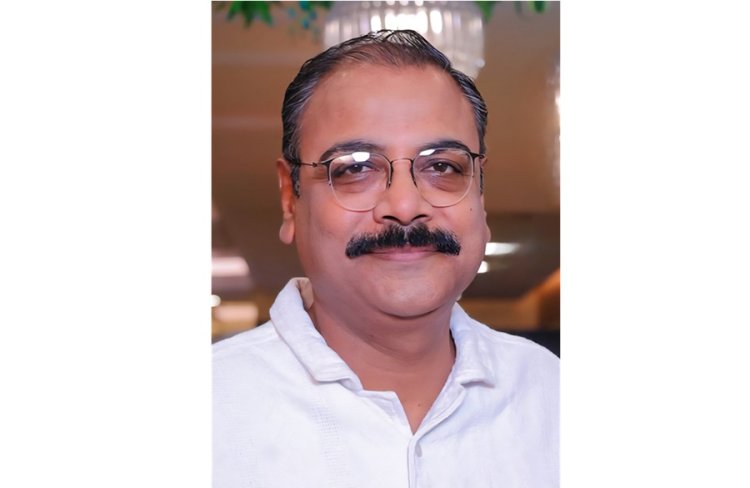
As companies worldwide push toward greener operations, McCain Foods is working to embed sustainability not just in its global strategy but across every link of its supply chain in India. In this conversation, Amitabh Baxi, Director of Government Relations & Corporate Affairs at McCain Foods, shares how India is shaping up as a key contributor to the company's net zero ambitions. With nearly 28% of operations in India already running on renewable energy, Baxi outlines the opportunities, roadblocks, and next steps in their efforts to reach 100% clean energy and align with ESG goals globally.
How does India's sustainability plan align with your global net zero roadmap, ESG objectives, and your efforts to integrate sustainability across all business functions?
India plays a very critical role in aligning with our global net zero roadmap and ESG objectives by integrating sustainability deeply across our operational domains, including procurement, supply chain, manufacturing, and our social responsibility initiatives. Our journey has focused on increasing the share of renewable electricity, which mirrors our global milestones. Currently, about 28% of our operations in India are powered by renewable energy. Moving forward, we aim to increase this percentage not only to meet global standards but also to demonstrate what an Indian company can achieve in renewable energy adoption.
This progress is driven by a combination of infrastructure investment and strategic partnerships with regional renewable providers. Transitioning the remaining 72% is, of course, a challenge - primarily due to the lack of readiness in the grid and the intermittency of renewable sources.
We continue to explore cleaner fuels and energy sources to move toward - while the exact timeline is still uncertain - a future of 100% renewable energy.
Whenever we try to change from existing systems or move out of our comfort zone, there are bound to be challenges. What challenges have shaped this alignment, particularly in achieving 28% renewable energy so far?
We have faced challenges including the readiness of government infrastructure and the current limitations in grid reliability. The scale of our operations and energy needs is massive. A complete shift to renewable energy isn't feasible soon simply because current sources can't meet our demand. Even on-site generation requires large spaces and significant infrastructure-something not always practical.
Moreover, most renewable sources come with limitations. Solar energy, for instance, is unreliable during cloudy or monsoon seasons, which means some dependence on fossil fuels will remain. The goal, however, is to keep reducing that reliance over time.
Challenges vary by region. Some states are proactive-they offer infrastructure support, financial incentives, and streamlined policies. Others pose more hurdles. We work through these differences to strengthen the overall ecosystem and move the needle forward. We stay in constant dialogue with governments across states to maintain this momentum. If you call us trendsetters, I'd agree-that's exactly what we aim to be.
The good news is that more and more governments are recognising and supporting companies like ours that are laying the groundwork for sustainable, clean-energy operations. That's where we are today.
Increasingly, most governments are encouraging, appreciating, and recognizing companies like ours that are building a strong foundation for planet-friendly and clean energy operations. So, that's where I stand now.
How are you planning to address the remaining 72% of our energy usage that still comes from non-renewable sources?
Currently, there are challenges in scaling up clean energy usage due to limited availability. While we encourage governments and energy providers to increase the grid's renewable share, our high energy consumption for storage, supply chain, and plant operations still requires significant power.
We are willing to pay a premium for clean energy to ensure our planet-friendly initiatives genuinely reduce our carbon footprint. As we expand into new regions, the demand for clean energy will grow-not only for our plants but also for transportation and supply chain operations. We also aim to collaborate with third-party suppliers and manufacturers to drive this change.
Our efforts extend beyond McCain's operations. We partner with local recyclers, start-ups, and other stakeholders to close the loop on food packaging, reduce waste, and improve sustainability across the value chain. Leading in sustainability means ensuring responsible practices extend to our partners and peripheral organizations-and that's our goal.
To what extent have Scope 3 emissions been localised in India for tracking? Also, what supply chain constraints or innovations have influenced decarbonization and zero waste?
Scope 3 emissions are a critical metric for us, and we have localised tracking in India by collaborating closely with regional suppliers and logistics partners. One key innovation is our digital traceability tool, which maps emissions across the value chain. This helps us pinpoint where to reduce pollution-whether in transportation, logistics, or third-party operations-and integrate data into actionable insights.
On zero waste, we partner with local recyclers and startups for closed-loop packaging and food valorization. Challenges remain, such as fragmented waste infrastructure and scalability, but hyper-local innovation and supplier capacity building are driving long-term impact.
These efforts extend beyond our operations-we're scaling learnings across the ecosystem to benefit communities and climate.
How do these efforts align with the SDGs or government sustainability missions?
We contribute meaningfully to global water stewardship goals. We run targeted watershed development and water reuse programmes in Madhya Pradesh and Gujarat. Partnering with local NGOs, we implement community-led water replenishment projects.
We work in areas that are truly underdeveloped and backward. When you visit these places, the level of need for water conservation becomes very clear. For example, when we talk about recharging local aquifers or improving irrigation efficiency, we focus on small farms and marginalised farmers for whom these initiatives are critical-even if they may not always recognise their importance.
But to go and make farmers aware of these initiatives-teaching them about regenerative agriculture frameworks, how investing in wastewater recycling can reduce dependency on fresh water, rainwater harvesting, constructing small check dams or boulder blocks-these concepts might seem unrelated to a potato-based company. However, where we truly make a difference is by working in regions that desperately need such interventions. More importantly, these efforts benefit last-mile farmers, for whom water, livelihood, livestock, and community development are critical.
At McCain, we actively invest in wastewater recycling as part of our sustainability plan. We are also advancing circular water use, where most of the water we consume is recycled back into various activities within our operations.
Are you considering aligning with frameworks like BRSR?
We report our ESG progress through the Global Reporting Initiative (GRI) standards. These frameworks help us align with regulatory expectations and ensure transparency with stakeholders. Our sustainability team also provides insights and localized best practices that feed into global ESG governance - making it a two-way dialogue.
While we report independently, we also assist our global governance forums by sharing local insights and best practices. This collaboration benefits both sides, and we're proud to contribute to advancing sustainability governance.
Interviewer: You mentioned digital tools earlier. I also heard about pilots and new material innovations as McCain's next steps toward sustainability. Could you elaborate on any new innovations or projects?
Response: I can share three key initiatives currently underway: First, we have pilots for material innovation focused on developing sustainable packaging that is both high quality and planet-friendly.
Second, we are launching digital agri-tools - AI-powered apps designed for farmers. These apps help monitor soil health, optimize agricultural inputs, and track regenerative farming practices in real time.
The third key area is forging new partnerships. This means engaging with academic institutions and climate tech incubators to co-develop scalable solutions in waste management, energy, and water stewardship. These are the three main pilot steps we are currently pursuing. While much of this work is still in progress, the early results have been very encouraging.
Could you share details on your future plans, specifically your global commitments for 2030 regarding farming practices?
We have achieved our 2025 target of improving water use efficiency by 15 percent. For farming practices, our primary goal is to implement regenerative agriculture across 100% of the potato farms we source from by 2030. Another major farming goal is to reduce our greenhouse gas emissions intensity-that is, emissions per ton-from potato farming, storage, and freight by 25%. These are the key targets we have set for 2030.
You mentioned working with 3,900 farmers across six continents. Could you provide the specific numbers for India? Additionally, regarding farmer training, McCain has delivered over 25,600 hours globally, with 71% of its potato acreage under regenerative agriculture practices. What are the corresponding figures for India in terms of training hours and acreage?
The exact number varies in real-time, but I can say that we currently work with over 1,400 farmers in India. McCain has delivered over 25,600 hours of training to farmer partners globally. Also, 71% of their potato acreage is under regenerative agriculture practices.
After McCain delivered this training to farmers and partners, what changes have you observed? What impact have these trainings had on the farmers' practices and outcomes?
Primarily, farmers have been able to apply these regenerative practices to their farms. While it will take a few years to fully see the benefits-because regenerative agriculture effects are gradual-there have already been positive developments over the past two years. Productivity has increased, and more importantly, farmers' costs have gone down. We expect these cost savings to continue improving.
If I may add, it is quite challenging to quantify these outcomes over just two to three years because the impacts are largely quanlitative and make time to fully manifest.
However, what we have clearly seen are two important outcomes. One is that farmers are starting to receive financial incentives because of adopting these sustainable practices.
The second important outcome relates to climate-resilient crop varieties. The training helps farmers move beyond the traditional knowledge of just Kharif and Rabi crops. For example, they learn about "middle" crops that can be planted between these two main seasons. These could be cash crops or climate-resilient varieties like pulses or small shrubs that are crucial for sustainability.
So, the training targets two main goals: one, improving crop impact and yield; and two, helping farmers access financial incentives linked to sustainable practices.
We have seen significant progress so far, but to provide precise numbers on these outcomes, we would need a longer time frame-probably 4 to 5 years-to fully quantify the results.
Please elaborate on your financial partnerships, particularly with agricultural banks. How do these collaborations support your sustainability initiatives and scale impact for farmers?
Globally we do. But currently, in India, we haven't partnered with any banks or financial institutions yet. We are exploring those options.
Why is there a need for financial partnerships? Since you provide training and practices, why do farmers need loans or financial support?
The need for financial partnerships is mainly to support farmers so that 100% of them can adopt regenerative practices. Partnerships with banks like Rabobank or NatWest help provide farmers access to financing solutions, such as purchasing or leasing high-quality farming equipment.
To start practicing regenerative agriculture, farmers often need specialized equipment, which requires investment. These financing solutions make it easier for farmers to afford or lease the necessary tools and equipment.
To add, it's not just about the equipment. These financial linkages also help farmers access essential inputs like fertilizers, seeds, and other agricultural resources. So, our goal is to ensure farmers have access to both technical knowledge and financial resources needed to successfully implement regenerative farming.
We provide these financial linkages to ensure farmers have access to good financial arrangements. When onboarding farmers, especially in contract farming, it is important to have some uniformity in the agricultural practices we expect on the farms. For example, we want farmers to reach a common level of acceptance of modern agricultural techniques, good agricultural practices, and the use of necessary tools and equipment.
How are the farm of the future and research partnerships helping advance McCain's regenerative agriculture and climate goals?
The farm of the future is about more than just survival or thriving - it's about ensuring that the entire ecosystem thrives. This includes the communities, the farmers (whom we call growers), as well as the logistics and peripheral units, all operating in the most planet-friendly way.
Our concept of the farm of the future involves innovation and capacity building to ensure that every step we take creates a significant positive impact. As we bring diverse flavors and food to consumers, we carry a responsibility to follow all laws and protect the environment for future generations.
We currently have three farms of the future globally, though none yet in India. These farms showcase not only regenerative practices but also the best agricultural methods. They serve as demonstration sites for farmers, employees, and other stakeholders. Many innovations developed in our Burkina Faso farm of the future, for example, are then scaled to other regions.
In what ways are your Indian initiatives addressing climate justice?
First, we actively source from local suppliers. We work directly with close to 1,400 to 1,500 farmers to procure potatoes-and these are large farmlands. When we say "direct," we mean contract farming as well. We support economic resilience and contribute directly to India's Sustainable Development Goals, especially SDG 5 on gender equality and SDG 12 on responsible consumption and production.
What's Your Reaction?