As climate concerns rise, Indian consumers are increasingly adopting sustainable habits in areas such as shopping, energy use, mobility and household consumption, driven by affordability, access and convenience
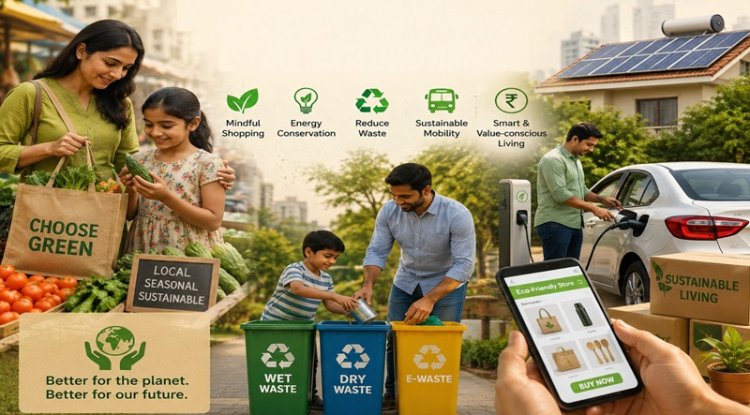
Nearly two in three Indians now believe climate change may already be beyond human control.1 Yet, even as climate anxiety rises, Indian households are not standing still. Consumers are gradually transforming everyday routines surrounding food, mobility, energy consumption, shopping and spending, in cities and smaller towns alike.
Sustainability is gradually shifting from conversation to habit across India, driven by environmental concerns as well as an increasing preference for a smarter and value-conscious living. As these conversations evolve, India is increasingly showing that economic growth and climate action can move forward together. More importantly, consumers today have easier, faster, and more accessible ways to turn that intent into action.
Sustainability is becoming part of everyday decision-making
Sustainability in the country has moved beyond policy conversations and corporate commitments. It's impacting our daily choices that create real impact as well. People today, are more concerned about where products come from and if brands genuinely act responsibly. This change is evident, especially among younger consumers who value durability, transparency, and ethical choices over impulse-driven buying.
We are changing our way of life. More and more households opt for seasonal and local goods, limit plastic waste and purchase at second-hand stores. People also question more about what they eat. This conscious approach is growing and is seen as a smart decision, not a sacrifice. The choices have changed; it’s not simply the planet anymore.
People see sustainability as part of being affordable, good quality, healthy, and convenient. So, products that fit all these needs do better in the market. To illustrate, the initiatives in Andhra Pradesh under the ‘Pradhan Mantri Awas Yojana’ (PMAY) are now pushing energy-efficient appliances to almost 5 lakh households. This reflects how consumers are choosing alternatives that save money on bills, are easy to use, and are green, too. 2
Access and affordability are spurring adoption
For years, sustainable choices have frequently seemed costly, focused on cities, or hard to get to. That distance is fast closing. Affordable cell phones, internet commerce platforms and frictionless payment ecosystems have extended access to greener alternatives much beyond major cities. Consumers in Tier II and Tier III markets are increasingly finding eco-conscious items online, evaluating options more quickly, and making quicker buying decisions.
Simultaneously, living in an environmentally responsible way has become as much a financial decision as it is an environmental one. Low-friction financing selections and flexible digital credit are decreasing the upfront burden of big-ticket items such as rooftop solar and energy-efficient appliances, electric vehicles, making them more financially feasible.
This transition is enabling conscious living go from the aspirational to the practical. People don’t have to choose between economical and eco-friendly anymore. Easier access to financing makes it easier to adopt and implement long-term sustainable decisions.
Easy-to-use digital journeys are speeding up decision-making
Technology is changing the way we look for and evaluate eco-friendly products. It helps us with AI recommendations when we purchase, and it allows us converse more naturally. It helps us to compare goods, check out claims and think about the pros and cons without having to jump from website to website.
Trust has become an important part of this process. People actively look for verified evaluations and transparent supply chain facts before they trust a brand completely. As awareness has expanded there is no place now for shallow sustainability messages. Buyers want proof today, not claims.
Furthermore, easy payments through UPI, integrated checkouts, and digital wallets make eco-friendly purchases quick and smoother. The simpler the journey becomes, the easier it is for consumers to act on intent immediately rather than postponing decisions. Convenience and conscious consumption, once seen as separate priorities, are increasingly beginning to work hand in hand.
Small household actions are creating large-scale impact
India’s sustainability transition will not be driven by policy alone. Real momentum won’t really start with a single big move; it comes from millions of small, consistent household decisions, like you know the quiet stuff. Things such as using LED lights, saving water, sorting trash, taking public transit, and choosing smarter what to buy can feel tiny on their own. Yet once millions of people stick with that same style, the effect adds up in a pretty serious way.
Research has suggested that when more people living in cities build conscious habits, the country can reduce its yearly carbon emissions to a degree, and also strengthen long-term climate readiness. That matches closely with bigger national efforts that are basically trying to get citizens to act as active contributors in making an eco-friendlier future.
The climate-aware family is showing up as a wider shift in consumer behaviour, where mindful living stops being some rare activity or only a high-end lifestyle thing, and becomes a steady, influential force in everyday spending choices, shopping patterns and daily routines. India’s next green growth chapter won’t be shaped only by huge policies or corporate promises, but by millions of people making quicker, wiser, and more intentional selections day after day.
Views expressed are personal
What's Your Reaction?