Nagpur to Host Regional Dialogue on Climate-Resilient Farming in Maharashtra
Nagpur will host a regional policy dialogue on climate-resilient agriculture in Maharashtra on June 30, 2025, focusing on sustainable farming, policy insights, and grassroots innovations, with awards open across eight categories.

The highest-level regional forum on climate-resilient agriculture will be organized in Nagpur on June 30, 2025. The conference will discuss the increasing climatic challenges facing Maharashtra farmers and will serve as a platform for ensuring long-term farming activities in the state.
The forum is under the Sustainability Matters and IndiAgri series and would be organized in collaboration with local stakeholders, GreyMatters Communications, FIJEEHA, and others. The forum will be convening a cross-section of participants including scientists, government representatives, agri-entrepreneurs, subject matter experts, and farmers already practicing climate-smart agriculture on the ground.
Maharashtra has emerged as a pioneering state of India's agricultural economy based on diversity in crops, climatic settings, and farming systems. However, Maharashtra farmers increasingly face uneven rainfall distribution, depleting groundwater, weather uncertainty, soil erosion, and rising input prices. All these underscore the need for regionally appropriate and climate-resilient agrarian solutions.
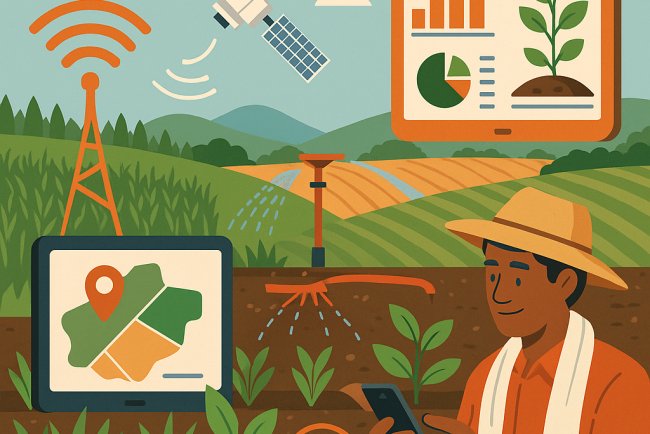
Nagpur event will leverage the insights from earlier editions of Sustainable Agriculture Summit & Awards in Delhi and local policy workshops conducted in Bhopal and Chandigarh. It will leverage Maharashtra's distinctive agro-climatic and socio-economic context and offer region-specific solutions such as watershed management, micro-irrigation, soil health regeneration, farmer producer companies, and technology-based agri-solutions.
Sustainability Awards is one of the feature highlights of the event and can be submitted by June 27, 2025. The awards will seek out and recognize people and institutions seriously working towards sustainable agriculture and conservation of the environment. Under the awards, there are eight awards, namely water conservation, soil health, climate-resilient agriculture, digital excellence, agtech innovations, community initiatives, progressive farming, and integrated agri-models.
The honors will acknowledge innovations at grass-root level and help build an ecosystem for the sharing of knowledge to enable replication of successful models at the state and national levels. With documentation and visibility of best practices and measurable achievements, the programme hopes to inspire a larger group of farmers and agri-stakeholders to embrace sustainable and climate-resilient agriculture.
The second Nagpur meeting would once more provide a multi-stakeholder forum wherein policy recommendations would be crafted both with actual ground realities and scientific inputs in mind. Regional adaptation, capacity development, market access, government policies, adaptation finance under climate, and the role of digital technology in building greater resilience would figure in the deliberations.
With the fresh climate risk to Indian agriculture, the event presents a unique opportunity to connect research, policy, and action on the ground. The discussion will bridge gaps in farmer-institutional linkages and create window to state-wide initiatives that are technology-enabled, locally initiated, and ecologically grounded.
Its cooperative aspect is also a manifestation of an even larger endeavor to foster community-led innovation where the farmer not only is but also a doer of action against climate change. With the vast range of agro-ecological zones in Maharashtra, from the arid zones of Marathwada to the irrigated tracts of western Maharashtra, the result and recommendations established in this discussion have the potential to influence policy and planning at the national and the state levels in the years to come.
Through the integration of sound field-level initiatives and strategic planning, the event will make Maharashtra's agriculture more resilient and pave the way for resilient agri-hubs. Recommendations generated by the event will inform grand policy architectures and development agendas that place central emphasis on climate action, rural livelihoods, and food security.
Source and Credits:
Original work by Sustainability Matters, GreyMatters Communications, and FIJEEHA
What's Your Reaction?