Rain, trees, and soil quietly regulate heat, manage water, and improve air quality—making them essential to keeping cities liveable.
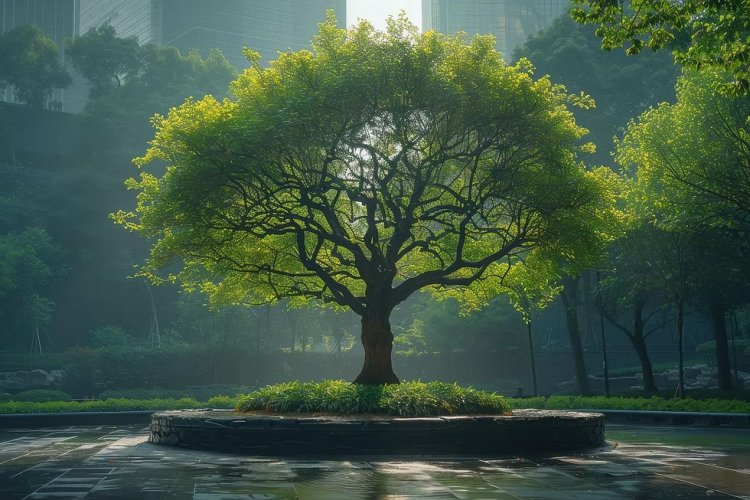
On Earth Day, attention often centres on visible environmental challenges. Less visible, however, are the natural systems that quietly support life in cities every day. Rain, trees, and soil work together to regulate temperature, manage water, and maintain air quality—functions that are becoming critical as urban areas expand.
Cooling Cities by Planting Trees
City environments are usually warmer than other landscapes owing to their dense building and pavement, which trap heat and make the city warmer. This phenomenon is termed the Urban Heat Island Effect. Trees offer some respite from such warming through their cooling effect caused by their shading ability and moisture release via evapotranspiration. Various studies prove that the more trees a particular part of the city has, the cooler its daytime temperature is.
Dealing with Rainfall to Avoid Flooding
Urban areas generate runoff due to their paved areas and lack of vegetation. It puts additional load on sewer systems, leading to increased flooding risk. However, the soil and vegetation absorb rainfall and regulate its flow. Trees can play an important role in mitigating the effects of rainstorms since the water intercepted by the tree canopies gets dispersed gradually.
The Importance of Soil in Urban Systems
In urban settings, soil plays an important role in managing water and sustaining vegetation. It stores water, supports roots, and controls the cooling effect that trees have on their environments. Where the soil is hard and covered with concrete, its capacity to retain water is greatly diminished, making flooding more likely and reducing cooling effects. Thus, it is important to preserve soil integrity.
Improving Air Quality
Plants in cities filter pollution like particles and nitrogen oxides out of the atmosphere. This becomes especially important in urban areas that experience heavy traffic, where pollution is prevalent.
Why These Systems Matter on Earth Day
These ecological systems work together behind-the-scenes to maintain the sustainability of our cities. They only really become noticeable when they are damaged through neglect, soil compaction, and unregulated urban development. On Earth Day, we celebrate not just the need for conservation but also recognize these daily ecological processes.
What's Your Reaction?