Oregon Launches Largest Solar Plus Storage Project in the U.S.
Oregon's Sunstone Solar project will become the largest solar-plus-storage facility in the U.S., combining 1,200 MW of solar with 7,200 MWh of battery capacity. Backed by Pine Gate Renewables, the project includes investment in local farms, job creation, and supports Oregon’s clean energy targets.

Oregon is going forward with the largest solar-plus-storage project in the US, a significant stride toward renewable energy infrastructure. The Sunstone Solar project in Morrow County in north-eastern Oregon will integrate large-scale solar generation and high-capacity battery storage to increase energy reliability and lower carbon emissions.
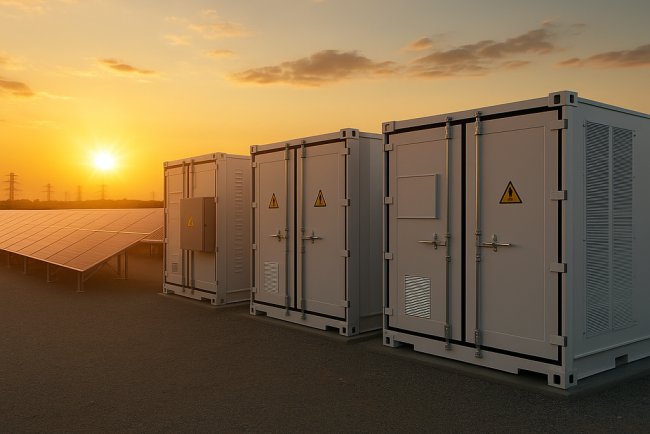
Sunstone Solar project was authorized by state officials in November 2024. It will occupy around 9,500 acres upon its completion and consist of 1,200 megawatts of solar capacity. This will be accompanied by up to 7,200 megawatt-hours of battery storage—sufficient to provide power for around 800,000 homes for a year. Built by Pine Gate Renewables, a company based in North Carolina, the project is part of a wider national shift towards combined clean energy systems that serve generation as well as storage demands.
Construction on the facility will start in 2026. The plant will be vital to ensuring Oregon reaches its clean energy goals. Oregon's two largest electric utilities are mandated by state law to be 100% carbon-free by 2040. The inclusion of such a large solar-plus-storage system will be vital to reaching the target.
The Oregon Solar Plus system also includes a neighborhood program to mitigate potential economic effects on the Morrow County farming economy. Pine Gate Renewables has pledged up to $11 million in investments to sponsor wheat farms neighboring the solar project, a large component of Morrow County's economy. The two-pronged strategy, with energy development offset by agricultural support, seeks to broker environmental development and stability of the local community.
Nationwide, the solar sector is growing exponentially. The US installed 34 gigawatts of utility-scale solar onto the grid in 2024, 74% more than in the prior year. Battery storage capacity also grew nearly to double at 13 gigawatts. These trends signal the rise of energy systems that not only generate renewable electricity but also capture and maximize it.
The scale of solar farms has grown very considerably in the last 10 years. In 2014, the typical size of a solar farm was 10 megawatts. By 2024, it reached 65 megawatts. Battery storage units have also expanded but more quickly, with typical capacities 15 times larger than in 2019. Economies of scale cause these to drop per unit of energy and to improve efficiency within systems.
The Oregon project excels in storage, which has a storage capacity of six hours of energy stored over the four hours or less that industry standard gives. This enables energy made during the day to be stored and used to feed into the grid during nighttime or peak demand. The project will adopt a combination of lithium-ion battery technology and newer technologies like zinc-based energy storage systems, which focus on enhancing long-term performance along with cost reduction.
Apart from environmental benefits, Sunstone Solar project will help in creating employment opportunities during the construction and operational phases. The project is consistent with state objectives to fuel job opportunities in the renewable energy sector and add to the stability of the energy grid.
The project also demonstrates the integration of renewable power with conventional uses of land like agriculture. The economics of local wheat farms are designed to mitigate any effect from the project by keeping farm production in sync with renewable energy production. The strategy can be applied elsewhere as a model for other places to reconcile energy ambitions and regional economic interests.
While big renewable proposals such as this one are well worth the effort, they also have problems. Land use is a major problem, and developers have to deal with local residents and green activists in opposition. In the Oregon Solar Plus proposal, it has been employed to constrain opposition and encourage long-term collaboration by including the local people early on and encouraging local farming.
As the cost of batteries falls—dropping by approximately 20% in 2024—bigger and longer-lasting storage systems become more cost-effective. Such advancements may encourage the incorporation of additional renewable energy sources into the nation's grid. Sophisticated storage will be instrumental in smoothing solar power and offering a reliable source of electricity.
The Oregon Solar Plus system can serve as a template for other solar-plus-storage developments in the future. It is a scalable model for deploying clean energy onto the grid, it serves local economies, and it directly supports climate objectives. As other states and nations are considering doubling their renewable energy capacity, Sunstone Solar projects will be a rich source of lessons on how large-scale systems can be planned and installed successfully.
The convergence of state policy, corporate investment, and community activism has provided favorable grounds for achievement in the project. When finished on schedule, it will be a milestone in the strategy for constructing renewable energy projects in the United States, proving solar-plus-storage as an integral element of national energy policy.
Source:
First published by Mongabay, 21 July 2025. Author: Grant Brown.
What's Your Reaction?