PepsiCo and Cargill have launched a regenerative agriculture initiative across 240,000 acres in Iowa, aiming to improve soil health, reduce emissions, and support local corn farmers with the help of Practical Farmers of Iowa.
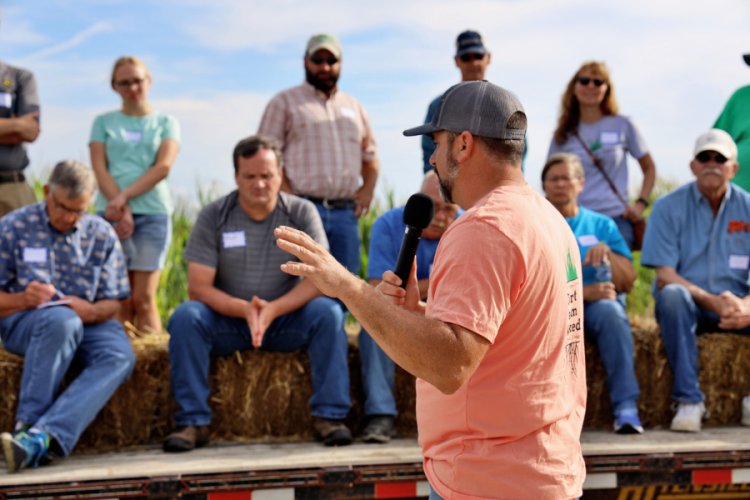
PepsiCo and Cargill have joined to grow regenerative farming practices on about 240,000 acres of Iowa farmland in the US. The effort is designed to promote sustainable practices in their common corn supply base, which Cargill buys from Iowa farmers to make ingredients for PepsiCo food items as well as drinks.
The initiative is being introduced in the local area by Practical Farmers of Iowa (PFI), an agricultural network, which will supply farmers with technical support and funding to make regenerative approaches a reality. Its objective is to improve long-term farm sustainability with the added benefits of addressing climate and productivity issues.
Iowa, the largest US corn-producing state, produces some 15% of the country's corn. By implementing regenerative practices on this scale, the project anticipates better soil health, lower greenhouse gas emissions, and higher crop yields, as well as enhanced resilience to climate-related disruptions.
The work is towards the larger objectives of the two companies. PepsiCo is working to transition 10 million acres of global cropland to regenerative, restorative, or protective agriculture by 2030. Cargill likewise pledged to share regenerative agriculture across 10 million North American acres of cropland during the decade.
This collaborative framework is a business norm of scalable collaboration to aid farmers and enhance agricultural systems from the ground level. It also demonstrates the significance of partnership in achieving tangible sustainability outcomes. The program will provide a working example for consolidating environmental positives and agricultural productivity through supply chain collaboration.
Through direct engagement of the farmers and mobilizing the local organizations, the programme hopes to provide tangible outcomes at the ground level. This involves the provision of established practices and economic incentive to make regenerative agriculture not just viable but also attractive to the producers. Some of these may involve practices like cover crops, tillage reduction, crop rotation, and other practices to enhance soil condition and water holding capacity with reduced carbon footprint.
Implementation of these practices has been observed to be pivotal in land degradation reversal and productivity enhancement. With agriculture facing increasing pressure to produce food for the world with low environmental impact, regenerative practices have attracted global attention. For large corporations such as PepsiCo and Cargill, investment in farm system security also provides long-term business objectives.
The action is taken amidst growing acknowledgment of the role played by big food and agriculture companies in supporting efforts to address climate change. Through this initiative, the companies are looking to not only cut emissions but also improve food security through supporting maintenance of healthy and fertile land.
The partnership will be carefully tracked to monitor results, including increased soil organic matter, biodiversity, water quality, and yield performance. Data gathered from the project are likely to have an impact on future sustainability plans in agriculture.
By focusing their efforts in Iowa, Cargill and PepsiCo are aiming at a leading agriculture center. The state's enormous agricultural land, established network of infrastructure, and position within the nation's corn supply make it the perfect place to show how to effectively scale up regenerative agriculture.
The participation of Practical Farmers of Iowa, which has experience with producers throughout the state, brings a vital local element. Their presence in implementation facilitation is a promise that practices promoted are feasible, field-tested, and appropriate to the local farming environment.
The expansion is a notable milestone in the pursuit of obtaining regenerative agriculture implemented on a norm rather than an exceptional basis in agricultural business. The partnership is a sign of increased private sector participation in sustainability projects that will benefit farmers while minimizing environmental footprint.
As the world's food production systems are increasingly bearing the brunt of climate change, resource constraints, and environmental degradation, such models of cooperation between corporations and local players will become increasingly prevalent. The Iowa project showcases how action in the supply chain can be collective and lead to farm-to-shelf transformation.
Source:
Original report adapted from ESM Magazine – https://www.esmmagazine.com
Published by: Editor | ESM Magazine | July 17, 2025
What's Your Reaction?