Regenerative Agriculture Gains Traction
Budget 2025 boosts regenerative agriculture with ₹5,000 crore to fight climate change, enhance soil health, and ensure food security across rural India.
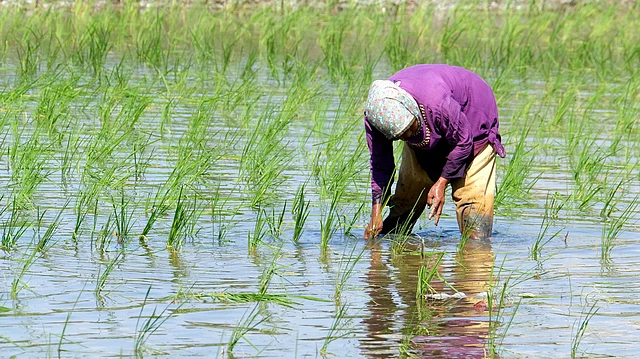
India’s Budget 2025 emphasizes regenerative agriculture to combat climate change and enhance soil health, allocating ₹5,000 crore for sustainable farming. Practices like mulching and crop rotation cut emissions by 10% and boost farmer resilience. With agriculture supporting 42.3% of India’s population, these initiatives align with the 2070 net-zero goal. However, high costs and limited awareness hinder adoption, requiring policy support and training to scale impact across the Indo-Gangetic Plains.
Regenerative agriculture, including the System of Rice Intensification (SRI), improves water efficiency by 25% in kharif seasons and reduces agrochemical use, cutting water pollution. In Punjab, farmers like Gurdeep Singh mulch stubble, saving 4350 MJ/ha in energy and boosting yields by 15%. Budget 2025’s ₹2,600 crore for KUSUM supports solar-powered irrigation, but only 10% of farmers adopt it due to costs. The government’s push for less-flooded paddy management aligns with SDG 13, but implementation lags in 60% of rural areas.
Climate change, with a 0.7°C temperature rise from 1901–2018, threatens India’s food security. Erratic monsoons and heatwaves reduce wheat yields in the Indo-Gangetic Plains by 10%. Regenerative practices mitigate these impacts, restoring soil degradation affecting 30% of farmland. However, a 2022 study notes challenges in controlling water during monsoons, with 40% of farmers struggling to drain excess water. Subsidies cover only 5% of SRI costs, limiting scalability.
Economic benefits include reduced fertilizer costs and higher yields. In Telangana, SRI farmers save ₹10,000 per hectare annually, supporting 60% of rural livelihoods. The sector’s 18.2% GDP contribution could grow with wider adoption, but fragmented regulations and low awareness hinder progress. Budget 2025’s ₹20,000 crore for Surya Ghar Yojana boosts rural solar access, yet grid modernization, needing $5 billion, is underfunded. India’s green bonds, attracting $2 billion yearly, fall short of needs.
Socially, regenerative farming empowers small farmers, who form 80% of India’s agricultural workforce. Women, comprising 30% of farmers, benefit from reduced chemical exposure. However, only 15% of farmers receive training, limiting adoption. Community models, like Kerala’s waste management, could scale awareness, but rural education gaps persist. The 2024 Wayanad floods, displacing thousands, highlight the urgency of climate-resilient practices for vulnerable groups.
Policy challenges include inconsistent subsidies and coal reliance (70% of energy). The National Green Hydrogen Mission, with ₹6,000 crore in 2025, supports decarbonization, but high costs limit scalability. Global cooperation, as seen in India’s G20 presidency, pushes climate finance, but the $100 billion pledge from wealthier nations remains unfulfilled. India’s advocacy for equitable funding, emphasized at COP33, is critical but faces geopolitical resistance.
Environmental benefits are significant, with SRI reducing biodiversity loss and water pollution, aligning with SDGs 6 and 15. In West Bengal, SRI boosts water productivity by 56%, but only 20% of farmers adopt it due to training gaps. The 2025 budget’s focus on climate-smart agriculture supports India’s 45% emissions reduction target by 2030, but coal’s dominance undermines progress. Technologies like green hydrogen could bridge gaps if scaled.
Regenerative agriculture offers a path to sustainable farming in India. Budget 2025’s investments are a step forward, but overcoming cost, awareness, and infrastructure barriers is critical to ensure food security and climate resilience for millions.
Source : Outlook Business
What's Your Reaction?