If the Northeast manages the latter, it won’t just protect its wildlife. It’ll protect a way of life that still remembers what coexistence feels like, writes the author
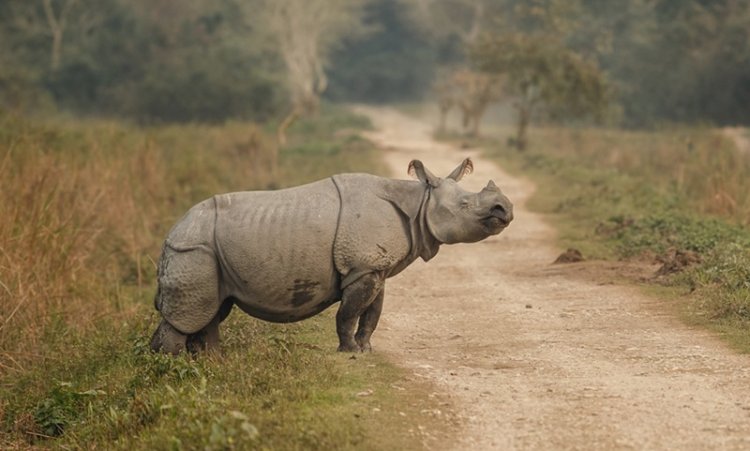
Every September, World Rhino Day comes around, and Kaziranga returns to the headlines. The images are familiar — rhinos grazing across tall, wet grass, the Brahmaputra breathing mist, forest guards standing watch. It’s easy to take comfort in that picture, to believe that something fragile has been saved. But the truth is messier. Saving a species isn’t the same as saving the land that keeps it alive.
Kaziranga’s one-horned rhinoceros has survived near extinction — that much is true. But the real challenge begins where the numbers end. Beyond the census sheets and photo ops lie the forests, rivers, and villages that make up the park’s living ecosystem. Protecting the whole is far harder than protecting its most photogenic part.
In Assam’s cultural imagination, the rhino isn’t just wildlife. It’s Gohona — a jewel, a quiet guardian of the land. Ask anyone from the older generation, and they’ll tell you stories that place the rhino somewhere between myth and memory. Conservation here was never a new concept introduced by law; it was instinctive, a kind of respect handed down.
During the devastating floods of 2019, one tired female rhino was found resting beside a roadside tea stall along National Highway 37. She had swum through floodwaters all night. The video went viral, but what happened off-camera mattered more. Villagers gathered around silently, forming a loose circle so she wouldn’t wander into traffic. Forest staff stood by. No one tried to move her. After a few hours, she got up and walked back into the forest. No applause, no drama — just relief.
That quiet understanding — between people and the wild — still exists, but it’s under strain. Across Assam and Arunachal Pradesh, hoolock gibbons, India’s only apes, are losing their canopy highways. A twenty-metre gap caused by a new road can trap an entire family. You can almost hear the silence where their calls used to echo. Development comes quickly here; ecological foresight rarely keeps up.
Then there’s the Golden Mahseer — once called the Tiger of Himalayan Rivers. Its numbers are falling fast. Dams, overfishing, silted waters — the usual story, but each detail matters when it comes from people who live by the river. When the fish disappear, the river loses its rhythm, and so do the communities that depend on it.
These aren’t isolated incidents. They reveal how tightly the Northeast’s environment is woven into its culture and economy. You can’t separate conservation from people’s daily lives. Indigenous systems — sacred groves, community forests, unwritten rules about what can and can’t be taken — have kept this balance for generations. Ignoring them in favour of outside “frameworks” only weakens what’s already working.
What’s needed now is a new kind of partnership — one that treats forest dwellers, scientists, and officials as equals rather than actors in separate silos. Forest rights have to mean something beyond paperwork. Schools should be teaching children how to read the forest as much as how to write an exam. And if technology must play a role, let it connect satellite data to what locals already see happening on the ground — drying rivers, vanishing birds, unpredictable floods.
Balancing human ambition with nature’s limits will define the region’s future. The economy and the ecology are not rivals — they depend on one another. Lose one, and the other follows.
So the question is this: will conservation remain an annual slogan, dusted off every World Rhino Day? Or will it become a habit, a daily responsibility carried out quietly — the way people once stood guard over that sleeping rhino on the highway?
If the Northeast manages the latter, it won’t just protect its wildlife. It’ll protect a way of life that still remembers what coexistence feels like.
Views are personal
What's Your Reaction?