Robots Reshape Rural Employment in Agriculture and Beyond
Robots are transforming rural employment in agriculture and logistics, boosting efficiency but raising concerns about job displacement and the need for reskilling.
.
Offering both possibilities and problems, robots are changing rural employment by automating tasks in agriculture, logistics, and other industries. Rural areas are transforming labor markets, increasing productivity, and solving workforce shortages as they embrace robotic technology; however, worries about job displacement linger.
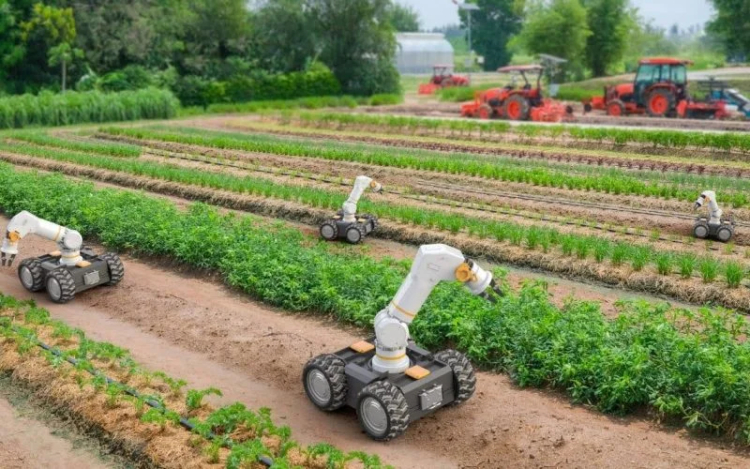
Traditionally dependent on manual labor, rural economies are seeing a technological revolution with the advent of robots. Robots are employed in agriculture for monitoring crops, harvesting, and planting, therefore boosting productivity and lowering dependency on seasonal labor. Autonomous tractors and drones with sensors, for instance, can examine soil quality and maximize irrigation, therefore allowing farmers to generate more yields with less labour. With considerable rural use in rich as well as underdeveloped nations, the world market for agricultural robots surpassed $7 billion in 2024.
Beyond farming, robots are transforming manufacturing and logistics in rural areas. Rural areas' automated warehouses simplify supply chains; robotic arms manage repetitive chores in tiny businesses. These technologies solve labor shortages since rural areas often have difficulty drawing employees because of urban migration. Robots are helping rural enterprises stay competitive in nations like India and China by lowering costs and increasing productivity. For example, robotic milking systems in dairy farming have increased productivity while decreasing labor requirements.
Still, the emergence of robots begs questions regarding job displacement. Many rural employees, especially those with little schooling, struggle to move to jobs requiring technical knowledge. Automated chores like fruit harvesting or packaging endanger low-skill employment, which is a major source of revenue in rural areas. Governments and companies are investing in training initiatives to give workers the skills needed to run and maintain robots in order to solve this problem. Among projects in India are training for rural young in robotics and automation as part of the Digital India campaign.
Significant economic advantages come from robotic adoption. Robots lower operating expenses and enhance product quality, so allowing rural companies to compete in world markets. Still, the change calls for careful planning to balance technological advancement with social consequences. Policies that encourage reskilling and aid displaced workers are vital to guarantee inclusive growth in rural areas.
Conclusion:By increasing productivity and solving labor shortages, robots are transforming rural employment; nevertheless, they also bring risks of job displacement. Proper training and rules let rural areas use these technologies to spur economic expansion while reducing societal difficulties.
Source: WINSSolutions
What's Your Reaction?