India’s government urges EV makers to confirm rare earth self-sufficiency under PM E-DRIVE, facing challenges from China’s export restrictions.
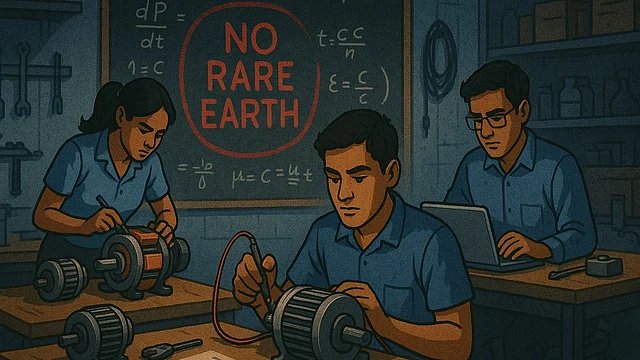
The Indian government is pressing electric two- and three-wheeler manufacturers to confirm self-sufficiency in rare earth magnets under the PM E-DRIVE scheme, amid supply chain concerns. China’s export restrictions on these critical materials have raised challenges for local production. This article explores the localisation push, its implications for the EV industry, and the barriers to achieving self-reliance.
The Ministry of Heavy Industries, through the Automotive Research Association of India (ARAI), issued a directive in July 2025 requiring EV manufacturers to declare sufficient rare earth magnet inventories and compliance with the Phased Manufacturing Programme (PMP). The PMP mandates domestic production of components like traction motors and electronic throttles to qualify for subsidies. Traction motors, requiring neodymium and dysprosium magnets, are central to EV functionality, but India relies heavily on Chinese imports.
China’s April 2025 export ban on raw magnets, while allowing finished motors, has disrupted local assembly. Manufacturers argue that localising magnet fitment is unfeasible without reliable raw material access, prompting requests for temporary import allowances. The government, however, insists on signed declarations ensuring PMP compliance, with penalties for non-compliance, including loss of incentives. Companies must also notify ARAI of any localisation changes.
The PM E-DRIVE scheme aims to boost India’s EV market, projected to reach 5 million units by 2030. Two- and three-wheelers, accounting for 80% of India’s EV sales, are critical to this goal. Subsidies under the scheme, worth ₹10,000 per kWh for two-wheelers, depend on meeting localisation targets. However, the rare earth crunch threatens production, as neodymium costs have risen 20% globally since 2024.
India’s EV localisation push mirrors global trends, as seen in Scotland’s offshore resource disputes. Developing domestic rare earth supply chains is challenging due to limited mining and processing capacity. India’s only significant rare earth mine, in Odisha, produces minimal output, and refining technologies lag behind China’s. The government is investing in recycling and alternative materials, but these are years from commercial scale.
Industry challenges include high costs and technical expertise. Assembling traction motors locally requires advanced facilities, which small manufacturers lack. The directive’s strict compliance rules could exclude smaller players, consolidating the market around giants like Hero Electric and Ola Electric. Collaboration with research bodies like IIT Indore’s new sustainability school could accelerate innovation in alternative materials.
The policy aims to reduce import dependency, aligning with India’s self-reliance goals. However, without addressing supply chain constraints, manufacturers may struggle to meet PMP targets, risking subsidy losses and production delays. A balanced approach, including temporary import flexibility and increased R&D funding, could bridge the gap.
India’s push for EV localisation highlights the tension between self-sufficiency and global supply chain realities. By addressing rare earth constraints and fostering innovation, the country can strengthen its EV ecosystem, supporting sustainable mobility and economic growth.
Source: Outlook Business
What's Your Reaction?