Robots Transform Strawberry Farming at Dyson
Dyson’s futuristic farm in Lincolnshire uses AI and robotics to grow 1.2 million strawberries annually, cutting water and energy use while boosting yields. As climate change disrupts traditional agriculture, such innovations offer a path forward—though high costs may hinder adoption in countries like India. The model blends automation with sustainability for future-ready farming.
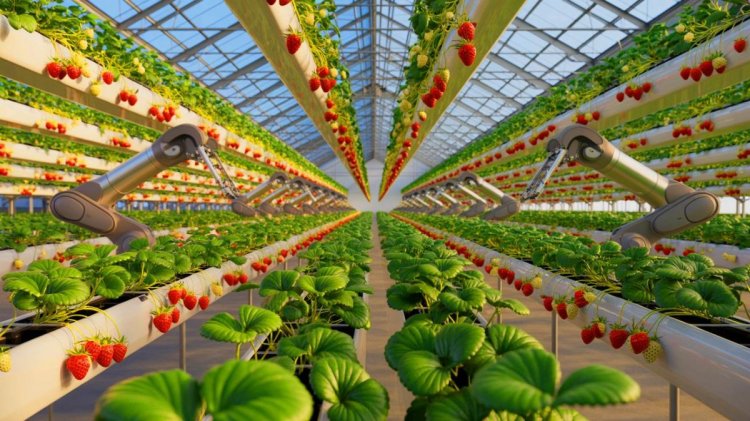
Dyson’s high-tech farm in the UK is using robots to grow 1.2 million strawberries annually, revolutionising agriculture with automation and sustainability. This innovation addresses labour shortages and environmental concerns, offering a model for modern farming.
Located in Lincolnshire, Dyson’s 6-hectare sci-fi-inspired farm employs robotic arms and AI-driven systems to plant, monitor, and harvest strawberries in controlled indoor environments. The facility, operational since 2024, uses 30% less water and 50% less energy than traditional farming, thanks to hydroponics and LED lighting. Robots equipped with sensors optimise growth conditions, boosting yields by 20% compared to conventional methods. The farm produces consistent, high-quality strawberries year-round, reducing reliance on seasonal labour and imports.
The global agricultural sector faces challenges from climate change, with floods and heatwaves reducing yields by 10% in 2023. In India, where extreme weather damaged 600,000 acres of crops during Cyclone Michaung, such technologies could enhance resilience. Dyson’s approach aligns with India’s push for precision farming, supported by ₹1,000 crore under the 2025 Budget for natural farming. However, the high cost of robotic systems, estimated at $5 million for setup, limits adoption in emerging economies like India, where 86% of farmers are smallholders.
Critics argue that automation may displace agricultural workers, with India’s 140 million farm labourers at risk. Posts on X highlight concerns about affordability, though supporters note job creation in tech maintenance. Dyson is exploring partnerships to scale the technology, potentially benefiting India’s 1.5 million-hectare fruit farming sector. Combining robotics with natural farming techniques could further reduce chemical use and emissions.
Dyson’s robotic farm sets a new standard for sustainable agriculture. For India, adapting such innovations could ensure food security and climate resilience, provided costs and accessibility are addressed.
Source: Sustainability Times
What's Your Reaction?