Rome’s Fiumicino Airport becomes Italy’s first to use large-scale second-life EV batteries for energy storage, reducing emissions and boosting renewable energy use in aviation.
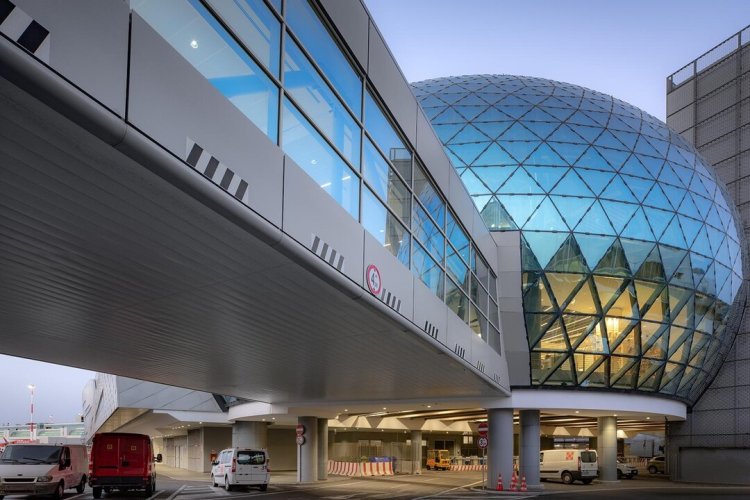
Rome's Fiumicino Airport has inaugurated Italy's first significant energy storage facility constructed from second-life electric vehicle (EV) batteries entirely. It is an important step towards decarbonisation for aviation and energy supply autonomy.
The Pioneer scheme has been developed in partnership with Italian energy company Enel and Aeroporti di Roma (ADR). The system charges the renewable power from the solar power plants at the airport and thus always has green power available despite fluctuating solar input. The Pioneer scheme is Europe's largest of its kind and represents a key part of Fiumicino's 2030 net-zero emissions goal.
762 retired battery packs from Nissan, Mercedes-Benz, and Stellantis cars are used by Pioneer. Such batteries as heterogeneous units were assembled by Loccioni, an Italian system integrator, into a 10-megawatt-hour energy storage system. What this shows is that automotive industry products can be recycled industrially to become part of circular economy practices.
The new system is complemented by the existing Solar Farm of the airport, Europe's biggest photovoltaic self-consumption plant at an airport. This is efficient for storing the renewable electricity and able to utilize it during times when solar contribution is minimal, enhancing overall energy reliability and assisting the local grid.
Decarbonization in Fiumicino has been supported by both private and public interests. The conference had government and industry representation in attendance, a testament to the project's significance on the national scale. Italian energy policy more and more focuses on green infrastructure and innovation, making it a leader in Europe's overall climate goals.
Aside from its sustainability advantage, Pioneer adds to the energy independence of the airport by lessening its dependence on outside sources of energy. This adds value through cost savings and resilience, especially during periods of energy market uncertainty. The project also restores Fiumicino's image as a cutting-edge transportation hub, consistent with its status as one of the world's leading airports.
International co-operation made the Pioneer possible. The European Agency for Climate, Environment and Infrastructure and the German Fraunhofer research institution co-operate, choosing the project for the funding of the Innovation Fund SSC-2020 call. This demonstrates how cross-border co-operation enables low-carbon infrastructure to be made possible.
The project also helps in developing sustainable aircraft designs. Airports use a lot of energy, and initiatives like Pioneer show the way the industry can shift towards cleaner energy systems. Recycling of lithium-ion batteries helps to retain valuable materials for a longer period and minimizes battery environmental effects of disposal.
Fiumicino's plan is one of carbon reduction, but also of digitalisation and efficiency in the longer term. Airport owner ADR has sustainability at the top of its to-do list, with the help of parent group Mundys. Pioneer is supporting wider goals to create intelligent infrastructure and advance low-emission transport solutions.
Through this deployment, Italy joins a number of countries embracing second-life battery packs during the shift to cleaner energy. The project is an iterable model that can be replicated in other manufacturing facilities or airports seeking to cut down on emissions and expand energy storage capacity.
Pioneer's success is evidence of the feasibility of recycling spent materials and using renewable energy to supply stable power with minimal production of greenhouse gases. It is an indication of a transition toward efficient, large-scale implementations of the circular economy into infrastructure.
Fiumicino's battery storage facility needs to prevent emitting 16,000 tonnes of carbon dioxide within the next decade. While other transport hubs reach for environmental goals, Rome has a working model to take lessons from and emulate.
Source & Credits:
2025 Nirmal Menon article, originally published in ESG Times.
What's Your Reaction?