Toxic sludge spread on UK farms carries hidden chemicals like PFAS and microplastics, risking soil and food safety.
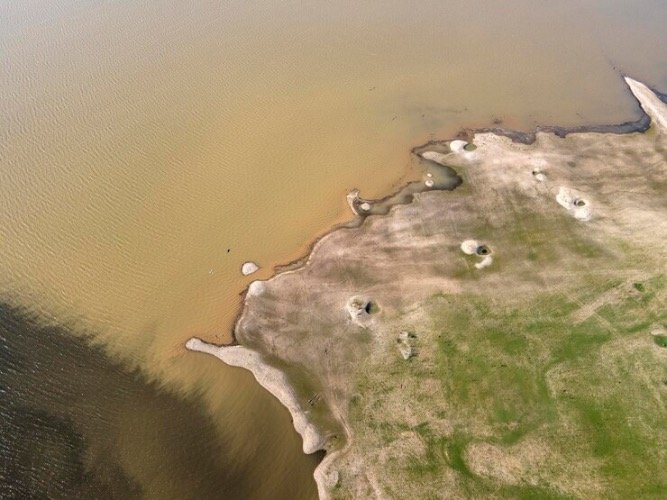
For generations, sewage sludge—a wastewater treatment byproduct—has been applied quietly to Britain's farmland as a nutrient-rich fertiliser. But now scientists and industry experts are sounding the alarm regarding its hidden dangers, including industrial and domestic chemicals like PFAS ("forever chemicals"), medicines, pesticides, endocrine disruptors, and plastic microfibres. These uncontrolled pollutants pose a threat to the long-term health of the soil, food chain, and public health.
Almost 768,000 tonnes of the sludge is recycled every year on 150,000 hectares of English land. Illegal in nations such as Switzerland, in Britain the practice remains allowed with minimal regulation. The authorities claim that the scheme is a surreptitious form of industrial residue disposal in the guise of recycling.
It was compared to a "Trojan horse" by an industry source, warned that poisonous chemicals embedded in sludge are eroding land stability. Existing legislation mandates screening for a limited number of heavy metals, ignoring other more dense noxious substances. Water companies are tempted to dispose of the sludge at bargain prices on farmers by not paying for its proper disposal.
Farmers, threatened with increasing fertiliser costs, are happy to take the sludge as a cheap option. The such circle is a closed loop in which economic gain is made by water companies, farmers, and industry too but at the cost of ignoring environmental and public interests, according to an Environment Agency (EA) officer. Industrial liquid wastes such as landfill leachate are increasingly pumped into wastewater treatment systems that are not designed to handle them, so that sewage is toxic waste.
The EA lacks sufficient resources and powers to track this increasing problem. Utility water companies maintain records for sludge application, but no one is obligated to notify regulators or the public where and when it is applied. Treatment plant digesters are not able to remove chemical contaminants, and sludge is often applied before final treatment.
Scientific reality informs us that sludge contaminants are making their entry into the food chain, with PFAS and pharmaceuticals accumulating in crops and animals. Regulations mandating that food be tested for such chemicals do not exist, and data on consumer safety and food quality are limited.
Physical contaminants in sludge have been highlighted in a 2017 internal EA document as possibly rendering the soil too contaminated to use to grow, but this has not been recommended to farmers. Farmers were actually encouraged in 2022 by the Department for Environment, Food and Rural Affairs (Defra) to spread organic waste, including sludge, as part of a scheme of sustainable farming.
Germany, Belgium, and the Netherlands have stopped or banned application of sludge to agriculture, whereas all Swiss sludge is incinerated and ash set aside for phosphorus recovery. Although expensive, environmental and health concerns outweigh the cost of such shortcuts in these countries.
Meanwhile, UK authorities have moved at glacial speed. The 1989 regulations are still intact, albeit with declining metal levels and inappropriately suggesting safety in the environment. The regulations were due for a root-and-branch review in 2023 but are still hung in the air. Insiders blame the regulators' inertia and tight EA budgets.
Activists maintain that legal channels already exist to define sludge containing toxic substances as waste and control its use accordingly. Yet, the voluntary industry "safe sludge matrix" has been attacked as a PR report intended to safeguard access to the marketplace more than public health.
Martin Lines, director of the Nature Friendly Farming Network, noted that farmers would like to produce safe food and look after the land but are being offered a choice between costly agrochemicals or possibly hazardous sludge because there is no regulation and lack of transparency.
Experts assert that there is a better way which would begin upstream, with industries which use dangerous chemicals. The EU has recently made the manufacturers of pharmaceuticals and cosmetics pay 80% of waste treatment charges. There is no such system operating in the UK.
Water UK argues that spreading bioresources is a controlled, good practice that supports farmers and limits the use of chemical fertilizers. It does admit there are PFAS and microplastics in there but demands proper testing and standards to be from the government. The Environment Agency claims to regulate to not harm the environment, and Defra called for an independent evaluation of the regulations on sludge.
But critics suggest that the system failures, from regulation loopholes to enforcement loopholes and transparency failures, are reducing fields into toxin dumps. Unless there is rapid reform and adequate surveillance, what was billed as a green recycling heritage now endangers public health, food quality, and environmental integrity
What's Your Reaction?