Solar Retreat: Developing Nations Scale Back Clean Energy Investment
Investments in clean-tech solar energy have declined by 20% in developing countries due to high capital costs and regulatory issues, despite global clean energy growth.Solar investments in developing nations fall by 20% due to financial and regulatory hurdles, even as global clean energy funding grows. Initiatives like ISA's SolarX aim to reverse the trend by connecting startups with investors.
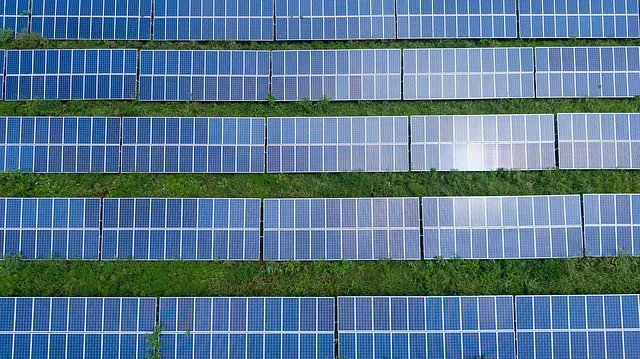
Investments in clean-tech solar energy in developing countries have declined by 20% compared to the previous year, according to recent data shared by the International Solar Alliance (ISA). The downturn comes despite global clean energy investments rising to $1.8 trillion in 2023, largely driven by developed economies and China.
The ISA, in collaboration with Business Mauritius, launched a two-day SolarX Accelerator Programme on April 8 in Moka, Mauritius. The initiative is designed to support the development of solar energy innovations and promote collaboration among governments, regulators, and the private sector in emerging regions. The SolarX Global Accelerator 2025 aims to bridge funding and innovation gaps by connecting startups with investors and offering tailored mentorship and fundraising support.
The solar energy sector in developing regions has faced multiple challenges in recent years. A major barrier has been the high cost of capital, which discourages investment in new renewable energy projects. This concern was highlighted in a 2024 report from the International Energy Agency (IEA), which stated that many developing and emerging economies continue to struggle to attract sufficient investment to accelerate their clean energy transition.
While global clean energy investments have grown by 40% since 2020, this growth is unevenly distributed. Advanced economies and China account for the vast majority of the investments, while other developing regions represent less than 15% of the total. These regions are home to about 65% of the world’s population and contribute to roughly one-third of the global GDP, yet they continue to face financial and regulatory hurdles that inhibit the scaling of renewable energy infrastructure.
The SolarX initiative, first launched in Africa and later expanded to the Asia-Pacific (APAC) region, provides a platform for knowledge transfer and collaboration. It facilitates exchange between entrepreneurs and stakeholders across regions, enabling technology developed in one country to be adapted and applied in another. For example, solar solutions designed for rural areas in one region may find viable applications in similar environments across continents.
This cross-regional collaboration is viewed as crucial in achieving the global transition to renewable energy. However, despite these efforts, capital flow remains insufficient in many emerging markets. The IEA’s report warns that without urgent reforms, including clearer regulatory frameworks and increased international financial support, developing countries may continue to lag behind in the global shift toward clean energy.
To address these issues, experts emphasize the importance of de-risking investments through policy clarity and stable regulatory environments. Investment readiness also requires increased access to technical expertise, financial mechanisms, and institutional support from the international community.
The SolarX Accelerator is one step in this direction. By creating links between private innovators, public agencies, and international investors, it aims to lay the groundwork for broader participation of developing nations in the global clean energy economy. Programmes like these are crucial in balancing global investment flows and ensuring inclusive energy progress.
Unless investment in clean-tech solutions in developing nations increases substantially, the global goal of a just and inclusive energy transition will remain elusive.
Source Credits: International Solar Alliance (ISA)
What's Your Reaction?