South Korea Rainfall Leaves 17 Dead, 11 Still Missing
Severe rainfall across South Korea has caused at least 17 deaths and left 11 missing, with the southern region of Sancheong most affected. Heavy downpours triggered landslides and flooding across rural and urban areas. Gapyeong county also experienced significant damage. Emergency responses continue as climate change is suspected to play a role in increasing weather extremes.
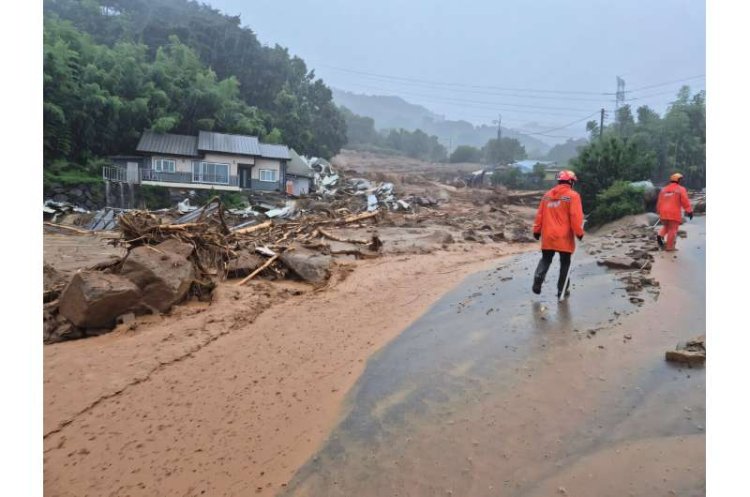
South Korea is struggling to keep at bay the impact of heavy rains that have claimed at least 17 lives and left 11 missing in parts of the nation. The northern and southern parts of the nation have been most affected, with the rain far into its record-breaking streak and resulting in landslides, floods, and huge property and infrastructure destruction.
The hardest-hit area has been Sancheong, a southern county that saw almost 800 millimetres of rain since Wednesday. The rural town of about 33,000 people had 10 dead alone and four missing as of Sunday evening. In most of the cases found, victims were buried under landslides or swept away by torrential water.
Heavy rainfalls in the country's north on early Sunday led to further damages. On Seoul's northern province of Gyeonggi in capital city, Gapyeong county registered rainy weather close to 170 millimetres thick in hours. Two were killed and five are missing there. Among the victims of the landslide were a 70-year-old woman who was killed when her house caved in after a landslide, and a 40-year-old man who drowned on a bridge.
The number of confirmed deaths rose step by step throughout the day as the missing turned up. Official statistics released by the Ministry of the Interior and Safety indicate the five-day rainfall fatality count at 17 as of today. The fatality count encompasses the death rate of the individuals reported missing but later found dead as the search and rescue operations were ongoing in battered areas.
South Korea otherwise would be having monsoon season rains in July and the government otherwise would have been adequately capable of coping with the aftereffects. But this year's rains have been among the strongest on record, particularly if measured in terms of hourly intensities, which are overwhelming the current drainage infrastructure and flood defenses.
The tragedy of last month was similar to one in 2022 when South Korea witnessed a record-high amount of rainfall that led to record-breaking flooding and a minimum of 11 deaths. It was the tragedy which took away three individuals trapped in a semi-basement apartment in Seoul, a lifestyle city life witnessed on world television screens in an Oscar-winning film "Parasite." The authorities then had blamed unusual weather on global warming, and this season's trend appears to be moving along the same path.
Climate experts and scientists continue to blame such weather for climate change, where increasing temperature is one of the key causes of higher frequency and severity of rains. South Korea and countries like it have climatic attributes that are different, though the frequency of natural disasters like floods and landslides is high during transitional periods.
Searches and rescue efforts for alleged missing persons are taking place in the impacted areas, both day and night efforts by local agencies and first responders. Displaced individuals are housed in temporary camps, and damage assessment continues to guide recovery.
The government should also investigate ongoing emergency interventions and infrastructure capacity after the disaster. Increased focus on long-term operations such as enhancing early warning systems, flood-risk area strengthening, and climate-resilient infrastructure investments should be utilized.
This recent incident indicates the susceptibility of urban and rural communities alike to weather extremes and abrupt changes. Future-proofing will include motivations and implications of weather regime extremes since rain patterns become increasingly volatile.
Source: © 2025 AFP
What's Your Reaction?