Scientists warn that the return of El Niño amid already record-high ocean temperatures could intensify extreme weather, threaten marine ecosystems and disrupt agriculture worldwide.
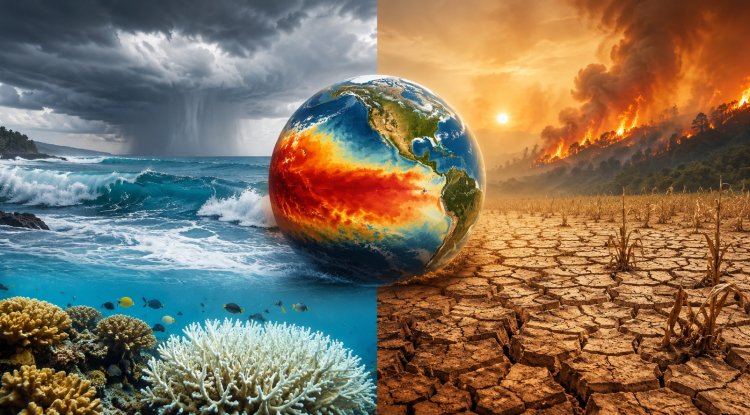
Climate scientists have confirmed that El Niño is back which is one of the most influential natural climate phenomena. This is raising concern among scientists as global temperatures are already high. According to forecasts from the U.S. National Oceanic and Atmospheric Administration (NOAA), it is expected that moderate to strong El Niño phenomenon will occur in the later part of 2026.
El Niño refers to a natural process of climatic variations and forms part of the El Niño Southern Oscillation (ENSO). This phenomenon is experienced whenever the water in the central and eastern equatorial areas of the Pacific Ocean becomes abnormally warm. Despite the small rise in temperature, ranging from 1° and 2°C, the effects can be felt worldwide.
This is worrying since the ocean temperatures were already abnormally high before the start of El Nino. Combined with climate change and El Nino, there will be abnormal incidences of heatwaves, droughts, flooding, and wildfires.
The marine environment is one of the systems that are anticipated to be affected the most by high ocean temperature as this reduces the amount of nutrients required for fish survival. Countries whose fisheries are found in the Pacific Ocean, like Ecuador and Peru, are adversely affected whenever there is an incidence of El Nino since the fish move to cooler areas.
There are increasing threats posed to coral reefs as well. Higher water temperatures cause coral reefs to undergo bleaching, which means that they lose the algae that give them nutrients and their distinct coloration. Extended periods of coral reef bleaching could mean that the corals will die out.
The impacts are not limited to the oceans. Historically, El Niño has been associated with heavier rainfall and flooding in parts of the Americas, while regions such as Australia, Indonesia and parts of South Asia often experience below-normal rainfall and drought conditions. These shifts can affect agricultural productivity, water supplies and food prices worldwide.
India will be observing all these events because the El Niño phenomenon has a tendency to be connected with reduced rainfall during monsoons. Though the connection does not always hold good, a highly powerful El Niño does increase the probability of lower rainfall.
According to climatologists, the strongest events of El Niño seen lately, taking place in 1997-98 and again in 2015-16, caused significant financial damage for human beings owing to weather disturbances, agricultural problems, and damage to ecosystems. Given that the water temperature is currently high, scientists are cautioning people about the possibility of experiencing even greater climatic effects in case an El Niño event happens in the coming year.
As the scientists and officials go on monitoring the situation of the Pacific Ocean, the coming of the El Niño phenomenon is a clear demonstration of the relationship between the climate pattern in the world and the marine environment amidst the global warming.
What's Your Reaction?