A recent study by Toxics Link shows that banned single-use plastic is still widely used across major Indian cities due to weak enforcement, steady supply, and strong consumer demand.
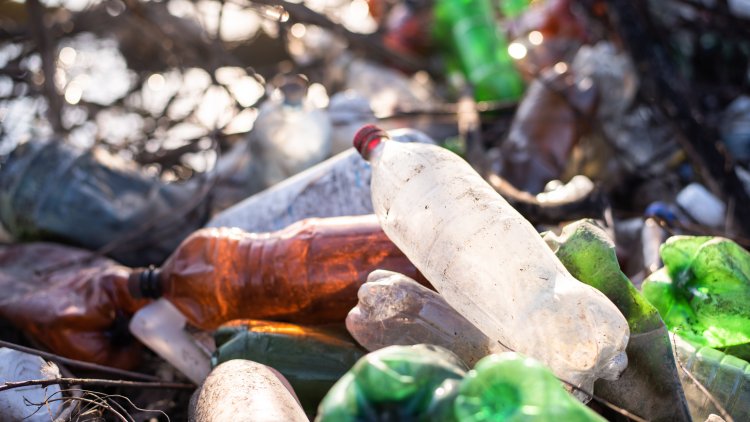
Even after single-use plastic is ban in India for the last three years, it is still being widely used in many places. The recent research revealed that a total of 84% of the areas in these four major cities are still using plastic items that are banned. This indicates that the ban is not being properly implemented.
The research was conducted by a Delhi-based environmental research group named Toxics Link. In their research, they selected 560 locations in Bhubaneswar, Delhi, Guwahati, and Mumbai and conducted a survey between April and August 2025. On March 25, 2026, they released their report and revealed that plastic ban is not being properly enforced.
Current situation across cities
The areas that were covered by the researchers include roadside vendors, juice stalls, markets, food stalls, grocery shops, temples, railway stations, and shopping malls. They also discovered that the prohibited items such as thin plastic bags, plates, cups, straws, and cutlery are readily available in the market. This is especially true in the market where the implementation of the ban is not so rigorous. Out of the total surveyed places in the nine cities, the highest percentage of banned plastic items is found in Bhubaneswar at 89%, followed by Delhi at 86%, Mumbai at 85%, and Guwahati at 76%. Although this is the lowest figure among the surveyed cities, it is also a big number that shows that the ban is not implemented in this region.
There is also a major problem on the supply side, as the banned items are still being manufactured and made available in the wholesale markets. This means that the ban has not only not been implemented at the consumer level but also at the producer level. As the supply of the items has not been cut off, the usage cannot be completely stopped.
Consumer behaviour and market response
Customer behaviour is one of the biggest reasons behind the continued use of plastic. Around 91% of vendors said customers still ask for carry bags, and many expect them for free. Although about 55% of people bring their own bags, a large number still depend on shops. Small vendors, already working with low margins, choose cheaper plastic over expensive alternatives to avoid losing customers.
About 91% of the vendors across the survey sites said customers ask for carry bags. Interactions with vendors also revealed that 55% customers bring their own bags, but many customers still expect vendors to provide free carry bags. Satish Sinha, the associate director of Toxics Link, said that customer preferences partly influence vendors’ reluctance to transition from plastics to alternatives, including paper cups and plates, wooden cutlery, steel utensils, aluminium foil containers, bagasse plates, cloth bags, and thicker reusable plastic bags above 120 microns. “Customers perceive disposable plates and cutlery to be more hygienic than reusable items. Our survey found that this perception, along with the cost advantage of single-use plastics, continues to drive their use among small and local vendors, although the intensity of this preference varies between rural and urban areas,” he said.
The second challenge that has arisen is the perception of the product. Many people think that disposable plastic products are more hygienic than reusable ones, especially in the case of food products. This has kept the demand for plastic products high. However, environmentally friendly products like paper, cloth, or bagasse-based products are not only costly or not readily available, making it even more difficult for people to change.
As the study has highlighted, large shopping malls and retail shops are adhering to the ban more effectively since they are strictly checked and can afford alternatives. However, small vendors are still using plastic products due to cost constraints and lack of strict monitoring.
The report emphasizes the point that stronger action is needed on all levels. This includes more rigorous inspections, effective penalties, effective control of manufacturing, and making the alternatives more affordable and accessible. It also emphasizes the importance of awareness-raising campaigns so that people’s habits can be changed.
The sad truth is that the reason the ban is not working is not because there are no rules in place, but because there is no effective enforcement, there is still supply, and there is still demand. If all of these issues are not fixed simultaneously, things won’t change.
What's Your Reaction?