Study Reveals Unequal Street Tree Distribution Across Canadian Cities
A University of Toronto Mississauga study shows street trees are unequally distributed across 32 Canadian cities, with marginalised neighbourhoods having fewer, smaller trees and lower species diversity. Findings highlight the role of residential instability and population demographics in shaping urban tree coverage.
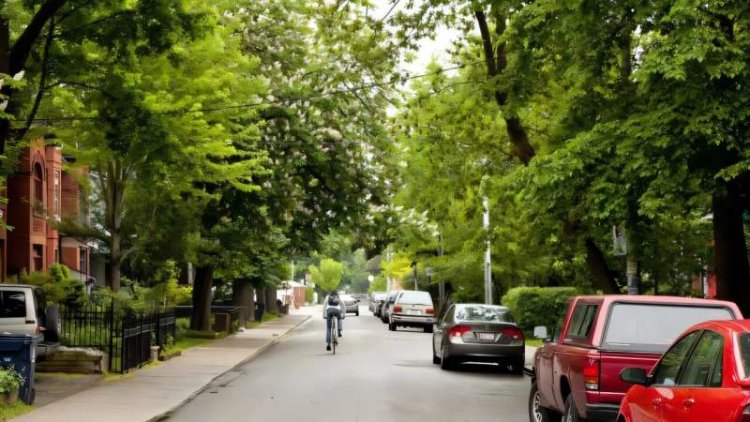
A new University of Toronto Mississauga research has found that street trees are disproportionately distributed across Canada's cities, with the disadvantaged communities having fewer, smaller trees and reduced tree species diversity. The research, published in npj Urban Sustainability, is a national assessment of 32 cities in eight provinces' spatial distribution of trees and documents significant inequalities attributed to demographic and socioeconomic characteristics.
The research contrasted publicly maintained city tree inventories, or street trees that are publicly owned and plotted on a regular basis. It offered a standardized set of data to compare tree cover and diversity between neighborhoods. Forty-nine percent of cities researched were in Ontario.
In distribution measurement, researchers applied the Gini Index, an economic measure for calculating income inequality and, in this case, quantifying urban area tree distribution in terms of how evenly spread they were. Spatial statistical analysis was employed to correlate patterns of tree distribution with different population characteristics, such as density of housing, instability, and proportion of racialised and immigrant populations.
Findings showed that in all 32 cities, street trees were heterogeneously located. There were more and older trees in certain neighborhoods while less fortunate neighborhoods had fewer smaller trees and lower species diversity. Residential instability was one of the most prevalent markers of unequal tree distribution, with neighborhoods having more renters and more moves having reduced access to quality street trees.
Neighbourhoods with more racialised and immigrant concentrations also had lower tree cover and diversity. Although tree density and diameter grew with population density in some, the species diversity declined, indicating that more densely urbanized areas have lower tree species. This trend may undermine the climate change, pest, and pollution resilience of city forests.
The study revealed that each of the cities possessed a specific tree inequality pattern influenced by their respective local development and policy histories. For example, the most evenly distributed trees in Fredericton are due to the fact that it is a small city with regular tree-planting initiatives. The most unevenly distributed trees were found to be in Maple Ridge, British Columbia, perhaps due to extensive urbanization and the desire to plant on park or private land instead of on public street land.
Toronto, with the highest mean tree species diversity among cities studied, continued to have distribution inequalities. Racialized and immigrant-concentrated neighborhoods with higher numbers of people had fewer smaller trees with lower diversity compared to other city neighborhoods. Mississauga also had incongruent patterns, where some marginalized neighborhoods experienced relatively improved tree coverages, revealing how local histories and strategies influence results.
By only considering street trees and excluding parks and private backyard trees, the research targeted a critical sphere of urban planning over which cities have full authority. Urban living is enriched in important ways by street trees through the mitigation of air pollution, lowering of temperatures, and maintenance of mental and physical well-being. But if the benefits are not distributed evenly, they can be made stronger to assist greater public health as well as social disparities.
The writers contend that enhancing street tree cover in impoverished neighborhoods must be central to climate resilience planning. More trees, particularly with species that will thrive under anticipated future climates, not only increase urban greening but also enable cities to resist the new heat, pests, and other environmental pressures.
More generally, this book is part of wider conversations about environmental justice and sustainable urban growth in Canada. It serves as good benchmarks for municipal planners, enabling cities to recognize gaps and formulate fair tree-planting and upkeep programs that enhance public health and climate resiliency.
Source: University of Toronto Mississauga
Credit: npj Urban Sustainability (2025). DOI: 10.1038/s42949-025-00210-2
What's Your Reaction?