Surya Roshni has invested ₹16 crore in captive solar power plants at three manufacturing facilities, adding 4 MW of renewable energy capacity and reducing annual carbon emissions by nearly 4,000 tonnes.
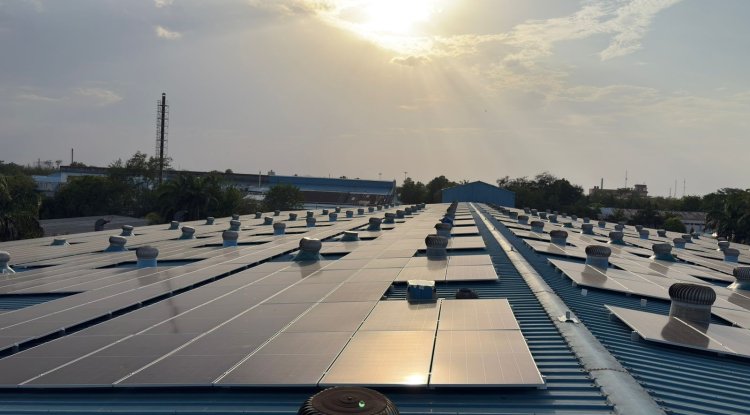
Surya Roshni Ltd. has put in about ₹16 crore to set up captive solar power plants with a combined 4 megawatt-peak (MWp) capacity at three of its factories in Madhya Pradesh, Uttarakhand and Haryana.
The plants have gone up at the company's units in Malanpur (MP), Kashipur (Uttarakhand), and Bahadurgarh (Haryana). Malanpur and Kashipur each have a 1.5 MWp installation, while Bahadurgarh has 1 MWp.
The company expects the three plants to generate close to 48 lakh units of electricity a year between them. Kashipur and Malanpur are each expected to produce around 18 lakh units annually, and Bahadurgarh about 12 lakh units.
Surya Roshni says the move should cut its carbon dioxide emissions by roughly 3,936 tonnes a year. The installations use a mix of rooftop shed-mounted panels and ground-mounted systems, depending on the site.
Chairman Jai Prakash Agarwal said the company has been working renewable energy into its manufacturing plans as it grows, to use more clean power and cut emissions across its plants. He described the solar projects as part of a longer-term push toward responsible manufacturing.
The investment is part of a wider push by the company to cut energy costs and rely more on clean power sources across its factories.
Surya Roshni, founded in 1973, runs five manufacturing plants in India — in Malanpur, Kashipur, Bahadurgarh, Hindupur and Anjar — making lighting products, wires and cables, fans, home appliances, PVC pipes, water pumps, water tanks and steel pipes.
The company posted an annual turnover of over ₹7,500 crore and sells to more than 50 countries. It also runs the Surya Technology & Innovation Centre (STIC) in the National Capital Region, which handles product development, testing, and quality checks.
The new plants add to a broader trend of manufacturers setting up their own captive solar capacity to bring down power costs and industrial emissions.
What's Your Reaction?