India’s renewable energy journey is gaining momentum as the country crosses 200 GW of non-fossil fuel capacity, but strengthening grids and infrastructure remains key to powering the clean energy future.
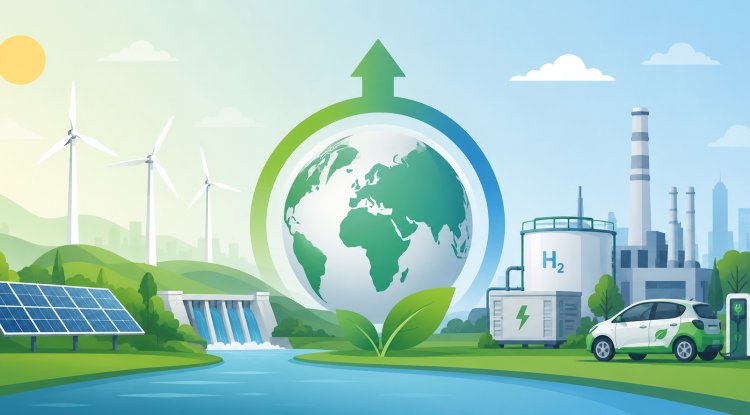
Ten years since the signing of the Paris Agreement, in India, climate change policies have shifted from being policy-related to becoming reality. This is because India has expanded its clean energy infrastructure, adopted new decarbonisation measures and improved climate governance while managing the challenge with the growing energy demands.
According to the UNFCCC, the Paris agreement which was signed in 2015, aims to ensure that there is less than 2°C rise in global temperatures in relation to pre-industrial times while putting efforts to ensure that the temperatures do not surpass 1.5°C. The Paris Agreement introduced a new strategy when it came to addressing climate change, which included allowing each country to make their own plan or Nationally Determined Contributions to mitigate their greenhouse gas emissions and reach climate objectives.
India has used the Paris Agreement as a framework to enhanced its strategies in regard to environmental sustainability, which includes development in renewable energy and increasing energy efficiency. This is evident from its climate commitment in 2022, where it has aimed to reduce emission intensity of its GDP by 45 per cent in relation to its GDP in 2005.
India has also set out a long-term goal of becoming net-zero in emissions by 2070. There have been many efforts by the Indian government in different areas such as renewable energy, green hydrogen, electric vehicles, energy efficiency and carbon reduction technology.
Renewable Energy Expansion Drives Climate Progress
Usage of renewable energy resources is another area that has gained considerable importance under the Indian climate change policy regime in the last decade. India has successfully met its aim to achieve generation of 200 GW of electricity from non-fossil fuel sources by 2025, thereby taking a step closer towards achieving its clean energy goals for 2030.
Among renewable energy resources, the contribution of solar energy is the highest, followed by wind energy, hydro energy, and bio-energy.
India has become one of the fastest-growing countries in the world for renewable energy. However, as renewable energy capacity increases, the country also needs to improve its power grid and transmission network to manage the changing and uneven supply of electricity from sources like solar and wind energy.
Green Hydrogen and New-Age Clean Technologies
India is not just focing on generating renewable electricity but also on other sectors beyond it and are focusing more on initiatives such as the National Green Hydrogen Mission. The aim of this initiative is to make India both importer and exporter of green hydrogen with a target of producing 5 million metric tonnes annually by 2030.
The deployment of green hydrogen would be important in emission reductions from hard-to-abate industries such as steel production, chemical industry, fertilizer production, and transportation. The establishment of local electrolyzer production capability, as well as hydrogen infrastructure, would determine the speed of uptake of the technology.
Other emerging areas, including battery storage, electric mobility, carbon capture technologies and energy efficiency solutions, are also expected to play an important role in reducing emissions across industries.
Balancing Growth with Coal Dependence
However, despite the fast growth of renewable energy, India's transition to new energy still remains difficult due to its dependency on coal. Coal is still an important part of electricity production and the functioning of industries.
As one of the world’s fastest-growing economies, India faces the challenges of developing energy access while cutting down on carbon emissions. The increasing demand for electricity due to the development of industries, urbanisation, and the increasing demand for cooling makes it difficult.
The transition will depend on accelerating clean energy deployment while ensuring affordable and reliable power supply for industries and households.
Article 6 and the Future of Carbon Markets
A key development under the Article 6 of the Paris Agreement is the one that provides the means for international cooperation in carbon markets and climate change mitigation and adaptation efforts.
According to Article 6.2, countries can cooperate through transferring of emission reductions results, whereas Article 6.4 states about the establishment of carbon credits mechanism supervised by the United Nations. Lastly, Article 6.8 mentions non-market-based approaches, such as technology transfer and policy cooperation.
For India, Article 6 presents an opportunity to attract climate finance and support emission reduction projects through credible carbon markets. As the country develops its domestic carbon credit trading system, strong measurement, reporting and verification (MRV) mechanisms will be essential to ensure transparency and maintain confidence among investors and international partners.
Carbon markets could support projects in areas such as renewable energy, energy efficiency, waste management, sustainable agriculture and industrial decarbonisation by creating additional financial incentives for reducing emissions.
Need for Climate Finance and Infrastructure Development
The next phase of India’s climate change efforts will involve substantial capital expenditure on green technology, infrastructure, and adaptation strategies. The climate change financing will be a key component that can help India develop renewable energy sources, modernise its electricity grid, invest in energy storage technology and help companies lower their greenhouse gas emissions.
India’s climate policy efforts have now focused on climate resilience due to the occurrence of extreme weather, higher temperatures, and changing precipitation.
Along with reducing emissions, climate resilient infrastructure, agriculture and ecosystem-based approaches would go a long way to safeguarding vulnerable communities.
India’s Climate Road Ahead
A decade after the Paris agreement, India has made substantial progress in building the groundwork for effective climate action through renewable energy deployment and technological development. How successful the country is in achieving tangible emission reductions over the coming decade remains to be seen.
The focus will now shift towards making major interventions in mobilising financing, enhancing carbon markets, and fostering innovations.
What's Your Reaction?