Toronto recorded the world's worst air quality after wildfire smoke from northern Ontario spread across the city and parts of the northeastern United States, prompting health advisories.
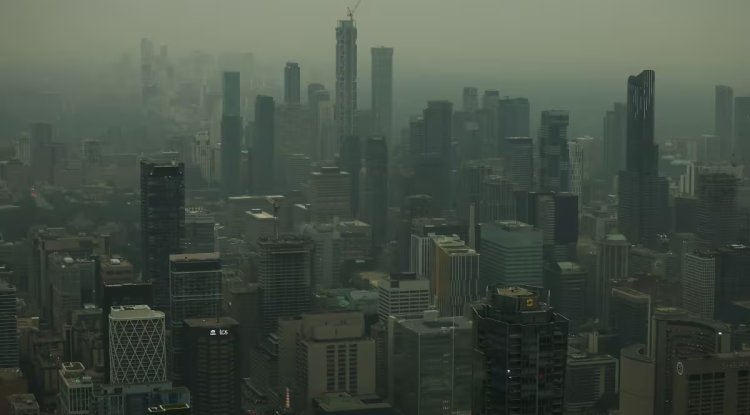
Toronto experienced the worst air quality in the world on Wednesday as smoke from wildfires burning in the north of Ontario covered the whole city. This led to warnings from officials and advice for citizens to limit their time outdoors.
According to IQAir, an air quality monitoring service, Toronto became the most polluted city in the world compared to New Delhi and Kinshasa. It was due to the smoke from forest fires that resulted in pollution staying in the region owing to the weather conditions.
Environment Canada placed Toronto's Air Quality Health Index at 10+, the highest risk category. The agency advised people, particularly children, older adults, pregnant women and those with heart or lung conditions, to avoid strenuous outdoor activities and keep windows and doors closed where possible.
Moreover, this air pollution influenced life in Toronto. The FIFA Fan Festival that was supposed to take place before the semi-final of the FIFA World Cup was cancelled in Toronto. Some public swimming pools were also closed due to the smog.
However, there were consequences for areas outside of Canada as well. There was smog from the fires in several states in the northeastern United States, such as New York, Pennsylvania, Connecticut, Massachusetts, Maine, and New Hampshire. Residents received warnings regarding high levels of particulate matter, which may affect their breathing and exacerbate any heart or lung conditions.
There are hundreds of active wildfires in Canada at the moment. These wildfires occur in Ontario, Manitoba, and Saskatchewan. Based on the information provided by the Canadian Interagency Forest Fire Centre, 1.9 million hectares have burned thus far this year. Although the area burned in Canada's wildfires is smaller than during the record 2023 fire season, authorities have stated that hot and dry weather may keep fires burning for some more weeks.
The smoke comes amid a heat wave occurring in parts of eastern Canada and the northeastern United States. Weather forecasts suggest that there will be a decrease in temperatures in southern Ontario, but winds' direction will determine how much longer the smog will continue to impact air quality in the region.
Residents have been advised to check air quality advisories and avoid outdoor activities while the air remains polluted.
What's Your Reaction?