UN: Sand and Dust Storms Impact 330 Million Globally
UN agency reports sand and dust storms now affect 330 million people globally, with rising health, economic, and environmental costs, urging urgent international action.
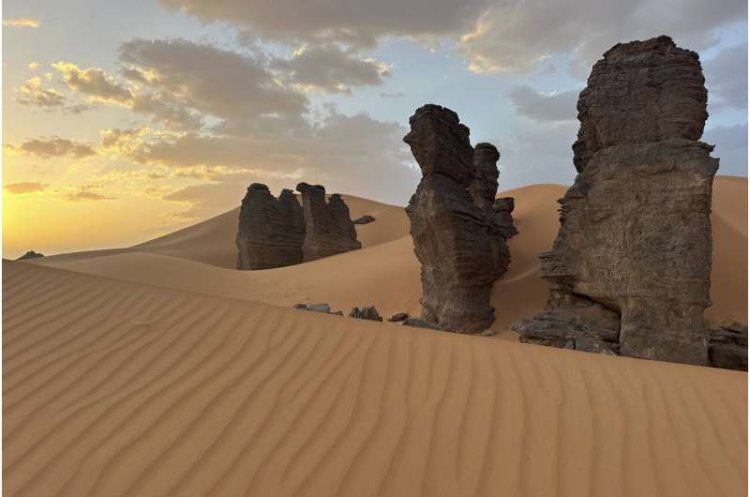
Dust and sand storms are increasingly becoming a major worldwide concern, impacting an estimated 330 million people in more than 150 countries, asserts the World Meteorological Organization (WMO), a United Nations body. Dust and sand storms are transmitting a variety of health, economic, and environmental issues and are being widely understood as an international spread phenomenon.
Addressing the United Nations General Assembly in New York, WMO UN representative Laura Paterson highlighted the enormous size of the issue. She said that almost two billion tonnes of dust are released every year into the atmosphere — the equivalent of 300 Great Pyramids of Giza in Egypt. Although more than 80% of this dust is from the North African and Middle Eastern deserts, it is blown across the globe in all directions, spanning thousands of miles over seas and continents.
The General Assembly convened to celebrate the International Day of Fighting Sand and Dust Storms on 5 July 2025. The UN formally declared 2025-2034 to be the decade of fighting these storms in this session, in view of the imperative of concerted global action.
General Assembly President Philemon Yang described the situation as one of the least recognized but most pervasive challenges facing the modern world. He put the blame on climate change, soil degradation, and improper land-use patterns for aggravating sand and dust storms. The impact is already evident in terms of respiratory and cardiovascular illnesses that account for an estimated 7 million premature deaths annually, Yang added. He also alerted the world to the agricultural effect of the storms, which can cut down crop yields by as much as 25%, thus aggravating hunger and displacement.
Rola Dashti, the UN Economic and Social Commission for Western Asia's Undersecretary-General and Executive Secretary, spoke to the gathering in order to acknowledge the economic costs of such storms. From her perspective, countries in the Middle East and North Africa suffer an annual economic loss of around $150 billion — 2.5% of their GDP — in the form of sand- and dust-related devastation and disruption of their operations.
Dashti referred to recent occurrences in the area. Hospitals in Iraq were filled with respiratory emergencies from blistering springtime dust storms. In Iran and Kuwait, the storms were so severe that government offices and schools were closed temporarily for public health.
How global these particles are can be observed in cases where Sahara dust has followed particles as far as the Caribbean and Florida. How they can travel such distances makes the storms not only a regional, but a transcontinental threat.
Dashti, who is also a co-chair of the UN Coalition on Combating Sand and Dust Storms, noted that there are more than 20 UN and international organizations working to address the issue. This ranges from strengthening early warning systems to addressing health concerns and financing deficits. She urged governments to include sand and dust storms in national and international policy instruments.
She again echoed in her speech the need to implement solutions like land rehabilitation, sustainable agriculture, and connected early warning systems. Although she recognized that the interventions to address the problem already exist, she again echoed the need for firm political will and sufficient finance to take these interventions at scale.
The UN appeal is in response to intensifying scientific and policy agreement regarding the multi-dimensional threat posed by sand and dust storms. These events are increasingly being seen not merely as an environmental issue, but also as a public health and economic issue of the highest significance with implications on a global scale.
As the issue attracts increasing focus, global collaboration and sustainable policy-making will play a vital role in mitigating the erosive effects of sand and dust storms. UN's new ten-year project has the aim to make the world more resilient to the storms by promoting innovation, knowledge-sharing, and investment in preventive infrastructure.
Original Source:
© 2025 The Associated Press. Report by Edith M. Lederer, edited by Andrew Zinin. All rights reserved.
What's Your Reaction?