A national study shows rising waterlogging and flood risks in Andhra Pradesh, highlighting the need for better drainage and management.
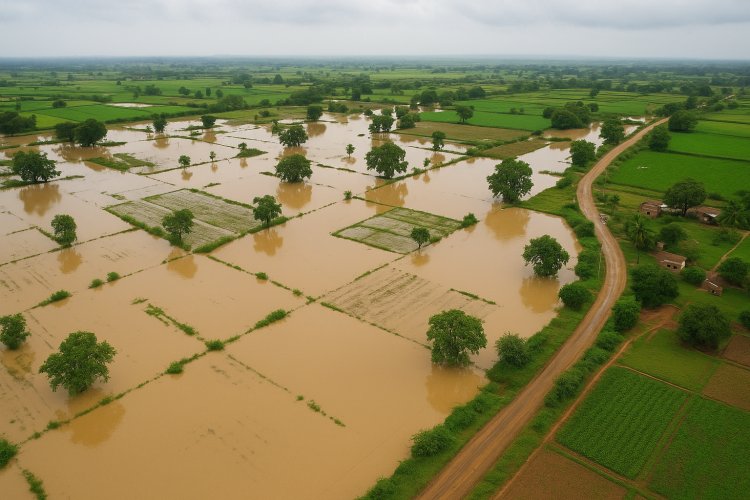
A nationwide study carried out by Central Water Commission along with Regional Remote Sensing Service Centre, Jodhpur under Indian Space Research Organisation on "Assessment of Water Logging and Salt/Alkaline affected soils in all the commands of Major and Medium Irrigation Projects in India during the year 2003 to 2008 indicates total waterlogged area and salt-affected areas in Andhra Pradesh as 28.267 thousand hectares and 12.933 respectively.
Flood Vulnerability: Budameru Diversion Channel
Andhra Pradesh Government has informed that Budameru Diversion channel for a length of 11.900 km is identified as a vulnerable reach for floods. Flooding in this area mainly happens due to limited drainage capacity, rainwater from nearby towns flows into the channel, the land is low and flat and due to some natural drainage routes. These conditions increase the risk of waterlogging and flood-related disruptions during intense rainfall rain.
Funding Framework Under FMBAP
Flood management interventions in states are eligible for support under the Flood Management Programme (FMP), a component of the Flood Management and Border Areas Programme (FMBAP). Funding is considered only for new, critical flood management projects, projects adopting modern technologies or innovative approaches, projects on major inter-state rivers and proposals submitted by states that have implemented Flood Plain Zoning (FPZ) through legislation or executive orders
Funding Pattern
Under the Flood Management Programme, general category states like Andhra Pradesh receive funding in a 60:40 Central–State ratio, while special and hilly states receive support in a 90:10 ratio. Projects must meet minimum costs of ₹100 crore for general states and ₹50 crore for special category states. Currently, no project from Andhra Pradesh is under consideration for central assistance.
Waterlogging and soil degradation in the state mainly happen because of several reasons such as inadequate drainage, seepage from canals, over-irrigation, rising groundwater levels, coastal salinity intrusion, and changing rainfall patterns, all of which contribute to long-term soil productivity issues.
Presently, no project proposals of Andhra Pradesh are under consideration for assistance.
Causes of Waterlogging and Soil Degradation
Waterlogging and salinity problems in many irrigation areas of India including Andhra Pradesh, happens due to several reasons. Water often gets leaks from canals that are not lined properly, over-irrigation in canal command areas, not having good drainage systems to remove excess water. Rising groundwater levels due to continuous irrigation, causing the soil to stay wet and changes in rainfall patterns, including high-intensity events. All these factors reduce soil fertility and can damage soil productivity and long-term land degradation unless managed properly.
Need for Drainage and Flood Management Improvements
Based on the study and the identified flood-prone areas, steps like strengthening drainage networks, improving canal lining, monitoring groundwater levels, integrating satellite-based assessments and applying updated floodplain management norms can help reduce water logging and soil salinity more effectively.
What's Your Reaction?