"We're Building An Ecosystem Where Each Kilometre Counts For Carbon Savings"
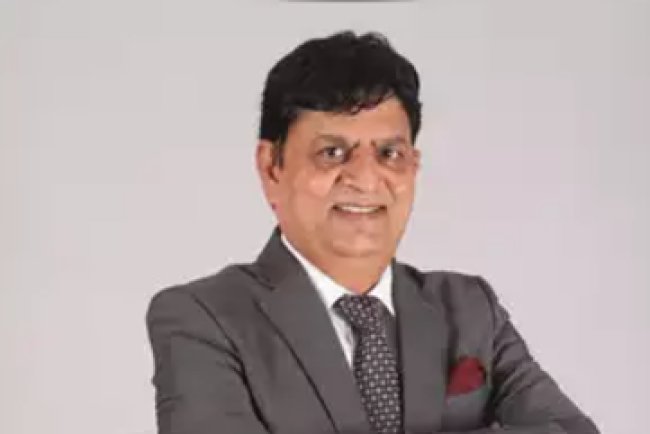
Swarup Bose, CEO & Founder, Celsius Logistics Solutions, discusses the company’s vision to establish a sustainable cold chain ecosystem through the use of electric refrigerated vehicles

India’s cold chain sector is undergoing a quiet but powerful transformation. At the centre of this change is Swarup Bose, CEO and Founder of Celsius Logistics Solutions, who has been pushing the boundaries of electric mobility and energy-efficient logistics. In conversation with Responsible Us, Bose discusses the company’s vision to establish a sustainable cold chain ecosystem through the use of electric refrigerated vehicles, partnerships for clean charging infrastructure, and a platform for tracking carbon credits. He explains how technology, efficiency, and awareness are reshaping the sector — and how farmers stand to gain the most from a supply chain that finally works in their favour.
You are also providing charging stations for the charging units. Are these charging stations powered by solar energy?
It’s not that we are providing the charging stations. First, we are using the existing charging facilities. Companies like GOBP and Static — we have done tie-ups with all of them. So, we’ll be using their facilities.
Where we want to put up charging stations is on certain routes where they do not exist, where we are not able to do a quick charge. We hope to find a company that has a solar grid, and we can borrow charge from them. We’ll be tying up with such partners to set up fast chargers so that our vehicles can take a quick charge.
The vision and hope are always to convert such charging stations into solar, but we have not yet deployed them. The plan is to put up these.
You mentioned carbon credits. How do you plan to generate them, given that simply running EVs doesn’t qualify since there are multiple stages involved?
We are developing an entire ecosystem to convert all the assets into ecologically sustainable solutions. With the new cold rooms coming up — all solar-powered — we are looking at energy-efficient cooling systems and environmentally friendly gases for those systems.
This is just the first step. When we work with a company, we give them 3PL (third-party logistics) solutions. So when we convert the entire 3PL into energy-efficient, greener solutions, that’s when we are able to generate enough carbon credits.
Everything is tracked on our platform so that we can pass it on to them. We have not yet built the platform — Arvind, our CTO and Co-founder, is now working on creating an ecosystem to track and transfer carbon credits. We are talking to consultants who are helping us set this up.
For example, if your vehicle runs for 10 kilometres, how many carbon credits would that generate, or how much emission would be reduced?
That is exactly what we are now designing. We have not reached that stage yet to be able to answer. Once we do, there will be a launch of that platform from Celsius, where you will be able to track live the carbon emissions saved and carbon credits generated. We have just started working on it. The first step was to launch these vehicles before we started tracking them. This is part of our second step. We will be happy to stay in touch when we do launch it — that is when I will be able to answer these questions better.
How are these vehicles different from normal ones in terms of cutting carbon emissions?
A normal refrigerated vehicle runs on diesel. The AC runs on diesel. Every time you stop, the vehicle is not switched off — it keeps running to supply diesel to the AC unit. When you are unloading, suppose it takes 10 hours because the warehouse is not ready, the vehicle runs the entire time. The moment you switch it off, your products spoil. So here, the necessity for electrical solutions is much higher than in any other segment because every other segment can at least switch off the vehicle and save on emissions — here you cannot. Electric solutions are the need of the hour in refrigerated logistics.
What kind of technology are you using in these vehicles, since you’re not using diesel?
These vehicles are completely electric; they run on a charge. The native battery of the vehicle powers the AC unit as well. The problem earlier was battery management — no one could manage the battery efficiently enough to give long range. The AC is an extra load, but Switch (our partner) was able to crack that.
What’s the life of the battery in general?
Seven to nine years.
And after that, what’s your plan for recycling?
We are hoping enough recycling companies come up. There are already startups working on recycling. In that much time, I hope they grow to a level where an efficient recycling system will be in place.
How will farmers and the food supply chain benefit from this initiative?
Whatever initiative you launch in the cold chain, the end benefit always goes to farmers. The more you save, the more you sell, and the more the supply chain profits. The biggest loss for farmers is that out of their 100% produce, 60–70% reaches the market, and the rest goes to waste.
When you make an efficient supply chain, that benefit reaches the farmers. If we can grow to that level, every farmer should benefit. Today, with Blinkit, we are picking up material directly from farms. As this increases, an entire community of farmers benefits.
Most fruits — strawberries, mangoes, litchis, all kinds — are picked up directly from the farm. As this ecosystem grows, every supply chain will become like this. Today, there is not a single ecosystem in India that we can support entirely.
What's Your Reaction?