A 2025 study links wildfire smoke to a 20% rise in lung cancer mortality, urging air quality action as climate change fuels fires globally.Wildfire smoke increases lung cancer mortality by 20%, per a 2025 study, highlighting climate-driven health risks and the need for air quality reforms.
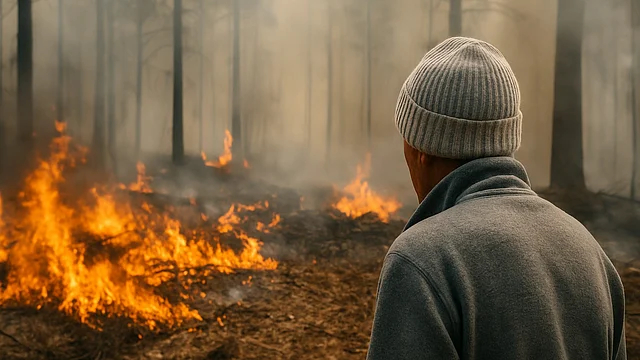
A May 2025 study published in The Lancet Planetary Health linked wildfire smoke exposure to a 20% increase in lung cancer mortality, driven by rising global wildfire frequency due to climate change. The findings, based on data from 10 million deaths, underscore health risks from PM2.5 in smoke, particularly in North America and Asia. The study calls for urgent air quality measures amid worsening climate-driven fires.
Wildfires, fueled by a 1.5°C global temperature rise, released 2 billion tonnes of CO₂ in 2024, with smoke affecting 500 million people globally. The 2025 Lancet study analyzed 10 million deaths from 2000–2020, finding that PM2.5 from wildfire smoke increases lung cancer mortality by 20%, alongside a 15% rise in respiratory diseases. North America, with 50,000 annual wildfire-related deaths, and Asia, particularly India and China, face the highest risks due to dense populations and frequent fires.
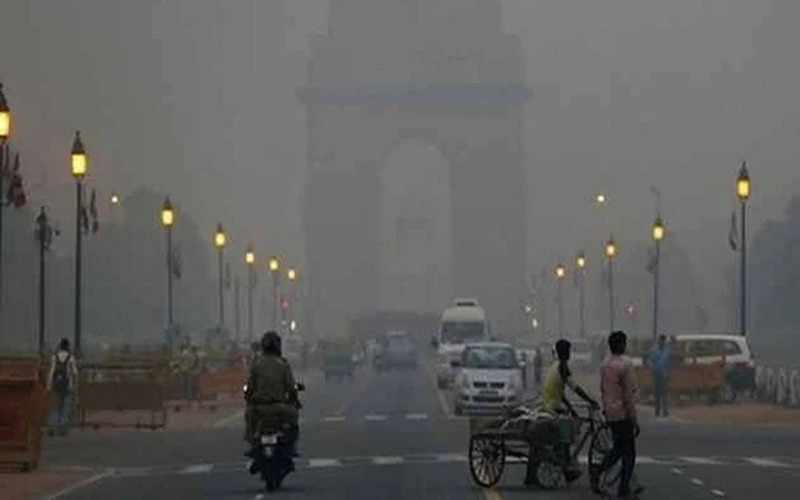
In India, wildfire smoke contributes to 1 million air pollution deaths annually, with Delhi’s air quality index (AQI) reaching 500 during peak seasons. The study notes that PM2.5 particles, smaller than 2.5 micrometers, penetrate lungs and bloodstreams, causing 10% of global lung cancer cases. Climate change exacerbates fires through droughts and heatwaves, with India’s forest fires doubling since 2000, burning 5 million hectares in 2024.
Health impacts are severe in vulnerable communities, with 30% of India’s rural populations exposed to smoke without adequate healthcare. The study estimates 100,000 premature deaths annually from wildfire-related PM2.5 in Asia, costing $50 billion in healthcare. Mental health effects, as noted in 2025 Outlook Planet reports, include a 25% rise in anxiety among youth in fire-prone areas, yet only 10% of affected regions have counseling services.
Mitigation requires stronger air quality regulations. The U.S.’s Clean Air Act reduced PM2.5 by 40% since 1970, but Trump’s proposed EPA cuts threaten progress. India’s National Clean Air Programme (NCAP) aims for a 20% PM2.5 reduction by 2030, but only 50% of cities have monitoring stations. Globally, the WHO’s 5 µg/m³ PM2.5 guideline is unmet by 90% of countries, with India’s average at 50 µg/m³.
Economic impacts include $100 billion in global wildfire damages annually, with 20% attributed to health costs. In India, air pollution reduces GDP by 3%, with 500,000 jobs lost in fire-prone sectors like agriculture. Solutions like Gujarat’s emissions trading scheme, cutting emissions by 30%, offer models, but scaling requires investment. Innovations like Japan’s soluble plastic could reduce fire-related plastic emissions, aligning with circularity goals. previous
Challenges include data gaps, with 60% of wildfire smoke impacts untracked in low-income regions, and political resistance, as seen in U.S. climate science dismissals. India’s partnership with iFOREST for pollution research could inform wildfire strategies, but funding is limited. Public awareness, critical for behavioral change, is low, with 40% of Indians unaware of smoke health risks.
Conclusion
The 2025 study linking wildfire smoke to lung cancer mortality highlights the urgent need for air quality measures amid climate-driven fire increases. While India and global regions face significant health and economic costs, solutions like emissions trading and research partnerships offer hope. Coordinated policy and public action are essential to reduce risks.
What's Your Reaction?