A growing network of women in small towns is moving beyond basic transactions to become trusted financial guides, quietly widening access to banking, credit and savings where the system once struggled to reach

In a small shop in Surat, a woman who once helped her family keep the shutters open now handles everything from cash withdrawals to insurance queries. People line up, not just for transactions, but for advice as they trust her.
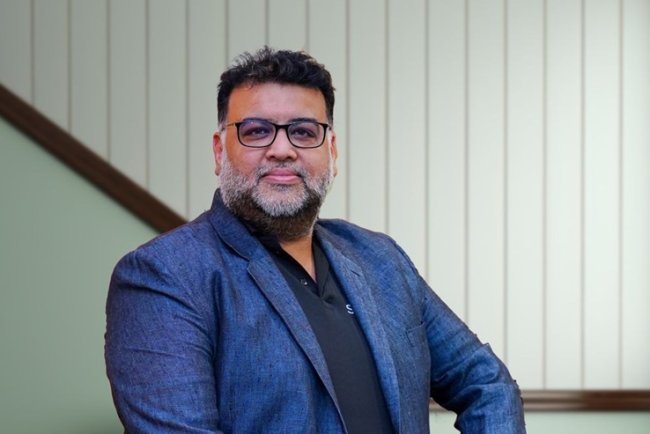
This is the kind of change Jayatri Dasgupta, CMO, PayNearby and Program Director, Digital Naari, has been watching up close, with a smile that reflects the satisfaction of seeing the impact of their work in expanding digital financial support in rural areas.
As CMO and the force behind the Digital Naari programme, Dasgupta has spent years working across rural and semi-urban India. Her takeaway is simple and sharp. When it comes to money, women are often the first point of trust in their homes and neighbourhoods. The system just took time to catch up to that reality.
“What we saw was not a sudden shift,” she says. “Women began with basic services like cash withdrawals or bill payments. Over time, they became the people others turned to for guidance on savings, credit or insurance.”
That slow build has now turned into scale. In just about a year, Digital Naari has reached more than three lakh women. Many of them had never run a business before.
The model, Dasgupta explains, did not start with training manuals or complex systems. It started with what women were already doing. Familiar services. Flexible hours. Work that could fit into their daily lives. “Instead of asking them to fit into a programme, we built around their roles in the community,” she says. “And then we stayed with them. Not just onboarding, but continuous support.”
That “handholding” is where many programmes fall short. Here, it has made the difference between one-time participation and a steady income. For first-time entrepreneurs, the early days are often filled with doubt. Many worry about handling digital tools or whether customers will trust them with money. That hesitation, Dasgupta says, does not last long. “Once they start seeing regular customers and handling simple transactions, something changes. They move from hesitation to ownership,” she says. “Within months, many are managing services on their own and guiding others.”
Today, these women, often called “Digital Banker Didis”, handle more than 25 services. The learning curve, surprisingly, has not been the biggest hurdle. “It is less about complexity and more about how you teach,” she says. “We start small, keep it practical, and build step by step.”
The numbers show how that approach has worked. The network is already facilitating transactions worth around ₹10,000 crore a year. Not through big pushes, but through daily use. Dasgupta is clear that this was never meant to be a grant-driven model. From the start, the idea was to build something that could sustain itself. “When income comes from real services people need, the model holds,” she says. “Women stay because they see steady earnings, not because of short-term support.”
The earnings may sound modest on paper. Around ₹3,500 to ₹5,000 a month. But in a village household, that money carries weight. “For many, it is the first income they earn on their own,” she says. “It goes into school fees, healthcare, daily expenses. But more than that, it changes how they see themselves.”
Across 15,000 pin codes, the pattern shifts slightly from place to place. In some regions, cash and remittance still dominate. In others, there is a gradual move towards savings and insurance. But one thing remains steady. “Trust is the common thread,” Dasgupta says. “When services come through someone people already know, adoption becomes easier.”
That trust is also what turns these women into influencers in their communities. She points to Rekha Devi in Surat. When her family was ready to shut down their small outlet, she stepped in. She began with basic services. Today, people rely on her for everything from government schemes to digital payments. “Families that once avoided formal systems now use them because they trust her,” Dasgupta says. “That is where the real shift happens.”
Despite the progress, she believes the last mile is still uneven. Access has improved, but usage often stops at one or two services. “The gap is not just access, it is sustained engagement,” she says. “People enter the system, but don’t always move forward into savings, credit or insurance.”
Part of the problem lies in how financial products are designed. Many are still built around standard patterns that do not reflect how women manage money. “Women’s financial journeys are often smaller, more frequent, and linked to household needs,” she says. “Products need to reflect that.”
As digital services spread, the question of trust becomes even more important. Here again, Dasgupta returns to the same idea. Technology alone does not build confidence. People do. “In many communities, the first step is not the app, it is the person,” she says. “Once that trust is built, everything else follows.”
The ambition ahead is big. The programme aims to reach 50 crore women over time. Dasgupta does not shy away from the challenge. “The real test is not onboarding, it is staying relevant,” she says. “Women need to see a clear link between what they do and what they earn.”
On a personal level, the journey has changed how she looks at leadership. “It has taught me that scale is not just expansion,” she says. “It is about staying close to the ground, listening, and building something that people can actually use.”
If there is one change she would push for in India’s financial system, it is this. Build with women in mind. “Access is not enough,” she says. “Relevance is what drives real inclusion.”
In thousands of small towns and villages, that shift is already underway. Quietly, one transaction at a time.
What's Your Reaction?