KP Group has partnered with AHES Co. Ltd. of South Korea and GH2 Solar Ltd. of India to establish a green ammonia production facility with a capacity of 100,000 TPA, supporting India’s National Green Hydrogen Mission and expanding international clean energy cooperation
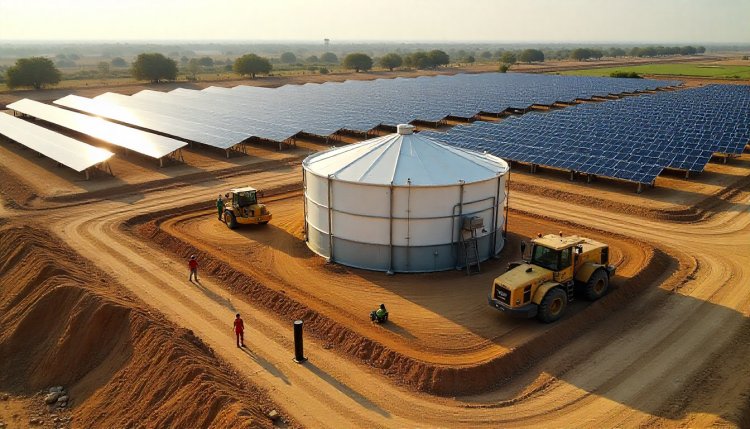
KP Group is excited to announce a partnership with AHES Co. Ltd. from South Korea and GH2 Solar Ltd. from India to develop a green ammonia production project in India capable of producing 100,000 metric tonnes each year. This facility is a key development towards India’s renewable energy objectives, and will also make a significant contribution to international decarbonisation initiatives. The project is aligned with the goals of India’s National Green Hydrogen Mission that promotes the broader use of sustainable energy solutions and diminished reliance on fossil fuels.
The three entities formalized their partnership through a Memorandum of Understanding (MOU) earlier this month. The project will be developed and operated by KPI Green Hydrogen & Ammonia Private Limited, a subsidiary of KP Group, together with AHES and GH2. AHES and GH2 will provide know-how and strategic support, as well as line up offtake agreements for the ammonia to be produced in India. These offtake agreements will be looking to markets in South Korea, Japan, and other destinations globally. Notably, AHES will be a direct offtaker, which helps to reinforce long-term market security for the project.
The sustainable ammonia facility will be powered by renewable energy through entities of KP Group, including KPI Green Energy Limited, K.P. Energy Limited, and KP Green Engineering Limited, and provide a fully integrated sustainable and low carbon feedstock for the production of ammonia. KP Group has several decades of experience in renewable energy and currently has more than 1.9GW of installed power capacity and a further 3.9GW in projects under development. This experience gives the project a strong foundation in energy expertise, infrastructure and operational delivery.
AHES Co. Ltd., one of South Korea's leading clean energy innovators, provides specialist expertise in hydrogen technologies including hydrogen electrolyser manufacturing, compressed hydrogen storage, and Power-to-Gas applications. This expertise is coupled with AHES' established presence in global clean energy markets ensuring both technological advancement and geographic market entry. GH2 Solar Ltd. is a credible renewable energy company based in India and brings deep local market knowledge and execution capability. GH2 Solar Ltd. is active in solar infrastructure, hydrogen production, and electrolyser manufacturing making GH2 Solar Ltd. a strong partner to fulfil the technical and operational requirements of a project of this scale.
The partnership comprises fundamental elements that include the production and supply of 100,000 tonnes of green ammonia per annum, supported by offtake agreements with AHES and GH2, with AHES as one of the major off-takers. Pricing of the delivered ammonia will be determined by international benchmarks to ensure competitiveness in global markets. The agreement outlines a 15-year partnership that reflects a long-term commitment to support the pathway to sustainable energy transition, both in India and globally, by all parties.
Industry commentators have suggested the partnership is especially timely, as global demand for green ammonia is increasing as industries seek sustainable alternatives to carbon-intensive fuels and feedstocks. Ammonia is often used to produce fertilizers and in other industrial processes; however, ammonia is also a viable carrier for hydrogen, which gives ammonia an important role in the global transition towards clean energy. Also, with the renewable energy, hydrogen production and international supply chains, this project is another crucial step in allowing India to realise their energy transition.
India’s National Green Hydrogen Mission has set ambitious targets for scaling hydrogen and ammonia production from renewable sources. The project through KP Group, AHES, and GH2 Solar aligns directly with this initiative, creating pathways for reducing domestic carbon emissions and potentially positioning India as a key exporter in the clean energy marketplace. These potential exports today are primarily identified as markets in South Korea and Japan and illustrates the growing role of India in a global decarbonisation.
A robust renewable energy infrastructure underpinning the project will be essential to its sustainable credentials. KP Group has already established a track record in advancing wind and solar energy projects across India, which have made a considerable contribution to India’s green energy goals. The company, established in 1994 by Dr Faruk G. Patel, continues to grow its business driven by focus on innovation, infrastructure, and sustainability. In the 3 decades that they have operated, KP Group has delivered numerous landmark projects and has established itself as a reputable partner for organisations looking to meaningfully reduce their carbon footprint.
In joining AHES and GH2 Solar, KP Group are moving beyond regular renewable energy projects and entering the world of large-scale industrial decarbonisation. Not only does this project and partnership embody the overall direction of the energy sector, it is also indicative of a wider recognition from companies to connect clean energy generation, with businesses around industrial uses, such as: fertilisers, chemicals, and heavy manufacturing. Green ammonia is one of the more attractive solutions to multiple applications because it is versatile in its use and, therefore, capable of delivering emissions reductions across multiple sectors.
While the project represents a significant opportunity, it also represents a suite of challenges that need to be addressed. The anticipated scale of 100,000 tonnes of ammonia production will require a substantial investment commitment, the use of advanced technologies and effective management of energy supply. It will also be important to ensure that the final product is cost competitive in access to international markets, especially since there will be other countries scaling up their own green ammonia projects. The sustainability of the project over the longer term will depend on how well the three partners can integrate their capabilities to produce a facility that is effective and commercially viable.
The international dimension of the partnership is especially interesting. AHES brings South Korean expertise and market access, while GH2 Solar can leverage strong project execution capabilities in India, making the partnership evidence of how cross-border collaboration can accelerate progress toward clean energy objectives. This collaborative model could also be a template for other projects to come, including local knowledge and international experience and market demand.
From an environmental impact perspective, the project is also anticipated to provide broader benefits. Using renewable energy as feedstock for ammonia will significantly reduce the the greenhouse gas emissions drastically compared to traditional fossil fuel ammonia manufacturing. The facility also supports India's decarbonization targets with ripple effect potential in ammonia-dependent industries and hydrogen. Over time, the project also may contribute to more sustainable supply chains in agriculture, industry, and energy that will continue to reinforce the role of green ammonia in addressing climate change.
As India advances its green hydrogen and ammonia ambitions, the collaboration between KP Group, AHES and GH2 Solar is a unique initiative. It combines innovation, international collaboration, and long-term commitment in a way that could set new metrics for clean energy production in the region. If it is successful, it will showcase how partnerships and integrated renewable energy solutions can offer scalable economic and environmental opportunities.
The new facility represents more than another industrial project, it highlights India's growing importance in the global clean energy transition and the role that innovative collaborations can play in shaping our sustainable energy future. With all three parties demonstrating strong commitment to the project, there is significant potential for it to fulfill its commitments in supporting decarbonisation objectives at both national and international levels while establishing new metrics for green ammonia production in India.
What's Your Reaction?