India and the United Kingdom have agreed to work on a unified safety framework for green hydrogen, focusing on regulations for production, storage and transport as part of broader clean energy cooperation.
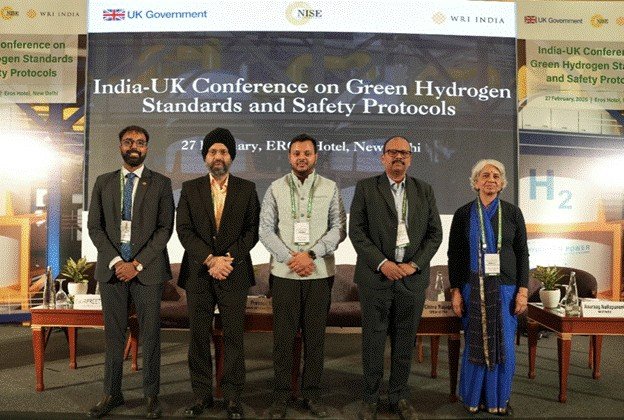
In order to harmonise safety standards for green hydrogen development, India and the UK are currently holding discussions about the safety standards governing green hydrogen: its production, storage, and transport.
These discussions were communicated during the meeting concerning the safety of the National Green Hydrogen Mission (NGHM) in India and will provide robust frameworks and ensure that safety standards guide the construction of hydrogen infrastructures.
The National Centre for Hydrogen Safety facilitated these discussions, during which experts addressed both the technical and regulatory challenges to developing hydrogen production and distribution. Apart from discussing the technical issues, they also considered how safety standards help to develop hydrogen production and minimise the risk of accidents.
India views green hydrogen as a key component of its long-term vision for clean energy. The process that produces these fuels relies on renewable electricity to split water into hydrogen and oxygen.
Representatives from the Bureau of Indian Standards and the Petroleum and Explosives Safety Organisation (PESO) presented the country’s existing framework during the meeting. The representatives explained how the country’s standards are changing and how they could be aligned with international best practices.
The meeting addressed the risk assessment procedures and operational safety measures that could be implemented to reduce the hazards that occur during the production, storage, and transportation of hydrogen gas. The meeting also addressed the monitoring systems that could be implemented to help identify any safety issues that could occur in the facilities that handle hydrogen gas.
Digital monitoring tools and artificial intelligence systems were also discussed as possible technologies for enhancing the safety oversight. The systems are believed to assist in the detection of abnormalities in the hydrogen infrastructure and allow for swift responses to operational risks.
It was noted that cooperation between countries would be vital in the development and extension of the hydrogen supply chain. It would be instrumental in the development of the hydrogen markets through the creation of consistency in the regulations.
The conference was concluded with a commitment by the two countries to enhance cooperation in the area of hydrogen safety. The cooperation would be in the form of technical research and the improvement of the regulatory capacity in the hydrogen sector.
Parvinder Maini, Scientific Secretary in the Office of the Principal Scientific Adviser to the government, said the development of safety systems and standards will be critical in the deployment of hydrogen technology.
As investments in hydrogen infrastructure grow around the world, regulators are focusing on safety systems to support the growth of the sector with reliable operational standards and mechanisms in place.
What's Your Reaction?