World Health Summit 2025 to Address Climate Inequality
World Health Summit 2025 to focus on global health, climate change, and inequality, urging cross-sector collaboration and science-driven policy in Berlin from October 12–14.
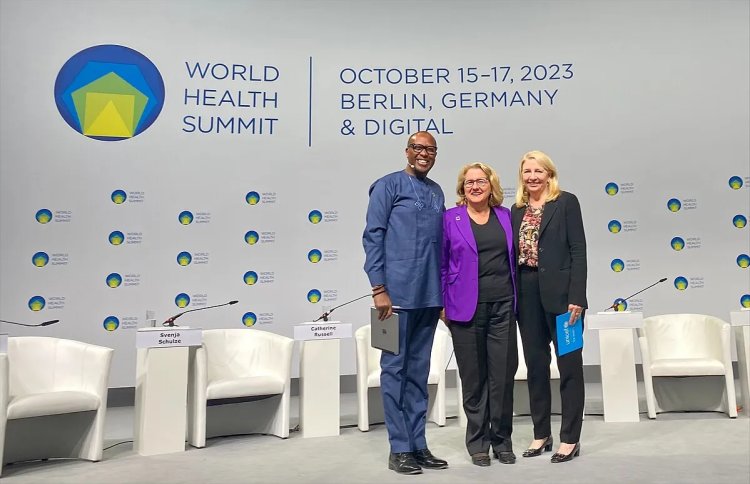
World Health Summit 2025 will be held in Berlin, Germany, between 12 and 14 October and host more than 3,000 global leaders in person and more than 10,000 online visitors. The conference, a leading international global health policy convening in the world, this year focused on the theme "Taking Responsibility for Health in a Fragmenting World." It stresses that the time has come to act with a sense of urgency on the convergence of health, climate emergencies, and inequities through collective, science-informed solutions.
Convening influential political, scientific, civil society, and private sector leaders, the summit aims to make decisions on health policy addressing the world's most pressing public health concerns as well as long-term sustainability. Collaborative partnerships across sectors are prioritized by organisers as central to building more resilient health systems and global health.
This year's discussion will be focused on gaining greater understanding that health problems are not solely the business of traditional medical care. The agenda is an extension of a broader vision for health in the sense that it directly connects it with climate change, pollution, poverty, and inequality. Organizers have contended that the root causes must be addressed in their entirety in a bid to build strong and equitable health systems across the world.
The summit positions itself in favor of the United Nations Sustainable Development Goals (SDGs) i.e., reduction of inequality, access to sanitation and clean water, and stepped-up climate action. It endorses mainstreaming of public health issues into all policy domains — a notion by the title "Health in All Policies."
The focal agenda of the summit is:
Health for All – Enabling universal healthcare access
Health, Environment and Sustainability – Mitigating the health impacts of climate change and pollution
Health in All Policies – Placing health in transportation, housing, and education policy
Health Systems – Strengthening the global health system and building capacity
Science, Research and Innovation – Enabling medical research and policy-making
Reducing health outcomes as a result of climate change is one of the biggest themes in the World Health Summit 2025. Heatwaves, storms, and air pollution are no longer just environmental phenomena but are increasingly being dealt with as public health crises. Heatwaves, floods, and droughts are increasing in frequency and threatening vulnerable groups, particularly the elderly and people with pre-existing conditions, even more.
Pollution from industrial and air transportation leads to respiratory disease, cardiovascular disease, and premature mortality. Water shortage due to flood and drought lead to the spread of infectious diseases like cholera and malaria, food insecurity, and malnutrition. They affect most in developing countries and poor communities.
Top policymakers will weigh how to structure climate policy so that it encompasses public health objectives, making requests that greenhouse gas reduction can not only slow climate change but also save lives and dollars in avoided disease burden and healthcare expenses. A dual-track approach is increasingly seen as the solution to sustainable development.
The conference also asserts that most of the gains in health are started outside the health care system. Education, highway design, urban design, and social services all have effects on health outcomes. Cities that have facilities for cycling and good public transport, for example, decrease air pollution and increase physical activity levels. The same can be said for early childhood education programs that are linked to enhanced long-term health.
By promoting the practice of "Health in All Policies," the summit encourages policymakers not just from healthcare but across sectors to consider the health implications of their policies. It is an intersectoral approach required in a period when boundaries between health, environment, and economics are dissolving.
Integration of digital health technology will be another area of concentration for the summit. Application of artificial intelligence, data analytics, and mobile platforms to enhance diagnosis, disease surveillance, and assistance to front-line workers will have their place on the agenda. Such technology is soon becoming an imperative to enhance access to care in distant or under-served areas.
The World Health Summit 2025 also seeks to advance worldwide cooperation. Although the summit is held in Berlin, its significance reaches worldwide. Policy concepts and designs discussed during the summit can influence the way nations prepare for pandemics, exchange vaccines, and construct healthcare infrastructure to mitigate shocks in the future.
The summit is underlining that in a globalized world, health can only be treated as a shared responsibility. Equitable global health, climate resilience, and economic security are increasingly dependent on one another. Summit organizers, through coordination across national and sectoral lines, aim to forge collective strategies that provide long-term solutions.
By facilitating inclusive, evidence-driven policy, World Health Summit 2025 offers a platform for governments, scientific institutions, and civil society to act together in creating 21st-century well-being systems that are appropriate to 21st-century circumstances. The conference addresses not only what must be done—but how collective action can spur actual progress in global health.
Original Source
Copyright 2025 The Associated Press. By Jamie D'Souza. All rights reserved. Photo via Wikimedia Commons.
What's Your Reaction?