Twenty-two advanced technologies have been selected under an “Innovation Challenge” launched to tackle air pollution in Delhi under the leadership of Chief Minister Rekha Gupta.
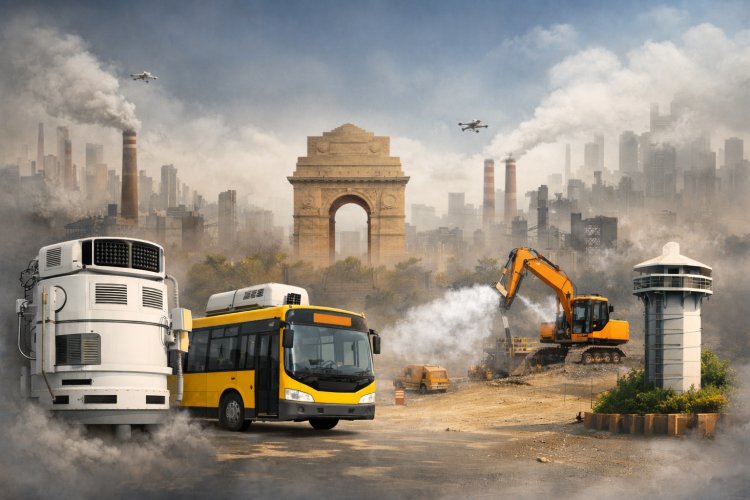
Delhi is consistently ranked among the world’s most polluted cities, especially during the months of winter when particulate matter levels often exceed beyond limits. According to the Central Pollution Control Board, level of pollution is triggered by several activities including vehicle emissions, construction dust, industrial activity, and seasonal factors such as crop residue burning in neighbouring states. In this context, authorities have been planning to address this issue.
The fight against air pollution in Delhi is about to enter a new, advanced stage. Under the “Innovation Challenge” initiative announced by Delhi Chief Minister Rekha Gupta, 22 advanced technologies have been selected, and they are now ready for ground trials. In the coming weeks, these technologies are to be implemented at major pollution hotspots across Delhi.
The Environment Minister of Delhi, Manjinder Singh Sirsa, has recently reviewed the preparations for the implementation of these technologies at a high-level meeting. He announced, “A total of 284 entries was received for the innovation challenge, out of which, after thorough technical assessment and evaluation by an internal technical committee, only 22 innovative solutions have been shortlisted for the trial stage.”
Solutions Divided into Two Categories
The 22 identified technologies have been broadly categorized into two groups. The first group comprises those technologies related to vehicle emission control. In this regard, there are 13 devices intended to control pollution emanating from buses and trucks. The devices are intended to provide vehicle-mounted air purifiers, retro-fit emission control systems, and bio-alkaline exhaust scrubbers, among others.
The second category focuses on ambient air purification and includes nine devices developed for open spaces such as construction sites and industrial areas. These technologies include dust suppression units and smog-control systems designed to reduce pollution levels in the surrounding environment.
What Could Change if Trail Works
If the trials are successful, these technologies could be implemented on major traffic corridors, construction sites, and industrial hubs in Delhi. Vehicle-borne purification and emission control technologies could be useful in directly controlling pollution at the point of origin, and the use of large-scale dust control and smog control technologies could also help in bringing down the levels of particulate matter in high-pollution zones.
Scalable solutions could be part of Delhi’s long-term solution to the clean air challenge.
Selection Based on Evidence and Data
Delhi Environment Minister Manjinder Singh Sirsa said that the main criteria that would be considered by the government to choose technologies would be evidence and data. It has been mentioned that the main focus of choosing technologies would be to identify technologies that not only work well to reduce pollution but would also be implemented on a larger scale across the city of Delhi. It is also mentioned that the trial phase would be able to identify technologies that would be able to produce the best results to improve air quality in Delhi.
During the trial phase, it has been mentioned that the Delhi Pollution Control Committee would be monitoring data collection and would be observing the performance of technologies.
What's Your Reaction?