Hyperion Robotics raises $7.4M to expand 3D-printed low-carbon infrastructure across Europe.
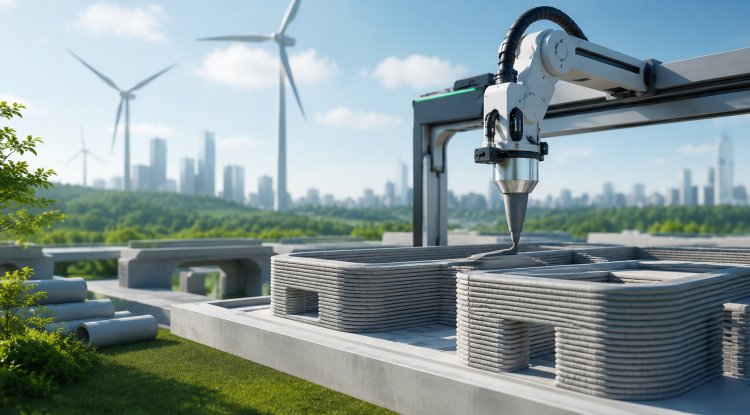
Finnish automation and construction technology firm Hyperion Robotics has raised $7.4 million in a growth round to speed up its development of a platform to manufacture infrastructure components with robotics, 3D printing and low-carbon concrete. The investment will help the company to accelerate the delivery of infrastructure, cut construction costs and carbon emissions as Europe starts a significant period of infrastructure renewal. Hyperion Robotics, low-carbon concrete, 3D printing, sustainable infrastructure and construction technology are likely to continue strong as the industry looks for alternative, more efficient and less-emissive methods of construction.
The money will be invested in ramping up Hyperion Robotics' manufacturing operations, developing its own software platform, and building new factories near project sites. It is based on automation, digital engineering and local manufacture, the company said, tackling issues such as labour shortages, an increasing infrastructure requirement and decarbonisation goals. This new investment comes as part of a wave of greater interest in technologies that boost productivity and minimize environmental footprint in the build-out of infrastructure, such as low-carbon concrete, 3D printing, sustainable infrastructure, and construction technology and Hyperion Robotics.
Technologies focus on speedy and less polluting construction processes.
Established in 2020 by Ashish Mohite, Fernando De los Rios and Henry Unterreiner, Hyperion Robotics is based in Finland and aims to create robotic manufacturing systems to 3D print concrete infrastructure elements in local microfactories. The company wants to replace traditional labour-intensive construction with digitally controlled production in factories that are developed near infrastructure projects.
Hyperion Robotics says its robotic microfactories are able to produce infrastructure components three times faster than traditional construction methods, and at up to 50% lower production costs. The company also produces an estimate of 70% reduction in carbon dioxide emissions compared to conventional construction methods.
Hyperion Robotics aims to minimize transport needs, shorten delivery times and increase manufacturing uniformity by having manufacturing facilities close to project sites. The company thinks this decentralized solution allows infrastructure providers to construct key infrastructure more efficiently while reducing the costs and emissions of heavy construction materials being transported long distances.
This enables Forge Platform Integrates Design and Manufacturing.
The core of Hyperion Robotics technology is its proprietary Forge software suite, which is an integrated suite of infrastructure design, structural engineering, regulatory compliance and robotics and factory operations software in one place.
The platform is designed to ease the engineering design-to-automated manufacturing process while improving the precision and reducing the amount of material used to manufacture infrastructure components. The company's approach to digitally managing every aspect of production will help to increase efficiency and reduce waste in manufacturing.
Hyperion Robotics also revealed plans to open its first manufacturing facility in the United Kingdom, called Forge I, in collaboration with the Swedish mining and industrial group, LKAB. The facility is anticipated to supply infrastructure to industries such as energy and utilities, water management, data centres and carbon capture.
Coping with the Investment Needs for Infrastructure in Europe
Governments and industries are embarking on one of the biggest infrastructure innovation cycles in decades in Europe, as they modernise their networks to address ageing power grids, water systems and industrial facilities, the company said. Meanwhile, the construction industry is under strain as demand for renewable energy infrastructure, the growth of data centres and carbon capture projects continues to rise.
The company Hyperion Robotics believes traditional construction techniques are falling behind the curve in the absence of the skilled workers, cost issues, and greenhouse gas emission concerns. The digitally enabled manufacturing model is aimed at solving these problems by shifting the way infrastructure is produced to an industrial manufacturing process instead of a sequence of singular projects.
The company added that the production process allows it to cut material usage by up to 75% compared to traditional methods, which ultimately lowers costs and helps to minimize environmental impact without compromising structural strength.
Investment to benefit European expansion.
The new capital will be used to launch the Forge I manufacturing facility, continue the Forge software platform development and speed up the company's growth in infrastructure markets in Europe, Hyperion Robotics said.
The company already has proven that it can build very efficient concrete buildings, and is now in the process of scaling production by using factory manufacturing near customer projects, Chief Executive Fernando De los Rios said. New models for the delivery of infrastructure are needed in Europe, he added, given the growing constraints on time, manpower and project costs for conventional construction techniques.
As a result of the latest investment, Hyperion Robotics stated its total funding to-date now exceeds $20 million, co-led by Course Corrected and the European Innovation Council Fund (EIC Fund) and including RE Ventures and existing investors Lifeline Ventures, Übermorgen Ventures and PC Rettig Impact & Co.
Minna Leisvuori, Senior Investment Advisor at EIC Fund, commented on the investment, and said that the company is using robotics, automation and software to modernise one of the world's least-digitised industries. She added that Hyperion Robotics' technology platform will have profound implications on the future of infrastructure manufacturing in Europe and on the global market because of its efficiency, scalability and sustainable nature.
What's Your Reaction?