Mirova invests €150 million to accelerate Yanara’s hybrid renewable energy projects across Australia.
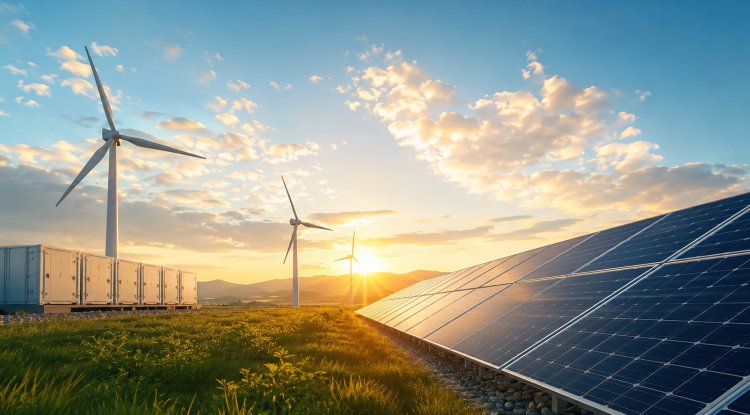
Sustainability investment manager Mirova has announced a commitment of EUR 150 million (approx USD$171 million) for the renewable energy developer Yanara to help rapidly develop large-scale renewable energy infrastructure in Australia. The funds will be used to bolster Yanara's utility-scale renewables energy portfolio and help to deliver hybrid energy projects, which integrate solar, wind and battery storage services. The investment underscores the continued interest in investment in renewable energy projects, Australia renewable energy, battery energy storage systems (BESS), clean energy infrastructure, and utility scale renewable projects as investors continue to invest in projects that help to support the global energy transition.
It's the first time that Yanara has raised capital in Australia since separating from BrightNight in 2025. Yanara is a developer, builder, owner and operator of utility scale hybrid renewable energy projects in the Asia Pacific region founded in 2019. It has a portfolio that covers Australia, India and the Philippines and includes solar, wind and battery energy storage technologies to enhance the reliability of the grid and facilitate the increased use of renewable electricity. The new investment should speed up the development of the projects and help grow the company's footprint in Australia's burgeoning renewable energy market.
Investment in over 2 GW of Renewable Generation.
The investment will help build over 2GW of renewable energy projects using multiple technologies in Victoria, NSW and WA, the companies said.
Yanara is in the process of expanding its pipeline to over 5.1 GW of hybrid and dispatchable renewable energy (DRE) projects in the Asia-Pacific region. These projects encompass integrated solar farms, wind power installations, and battery energy storage systems, all aimed at providing sustainable and stable energy supply to the grid. To overcome the intermittency of renewable energy sources and ensure adequate energy supply during peak demand, hybrid projects are now becoming more common, linking renewable energy with battery storage.
The funds will support project development activities such as planning, permitting and construction preparation to help accelerate activities aimed at bringing more renewable energy capacity to market over the next few years, enabling Yanara to deliver more solar energy to the market.
Mortlake Energy Hub will get a significant investment.
Much of Mirova's investment will be put into its flagship project, Mortlake Energy Hub in Victoria, which is one of Australia's biggest planned hybrid renewable energy projects.
The project will include 450 MW (225 MW in Phase 1, 225 MW in Phase 2) of solar generation capacity and a 600 MW/2,400 MWh battery energy storage system, to be built in two phases. The project aims to use large-scale battery storage and renewable energy sources to meet the peak demand for electricity, while also reducing dependence on fossil fuel power generation.
The Mortlake Energy Hub will be capable of producing around 200,000 homes' worth of renewable electricity per year once in operation. The project is also estimated to reduce approximately 880,000 tonnes of carbon emissions annually, which would help Australia achieve its emissions reduction targets.
The first phase of the project is currently in the process of being put up for construction. In this stage, the development will generate a total of over 300 jobs in construction and related sectors.
A reliable, renewable energy source is needed in the region, Yanara Highlights, says.
“Australia's electricity market is becoming more and more reliant on renewable energy that is reliable, scalable and on-demand and the investment will help meet that need," said David Delmas, Chief Executive Officer Australia at Yanara.
Mirova's investment will help the company ramp up its project pipeline of gigawatt-scale size projects and accelerate its deployment of other hybrid renewable energy projects in Australia, he said.
The combination of renewable generation and battery storage will also contribute to enhancing the country's electricity system and energy security and decarbonisation objectives, Delmas said.
Mirova supports Energy Infrastructure that is more flexible.
The investment is part of Mirova's policy of investing in infrastructure projects that help move toward low carbon energy systems, Mirova said.
“It is an investment that reflects Mirova's continued support for the development of key energy infrastructure which can help to support Australia's future electricity market,” said Raphael Lance, Global Head of Private Assets at Mirova.
The company is pleased to be collaborating with the management team of Yanara and is looking forward to the collaboration to help shape the development of a high-quality portfolio of flexible renewable energy assets with battery energy storage systems in the country, he added.
More investment in Australia's Energy Transition.
Governments, utilities and private investors are continuing to invest heavily in Australia's renewable energy, as the industry grows in importance and value to meet the demand for more clean, reliable energy. Battery energy storage systems (BESS) are increasingly being used in new renewable energy projects to store excess electricity produced by solar and wind power sources, and then release it when it is needed most.
Rising renewable penetration in the electricity network is also driving the growth of hybrid renewable energy projects, which integrate a variety of renewable technologies. These systems have the potential to enhance energy security, increase grid flexibility, and support the shift towards a more sustainable energy grid by reducing reliance on traditional fossil fuel generation methods.
The partnership between Mirova and Yanara is furthering Mirova's expansion of utility-scale renewable energy infrastructure by advancing over 5.1 GW of renewable energy projects throughout the Asia-Pacific region and more than 2 GW of projects in Australia in Australia's long term decarbonisation goals.
What's Your Reaction?