Advanced AI models are enhancing weather prediction in India, boosting agricultural planning and disaster response. Startups like Climesense and IMD’s Google partnership now achieve 85% forecast accuracy, improving monsoon and flood prediction. With 236 GW of renewable energy reliant on forecasts, AI reduces solar and wind losses by 10%. Yet, limited rural internet, high computational costs, and data privacy concerns hamper scale. The ₹10,000 crore IndiaAI Mission seeks to bridge these gaps. Integrating AI with traditional systems could build resilience across farming and infrastructure.
Advanced AI models are revolutionising weather prediction in India, offering improved accuracy for agriculture and disaster management. While promising, scalability and data access challenges limit their transformative potential.
Startups like Climesense and AI Weather Solutions use machine learning to enhance forecasting, achieving 85% accuracy for short-term predictions compared to 70% for traditional models. These systems analyse satellite data, soil moisture, and historical patterns, supporting India’s 140 million farmers. The IMD collaborates with Google to integrate AI, reducing flood prediction errors by 15%. With 236 GW of renewable capacity reliant on weather data, AI aids solar and wind plant efficiency, cutting losses by 10%.
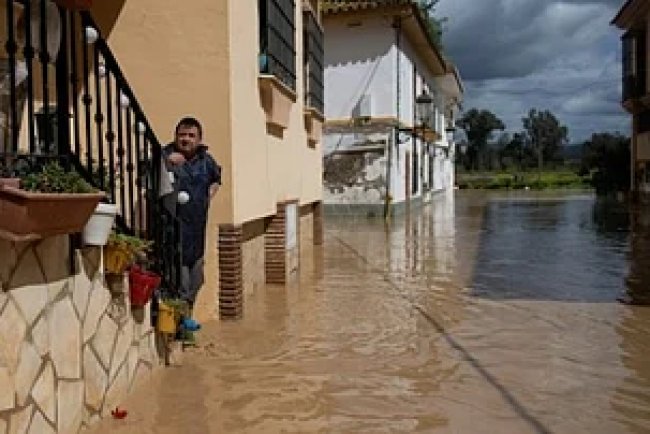
India’s monsoon, contributing 70% of annual rainfall, is critical for 50% of farmland. AI models predict rainfall with 48-hour precision, aiding sowing and irrigation. However, only 40% of rural areas have internet access, limiting data collection. High computational costs, at $500,000 per model, strain startups. Posts on X highlight optimism but note data privacy concerns and reliance on US-based cloud systems. Critics argue that AI’s accuracy drops in extreme events like cloudbursts, as seen in Jharkhand’s floods.
The IndiaAI Mission, with ₹10,000 crore, supports AI scaling, but 60% of weather stations lack real-time data integration. Combining AI with traditional forecasting, as in Wular Lake’s monitoring, could enhance resilience.
AI weather prediction offers transformative benefits for India’s agriculture and disaster preparedness. Overcoming infrastructure and cost barriers is essential for widespread adoption.
Source: The Economic Times
What's Your Reaction?