Satellite radar observations show Alaska's glaciers remain melting for about three extra weeks for every 1°C rise in summer temperatures, with heat waves accelerating seasonal snow loss.
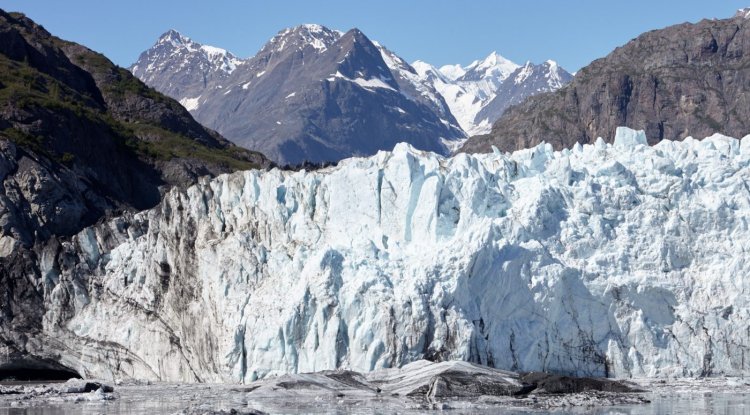
The melting state of Alaska glaciers will persist for almost three additional weeks for each 1-degree centigrade rise in summer temperatures, according to a recent study in the journal npj Climate and Atmospheric Science. The study indicates that warm summers have increased the duration of the melt season, giving glaciers more time each year to shed ice.
"Seasonal progression of melt and snowlines in Alaska from SAR reveals impacts of warming" investigated the radar images of over 3,000 glaciers in Alaska during 2016 through 2024. The research made use of the European Space Agency’s Sentinel-1 satellites for detecting the point at which glacier surfaces changed from frozen states to melting states and seasonal snowlines.
Each 1-degree rise in average summer temperatures increased the number of weeks when glaciers stayed in melting states by approximately three weeks.
The study monitored the seasonal shift of the snowline—the border that separates snow-covered zones from glacier ice zones. With increasing temperature, the snowline rises above the glaciers; thus, more and more of the ice is exposed to light and heat. This effect is observed for most of Alaska; however, there is variability in the degree of the effect depending on the mountain ranges.
In contrast with the optical satellites, radar satellites are able to make observations independently of clouds or solar illumination. In this way, scientists were able to monitor conditions in the area of the glaciers and produce an annual monitoring of glacier changes. Sentinel-1 satellites pass by every twelve days over the glacier zones of Alaska.
Another important point is that the researchers observed regional differences in glacier behavior. Coastal glaciers have larger amounts of melting during the summertime and receive more snow during the winter compared to glaciers that are situated farther away from the coast.
According to the authors, observations of the snowline position and melt period allow measuring the glacier mass balance, which indicates the balance between the snow accumulation and ice reduction.
The study was led by Albin Wells of Carnegie Mellon University with David R. Rounce and Mark Fahnestock and was published in npj Climate and Atmospheric Science.
What's Your Reaction?