A report by IESA and CES projects India's commercial and industrial energy storage market could grow from less than 1 GWh in 2025 to between 23 GWh and 31 GWh by 2032 amid rising renewable energy adoption and growing demand for reliable power.
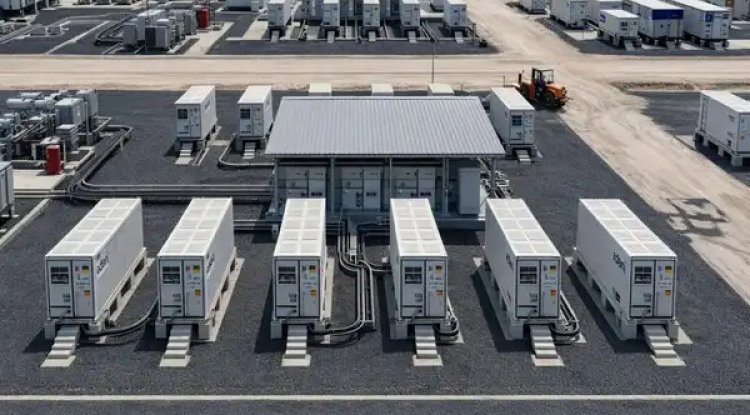
India's commercial and industrial (C&I) energy storage market is expected to grow substantially over the next several years, with cumulative installations projected to increase from less than 1 GWh in 2025 to between 23 GWh and 31 GWh by 2032, according to a report by the India Energy Storage Alliance (IESA) and Customized Energy Solutions (CES).
The report, India Stationary Storage Market for C&I Applications: Insights Till 2032, is scheduled for release during India Energy Storage Week (IESW) 2026, to be held from 8-10 July at Yashobhoomi (IICC) in New Delhi.
The study states that rising electricity costs, increasing renewable energy deployment, the need for uninterrupted power supply and efforts to reduce energy expenditure are expected to contribute to the growth of energy storage adoption in the C&I sector.
According to the report, cumulative energy storage installations could reach 22-23 GWh by 2032 under a Business-as-Usual (BAU) scenario. Under a Rapid Adoption (RA) scenario, installations could rise to 31 GWh, supported by higher renewable energy growth and lower battery costs.
Debmalya Sen, President of IESA, said energy storage is increasingly used for applications beyond backup power and peak-demand management.
The report reviews a range of storage technologies, including lead-acid, advanced lead-acid, lithium-ion, vanadium-redox flow, sodium-ion and pumped hydro systems. Detailed analysis is provided for lithium iron phosphate (LFP), nickel manganese cobalt (NMC), vanadium-redox flow batteries (VRFB) and sodium-ion technologies. LFP batteries currently account for a significant share of installations, while vanadium-redox flow and sodium-ion technologies are being assessed for longer-duration storage applications.
The study notes the growing use of battery energy storage systems alongside rooftop solar installations, renewable energy open-access projects and diesel generator replacement projects.
It also examines three case studies involving battery energy storage deployments at an industrial facility, a renewable energy project in Leh and the Om Shanti Retreat Centre in Gurugram. The findings indicate that battery systems designed around average load requirements and used more frequently may achieve shorter payback periods than larger systems designed primarily to meet peak demand. The report also notes that solar and battery storage systems can reduce dependence on diesel generation in remote locations.
The report includes market projections, state-level regulatory assessments, technology comparisons and analysis of factors affecting energy storage deployment in India's commercial and industrial sector.
What's Your Reaction?