Ambuja Cements has partnered with Leilac to deploy carbon capture technology at its Gujarat plant, aiming to reduce emissions and support India's low-carbon industrial transition.
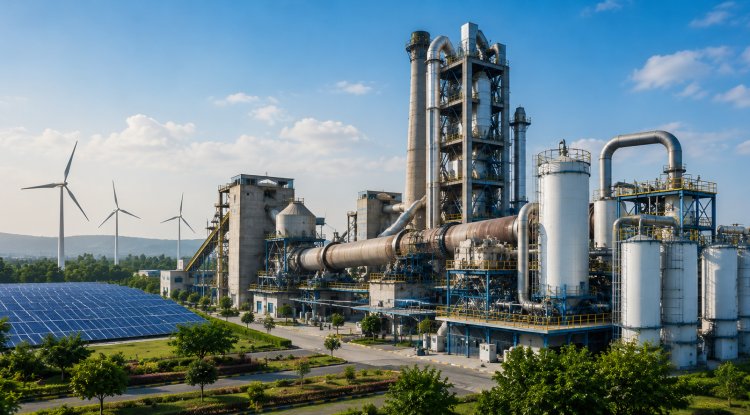
Ambuja Cements Partners with Leilac to Advance Low-Carbon Cement Manufacturing in India

India's industrial future presents a major paradox as the country's booming urbanisation adds up to massive infrastructure drives, which are putting a huge strain on the country's key industrial sectors. Cement continues to be a key material for economic development, and the cement sector is under pressure to reduce its high carbon emissions from its skyrocketing output. In a significant move to solve this industrial challenge, Ambuja Cements, a leading cement and building materials company under the Adani Group, has announced a groundbreaking international technology alliance. According to the analysis, the companies have signed a strategic partnership to implement a novel, commercial-scale low-carbon pathway to cement manufacturing at the Sanghipuram plant in Kutch district, Gujarat, India. The partnership represents a significant shift in cement manufacturing practices and provides a potential pathway for decarbonising cement production in developing economies.

The chemistry of cement production makes this environmental intervention particularly important. In contrast to most industrial sectors where carbon emissions are almost exclusively due to fossil-fuel-fired heat, the cement industry has a large proportion of its emissions that is difficult-to-abate. It is a naturally occurring by-product of the raw chemical process which occurs during clinker production, when limestone is heated at high temperatures. Ambuja Cements is adopting the specialised direct separation carbon capture technology provided by Leilac to go beyond the conventional approach of energy efficiency and achieve deep decarbonisation. Process CO2 emissions are captured directly as they are released, trapping the CO2 as it is being emitted, thus maintaining the purity and isolation of greenhouse gases (GHGs) for storage or other industrial applications.

The first step in this collaboration will be a comprehensive commercial demonstration project, which will be part of a 6.6 million tonnes per year Sanghi cement plant in Kutch, with full integration into the plant operations. In this test approach, a very complex blend of carbon capture and hybrid electric heating will be assessed by engineers. The aim of this dual engineering approach is to achieve a manufacturing facility that can steadily phase out coal use and operate flexibly with variable alternative fuels and clean electricity. The novel heating mechanism combined with strong emission trapping will simultaneously tackle the emissions from fuel burning and the emissions of the chemical process within the structure.

The potential impact of the Gujarat trial is significant. If the pilot project achieves the basic engineering targets under normal industrial operating conditions, the companies have plans to rapidly expand the technology by 7-8 times its current capacity. The added facility would be able to capture over one million tonnes of CO2 annually, potentially making it one of the largest industrial-scale carbon capture projects globally. To the rest of the international energy community, this scale confirms not only India's willingness to pilot the use of green energy at the local level but also shows that the country has begun developing the industrial infrastructure necessary to sustain long-term sustainable growth on a global scale.

This technology push is part of Ambuja Cements' overall corporate strategy, which includes a target to achieve a Science Based Targets initiative (SBTi)-validated net-zero target by 2050. The company is investing extensively in captive green power, with nearly one gigawatt of renewable power generation capacity, including significant solar and wind projects, as well as large waste heat recovery systems, all designed to support these electrification initiatives. “Bold thinking and strong collaborative efforts along the entire supply chain are required to make the transition to a low-carbon industrial economy,” said Karan Adani, Director of Ambuja Cements. The partnership highlights the potential for heavy industrial manufacturing to reduce emissions while maintaining productivity.

Share: