World's Largest Electric Ship Launched in Australia
Australia’s Incat has launched the world’s largest fully electric ferry, Hull 096, equipped with over 40 MWh battery capacity to operate emissions-free between Argentina and Uruguay. This milestone in maritime sustainability is backed by Wärtsilä’s ESS technology and positions Australia at the forefront of green shipbuilding.
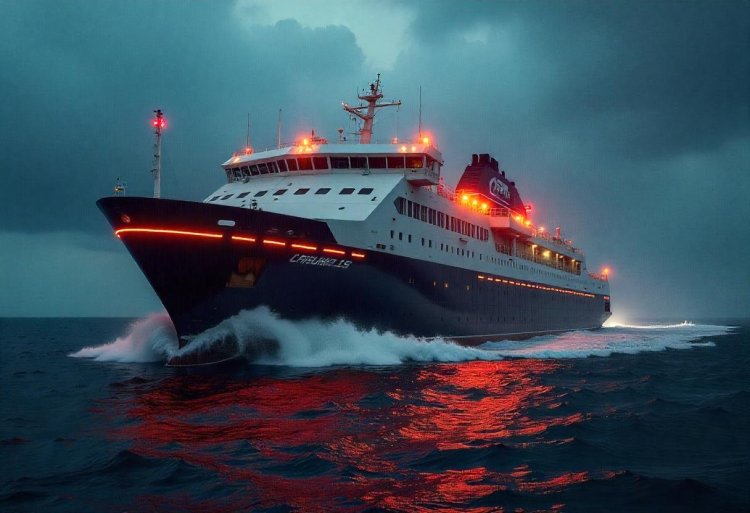
Australian shipbuilder Incat launched the largest 100% electric vessel on the planet during a significant moment in green shipping. The 130-metre-long ferry vessel, Hull 096, has been launched in Incat's Tasmanian Hobart facility. Commissioned by South American ferry operator Buquebus, the vessel will run exclusively from batteries between Argentinian base Buenos Aires and Uruguayan ports.
Hull 096 is a milestone in naval engineering. It boasts an Energy Storage System (ESS) capacity of over 40 megawatt-hours, the largest ESS to be fitted on any ship. The more than 250-tonne weight battery system propels eight electric waterjets that propel the ferry on non-fossil fuels. The ESS was designed with the help of Wärtsilä, a Finnish engineering firm with a background in marine energy solutions.
The ship will be able to transport a maximum of 2,100 passengers and 225 cars, with zero-emission travel on its South American route. The launch is being described as a step towards the decarbonisation of the global shipping economy. It aligns with global aspirations to move towards cleaner, greener forms of transport and lower the shipping industry's contribution to climate change.
An interesting feature, the vessel was initially designed as an liquefied natural gas (LNG) ship. It was subsequently redesigned to operate on electricity only, however, after strategic talks between Incat management and Buquebus. The upgrade follows on the heels of a wider shift in the shipbuilding sector, with electrification increasingly touted as a scalable and viable solution.
The ship's construction has been advertised not only as a technical success but as a national pride point for Australia. Tasmanian officials mentioned the project as evidence of the nation's potential in high-end engineering and clean energy technology. The vessel is also one of Australia's largest single export projects in industry history, set to generate greater international focus.
Final fit-outs are currently underway, including the 2,300-square-metre onboard duty-free shopping centre, to be the largest onboard shopping complex on any ferry in the world. Battery systems are being installed and tested prior to the ship commencing sea trials in the River Derwent.
Through this project, Incat not only established itself in electric ship construction but also demonstrated the maturity of zero-emission solutions for commercial-scale transport. The launch of Hull 096 marks the watershed moment for the ferry market, especially in congested routes where green concerns are inducing quicker uptake of eco-technology.
The ship's first voyage in South America will impact ferry operators and policymakers worldwide to hasten investment in electric marine infrastructure. It also gains ground on the world's response of the maritime industry to international climate targets, particularly those that focus on mid-century net-zero emission goals.
In the future, Hull 096 will be an example for future battery-electric ships, providing an example in design, power rating, and operation in real conditions. Incat continues to be at the forefront in this direction, with the company set to receive additional orders from ferry owners looking to replace their fleets to meet environmental needs.
The successful launch proves that zero-emissions shipping is not only an idea but a deployable reality. It highlights the importance of collaboration between shipbuilders, energy companies, and governments in making sustainable shipping a norm rather than an exception.
Source/Credits:
Source: Incat, University of East Anglia, Buquebus, Wärtsilä
What's Your Reaction?