Tiny ocean stones called ooids reveal that ancient oceans held far less carbon than previously thought, offering insights into past life evolution and modern ocean risks.
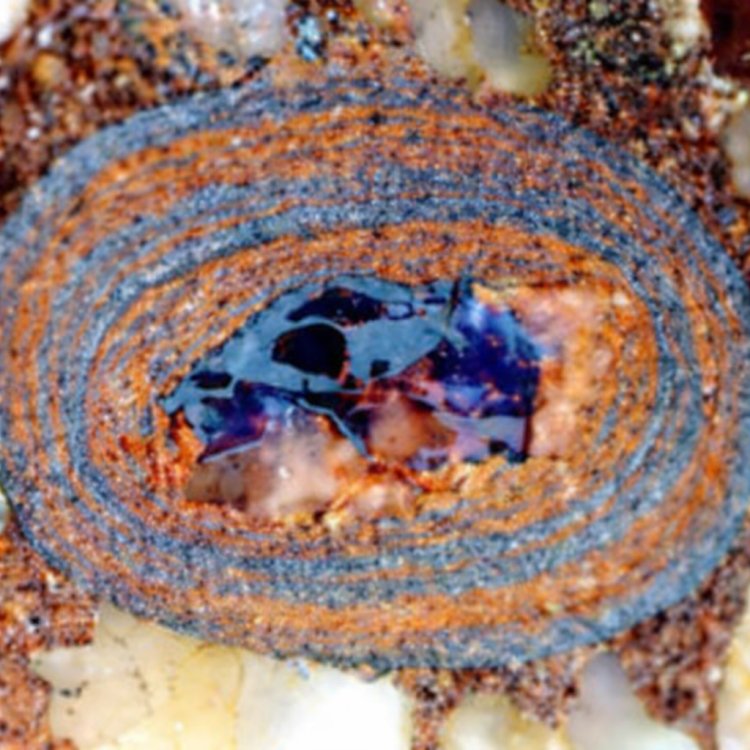
Studying Earth’s ancient past is extremely tricky because much of it happened millions or billions of years ago, leaving little direct evidence. But a team led by Professor Jordon Hemingway at ETH has found a clever way to look back in time using tiny egg-shaped stones called ooids. These stones, found on the ocean floor, grow in layers like rolling snowballs. As they form, carbon from the ocean sticks to them, creating a record of how much carbon was stored in the seas long ago.
By analysing these ooids, the researchers discovered that between 1,000 and 541 million years ago, the ocean had much less dissolved organic carbon than we thought and it is up to 90–99% less than today. This challenges old ideas about how ice ages happened and how complex life evolved during that time.
How carbon entered the oceans
Carbon dioxide from the atmosphere is dissolved in the water and precipitates to the bottom. Finally, producers like phytoplankton and certain bacteria will then produce organic carbon by using CO2 and the sun. Consumers then sink to the bottom as “snow” after they die. Microorganisms recycle carbon from dead material and excrement, producing dissolved organic carbon, a massive ocean reservoir containing 200 times more carbon than is locked into marine life.
The Oxygen Revolution and Life’s Evolution
An accumulation of oxygen resulted from two major "oxygen events." Thereby, organisms were able to develop more efficient ways of metabolizing. The sinking rate of old single-cell and early multi-cell organisms increased in correspondence with larger sizes, thus accumulating more carbon in sediments. Low oxygen levels in the deep ocean were unable to recycle carbon, thus leading to a drastic fall in dissolved organic carbon. Oxygen had to accumulate to these deep waters before carbon rose again, as it does today.
Implications for today
This research shows us that Earth’s geochemical and biological history is totally different than we though. It also warns about today’s oceans risks: human activities like global warming and pollution are reducing oxygen levels in the oceans. This could replicate problems that happened long ago such as carbon not being recycled properly which would harm marine life and disrupt ecosystems.
In essence, these tiny stones are like natural time capsules, revealing how carbon moved through the oceans in the distant past and understand that if similar changes happen today, they could have serious effects on life in the oceans again in the future.
What's Your Reaction?