


Satellite data show Antarctica has lost about 12,820 square kilometres of grounded ice since 1996, with retreat concentrated in West Antarctica and the Antarctic Peninsula.
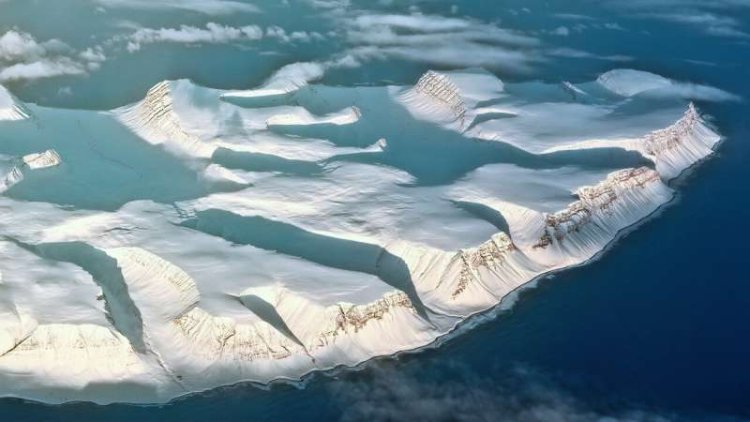
A new satellite study has revealed that Antarctica has lost significant amounts of its grounded ice over the last three decades, an area that is about 10 times larger than that of Los Angeles. However, the new study has revealed that the ice has melted in specific areas, even though the majority of Antarctica has remained stable.
According to the new study carried out by glaciologists at the University of California, Irvine, the satellite radar data have revealed that Antarctica has lost about 12,820 square kilometers of its grounded ice since the year 1996. The new satellite study has revealed that there has been a retreat in some areas along the coastline of Antarctica.
What the study measured
Grounded ice is the part of the ice sheet that is located on land under the ocean. This is the part that is critical because once it starts retreating towards the land, it can cause the movement of glaciers into the ocean, which can cause the level of the ocean to rise.
By using the radar data from various satellite observations, scientists have produced the first complete map that shows the movement of the grounding line along the entire coastline of Antarctica over the last three decades. The study has revealed that 77% of the coastline has remained stable since the mid-1990s.
However, the parts that have remained unstable have recorded significant retreats over the period. On average, about 442 square kilometers of grounded ice have been lost annually over the last three decades.
Where this ice loss is happening
Research points to several areas where this ice loss is more pronounced. These areas are West Antarctica, the Antarctic Peninsula, and parts of East Antarctica.
Warm waters at the base of glaciers are cited as some of the leading causes of this ice loss, according to scientists. This warm water, they say, affects the ice shelves, which are located at the base of the glaciers, thus weakening them.
Ice shelves are structures that help keep the glaciers stable on land. When they are broken, the glaciers move into the sea, leading to this loss of ice over time.
According to researchers, the study of the movement of the grounding lines is important in helping better understand what might happen in the future regarding this ice loss.
Why grounding lines matter
The Antarctic ice sheet is the biggest ice body in the world and covers most of the continent. It also contains a large part of the world’s freshwater in the form of ice.
The study has identified the migration of the grounding line in Antarctica. This will be useful in the future as scientists will be able to trace the changes in the ice sheet more precisely. According to the scientists involved in the study, it has been found that although most of Antarctica is stable, it is important to keep an eye on areas where ice is retreating.
According to scientists, it is expected that with these results, it will be possible to increase the accuracy of their computer models and make accurate predictions about the behavior of the polar ice sheets in the coming years.
What's Your Reaction?

















