On World Environment Day 2026, industry leaders argued that sustainability must move beyond symbolic pledges to measurable action, with a focus on circular economy practices, clean energy, climate finance, sustainable infrastructure and community-led solutions

Every year on June 5, companies change their profile pictures to something leafy. A pledge goes up. A press release goes out. And then, for most of them, it's back to business.
That ritual is running out of road. "Five years ago, a green logo swap and a pledge post would clear the bar towards green initiatives," says Keerthana Chandrasekaran, Co-founder of Bunjy Digital. "That bar is gone now. Consumers, especially younger ones, now look for clear, detailed and measurable information rather than general statements or vague promises, including what changed, by how much, verified by whom."
She is not talking about activist pressure. She's talking about ordinary people who've gotten better at reading the gap between what a brand says in June and what its supply chain looks like in December. "At this point, the brands still doing the logo swap are mostly telling on themselves. The ones getting it right are treating sustainability as an operational commitment first and a communication decision second."
That shift — from performance to accountability — runs through almost every serious conversation about climate action in 2026. And on this World Environment Day, the voices coming from India's business and innovation community are saying something similar from very different corners of the economy.
The Phone in Your Pocket Is Already the Answer
Start with something most people don't think about: the smartphone. Nearly 80% of a smartphone's carbon footprint is generated before it ever reaches a consumer, according to Nakul Kumar, Co-Founder and CMO of Cashify. That cost is baked into raw material extraction, component production, assembly, global logistics — all of it happening before the box is opened. "The phone you already own is the most sustainable phone you can have," Kumar says. "The phone someone else already owns is the second most sustainable."
The numbers behind that logic are striking. A single refurbished smartphone can save up to 85 kg of CO2 emissions — roughly equivalent to driving nearly 500 kilometres in a petrol car. It can prevent the extraction of approximately 243 kg of raw materials and conserve nearly 13,000 litres of water that would otherwise be used to manufacture a new device.
"Every time a device finds a second life instead of a landfill, we avoid the full environmental cost of manufacturing a new one," Kumar says. "That's the logic of recommerce, and at the scale India operates, it is one of the most consequential climate actions we can take as a country."
It's an argument that reframes the entire conversation. Sustainability doesn't always require new technology or new infrastructure. Sometimes it just requires not throwing away what already works.
Electric Vehicles Are Only as Clean as the Grid Behind Them
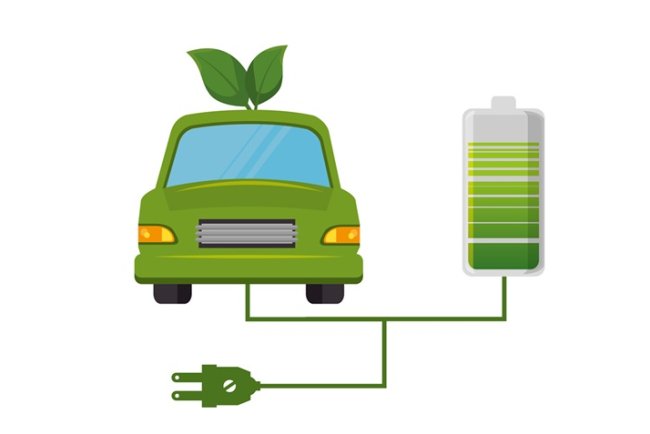
India's EV transition has moved well past the early adopter phase. But Akshay Shekhar, Co-Founder and CEO of Kazam Energy, thinks the country needs to confront something it's been avoiding. "An electric vehicle is only as clean as the grid that powers it." If the electricity comes from coal, the tailpipe emissions haven't disappeared — they have just moved to a smokestack somewhere else. The vehicle is cleaner. The system isn't necessarily.
Shekhar's answer draws from how nature actually works. "Nature operates on perfectly balanced, decentralised ecosystems. That is exactly how we need to build our energy infrastructure." The real opportunity, he argues, isn't just building more charging points. It's turning homes, apartments, and workplaces into smart, decentralised energy hubs — places that charge vehicles when renewable energy is most available, and stop drawing blindly from a stressed grid.
Kazam has deployed over one lakh home chargers, particularly targeting high-usage three-wheelers in Tier 2 and Tier 3 markets. The impact is showing up not just in emissions but in economics — drivers are capturing 25 to 30% savings in operating costs through smarter energy management.
"For World Environment Day, our focus must go beyond the vehicles," Shekhar says. "Our future depends on building a grid-aware, solar-aligned ecosystem that ensures the energy moving India forward is as clean as the intent behind it."
India Is Moving Faster Than Anyone Expected
The macro picture is more encouraging than the daily news cycle tends to suggest. More than 270 gigawatts of renewable capacity installed—the third-largest renewable energy nation in the world. About 50% of power now coming from clean sources — ahead of schedule.
"This country has proven that scale and speed are not obstacles to sustainability," says Abhishek Sarmah, Head of Corporate Strategy and Strategic Marketing, ESG and CSR, Delta Electronics India. "They can be its greatest allies."
Delta has installed 5.5 MW of rooftop solar across its own facilities and sources wind-generated electricity for its Krishnagiri plant. Globally, the company has committed to the Science-Based Targets' Climate Transition Plan, aiming for 100% renewable electricity. "We believe that the most credible thing a company can do is live by what it builds," Sarmah says.
The efficiency argument echoes through the work of Rahul Gautam, Co-Founder of Exeliq Tech Solutions, who points to this year's World Environment Day theme — Inspired by Nature. For Climate. For Our Future — as a useful frame. "Nature's greatest lesson is efficiency. It is about creating intelligent and efficient systems that can support a low-carbon future, from solar power and electric mobility to smart grids, energy storage, and distributed energy infrastructure."
The choices made now in energy, mobility, and technology, he argues, will define the sustainability of the decades ahead.
When Store Expansion and Environmental Action Move Together
Growth and green intent don't have to pull in opposite directions. That's the bet Hemant Agarwal, Chairman and Managing Director of V-Bazaar, is making as his retail chain scales from 130 to 250 stores.
Under its #NowForClimate campaign, every new V-Bazaar store is being set up as what Agarwal calls a Green Community Hub — a model where commercial expansion and environmental action are designed to move in step rather than in conflict.
"Every new store should also create a positive impact in the community around it," Agarwal says. The company already uses sustainable yarn across parts of its apparel range and is working to increase that share and reduce the overall carbon footprint of its products.
Quarterly plantation drives, run with store teams, schools, and nearby communities, are part of the plan. The long-term goal is to support the planting of one lakh saplings by 2030.
"For us, every store should also contribute something positive to the environment, along with serving customers," he says.
It's a model that treats the physical footprint of retail — typically a liability in sustainability conversations — as an opportunity instead.
Climate Action Needs to Become Development Policy
For Manav Subodh, Curator of 1.5 Matters — a movement by 1M1B building a generation of climate leaders committed to keeping global warming below 1.5°C — the frustration is structural.
"Climate action must move beyond awareness campaigns and become a national development priority."His ask is specific: green skills, climate innovation, and sustainability need to be at the centre of education, skilling, and economic policy — not treated as add-ons. Local climate projects and youth-led innovations should be funded and rewarded because, as he puts it, "real change happens at the community level."
He also raises something that tends to get drowned out in the energy transition conversation: water. "Many of our cities are already entering the red zone, and the water crisis is unfolding silently around us." Rainwater harvesting, conservation, and local water solutions need immediate scale and active citizen participation, he says.
And for corporate leaders specifically, the message is blunt. Move from commitments to measurable action — reducing carbon footprints, conserving water, investing in sustainable operations and supply chains. The commitment phase has gone on long enough.
The Two Billion People the Energy Transition Is Leaving Behind
Most of the energy transition conversation is about what comes next — solar, storage, smart grids, EVs. Ankit Mathur, Co-Founder and CEO of Greenway Grameen and Board Member of CLEAN, wants to make sure it doesn't skip over what's still unfinished.
Around two billion people have yet to make the most basic energy transition of all: access to clean cooking. For them, the conversation about EVs and smart grids is several steps removed from daily reality.
"The time is ripe for a concerted push between technology providers, funders, and policymakers to build an affordable, fuel-agnostic energy ladder," Mathur says. The idea is a spectrum of viable technologies that allows households to progressively move from conventional to cleaner solutions as their income and local infrastructure allow — not a single leap that many can't make.
"We need to meet people where they are — whether that is a rural family reducing emissions with an efficient biomass stove when LPG is inaccessible, or a small business owner transitioning to electric or decentralised renewable solutions," he says.
It's a reminder that climate equity and climate ambition aren't separate conversations. "Doing so is critical not just for climate goals, but for delivering practical, widespread energy security and equity."
Capital Is Finally Paying Attention
For a long time, the dominant assumption in business was that environmental responsibility and financial returns pulled in opposite directions. Bharti Singhla, Principal at Momentum Capital, thinks that assumption has broken down — and the money is starting to follow.
"Historically, capitalism and environmental stewardship were viewed as opposing forces, with capital generation often working against the environment by extracting more than it replenishes," she says. "However, that narrative is breaking as the world realises that we do not exist independently of the environment, and economic growth is not possible on a planet that cannot sustain life."
Venture capital, she argues, has a specific and catalytic role to play — de-risking technology development early enough that mainstream institutional capital can follow. "Deploying venture capital in environmental solutions allows us to tap into the vast economic upside that comes from creating long-lasting solutions that are actually needed by humanity."
The framing matters. This isn't philanthropy or compliance. It's an economic argument — one that treats climate-tech investing as both an immediate opportunity and the only rational long-term bet.
Buildings Are Part of the Problem Too
Nearly 37% of global energy-related carbon emissions come from buildings and construction. It's a figure that Dr Anand Achari, Principal of VES College of Architecture, thinks doesn't get nearly enough attention in the climate conversation.
"For architects, designers, and the students who will shape the built environment of tomorrow, this responsibility begins long before a building is constructed," he says. "It starts with the ideas we develop, the materials we choose, and the way we think about the relationship between people and their environment."
As Indian cities continue to grow rapidly, in many cases without adequate planning for what that growth costs the environment, the urgency of sustainable design is no longer theoretical.
"Creating environmentally conscious spaces is no longer an option," Dr Achari says. "It is becoming an integral part of good design." At VESCOA, students are encouraged to think beyond aesthetics and understand the broader consequences of their choices — to design spaces that are not just functional but contribute positively to the communities and environments they sit within.
What This Day Actually Requires
Taken together, what these voices are describing is a World Environment Day that looks different from the ones before it. Less about symbolism. More about systems. Less about pledges. More about proof.
The refurbished phone that saves 85 kg of CO2. The home charger that helps a three-wheeler driver cut costs while pulling from cleaner energy. The retail store that plants trees as it opens new locations. The venture fund that bets on climate-tech because the economics finally make sense. The energy ladder that meets a rural family where they actually are.
None of it is especially glamorous. None of it makes for a particularly arresting social media post. But it adds up in a way that a green profile picture never will.
As Chandrasekaran put it, the scrutiny now comes from regular people. They've learned to read the gap. And the gap is getting harder to hide.
This story was compiled from industry voices on World Environment Day 2026.
What's Your Reaction?